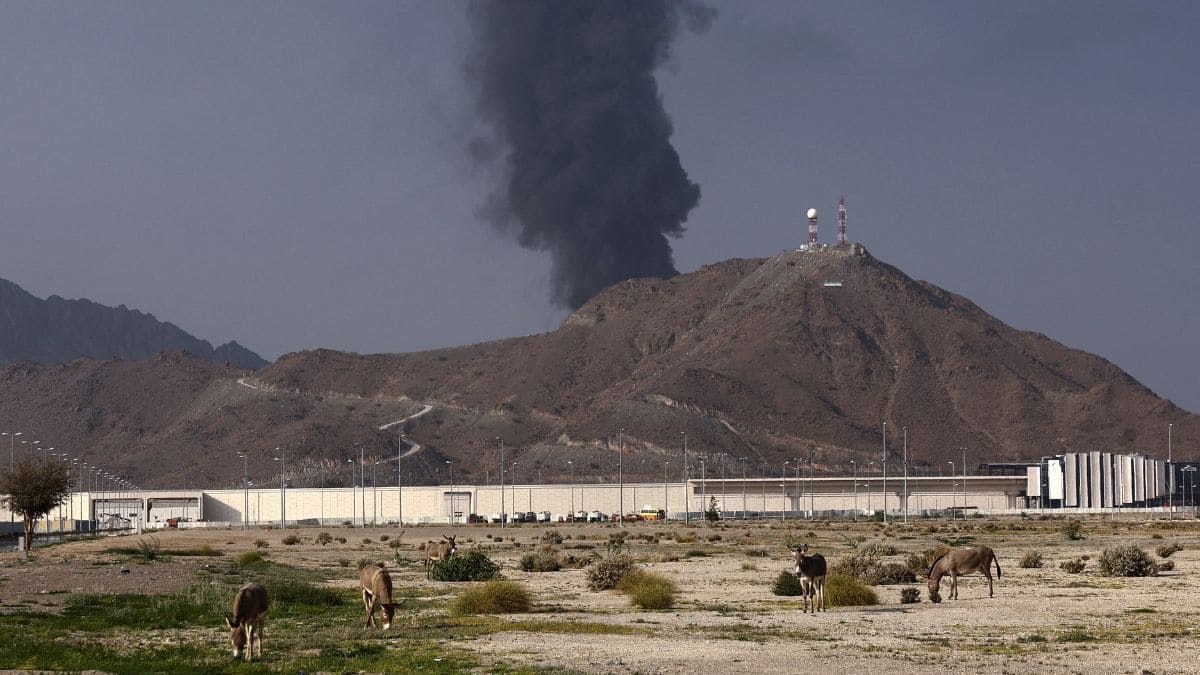
If you've got a flight booked to Jerusalem or a business meeting in Riyadh this week, cancel it. Seriously. The regional friction between the U.S., Israel, and Iran has officially boiled over into a logistical nightmare that makes the 2020 lockdowns look like a minor inconvenience. We aren't just talking about "increased security" anymore. We're looking at shuttered embassies, scorched parking lots, and a total collapse of visa processing across the most critical hubs in the Middle East.
On Saturday, February 28, 2026, the U.S. and Israel launched a massive offensive against Iranian targets. Tehran didn't just sit back. They've spent the last few days raining drones and missiles across the region, targeting not just military sites, but the very diplomatic buildings that are supposed to help people like you get in and out of the country.
The Great Embassy Blackout
The U.S. State Department basically hit the panic button on March 2. They issued a "Worldwide Caution," but the reality on the ground is much grimmer. In Saudi Arabia, the U.S. Embassy in Riyadh was actually hit by drones. Imagine trying to get a visa renewal while the roof of the chancellery is literally collapsing from smoke damage and structural failure. It’s not happening.
The embassy in Riyadh is closed. Canada’s embassy there is closed too. In Kuwait City, a drone-sparked fire gutted a warehouse on the U.S. diplomatic compound. Lebanon? Closed. Jordan? Personnel evacuated. Bahrain? Indefinitely shut. Even the U.S. Consulate in Dubai—a place usually bustling with expats—had a drone blow up in its parking lot.
If you’re an American citizen currently in one of these 14 countries, the government’s message is blunt: Get out now. The list of "no-go" zones currently includes:
- Israel, the West Bank, and Gaza
- Saudi Arabia
- United Arab Emirates
- Qatar
- Jordan
- Kuwait
- Bahrain
- Oman
- Egypt
- Lebanon
- Iraq
- Syria
- Yemen
- Iran (obviously)
Don't count on a rescue
The most chilling part of the latest alerts is the fine print. The U.S. Embassy in Jerusalem specifically stated they aren't in a position to evacuate anyone. Don't expect a C-130 to land and whisk you away. The State Department’s automated message is essentially telling people "you're on your own." If you’re waiting for a passport or a Consular Report of Birth Abroad, you’re stuck. Those services are dead in the water.
The Visa Crisis Is Just Getting Started
For anyone trying to move for work or reunite with family, the timing couldn't be worse. Visa processing has ground to a halt. When an embassy "shelters in place," the first thing they cut is routine consular services.
If you had an interview scheduled in Abu Dhabi or Jerusalem for a work visa, it's been canceled. There’s no clear timeline for when these will be rescheduled. Some applicants are being told to look at "alternate sites" like Athens or Bucharest, but good luck getting a flight there when half the region’s airspace is a restricted combat zone.
The Saudi Stance and the Israel Factor
There’s a massive misconception that Saudi Arabia would just side with the U.S. and Israel. In reality, Riyadh is in a bind. While they’ve condemned the attacks on their own soil, they’ve also publicly blasted "Israeli aggression."
If you’re traveling on an Israeli passport, don't even try entering Saudi Arabia—the permanent ban is more rigid than ever. For other nationalities, while Saudi Arabia hasn't officially banned workers, the "security screening" has become a brick wall. High-volume nationalities from India, Pakistan, and Egypt are seeing their "block work visa" quotas paused. The Kingdom is prioritizing its own security over Vision 2030 tourism goals right now.
Airspace Is a Ghost Town
You can't have a "visa crisis" without a "transportation crisis." Ben Gurion Airport in Tel Aviv is a ghost town. No commercial flights. No charters. The land crossings are even sketchier.
- Allenby/King Hussein Bridge: Only open for specific ID holders and diplomats.
- Taba Crossing (Egypt): This is currently the "best" bad option. U.S. officials are telling people in Israel to take a bus to Egypt and try to fly out of Sharm al-Sheikh.
- Jordanian Borders: These fluctuate hourly. One minute the Northern crossing is open; the next, it's closed because of a "red alert" siren.
Even if you find a flight, expect it to take twice as long. Planes are flying massive detours around the Persian Gulf and the Levant to avoid being mistaken for a military target. Oil prices have already spiked over $80 a barrel, and if the Strait of Hormuz gets choked off like Iran threatened, those ticket prices will triple overnight.
What You Should Actually Do
Stop checking your flight status every five minutes—it's likely not going. If you're currently in the region, your priority isn't your visa; it's your exit strategy.
- Register for STEP immediately. The Smart Traveler Enrollment Program is the only way the embassy knows you exist. It won't get you a flight, but it will give you the security alerts before they hit the news.
- Audit your documents. If your passport expires in less than six months, you are in trouble. Get copies—digital and physical—of your current visa and entry stamps. If the digital systems go down, you’ll need that paper.
- Cash is king. ATMs in conflict zones are the first things to run dry or lose connectivity. Have enough local and U.S. currency to buy your way onto a bus or a private car to a border crossing.
- Look South. Forget trying to exit through the North or the Gulf. Egypt (via the Taba crossing) is currently the most stable corridor, though "stable" is a relative term when drones are flying overhead.
The idea that this will blow over in a week is wishful thinking. President Trump suggested this could last four to five weeks, but military experts are already settling in for a long-haul conflict. The "visa crisis" isn't a glitch; it's the new reality of a region that's effectively closed for business.
If you aren't already there, stay home. If you are there, stop waiting for a government-sponsored miracle and start looking for the nearest open land border. Don't wait for the next "Worldwide Caution" to tell you what's already obvious: the gates are shut.