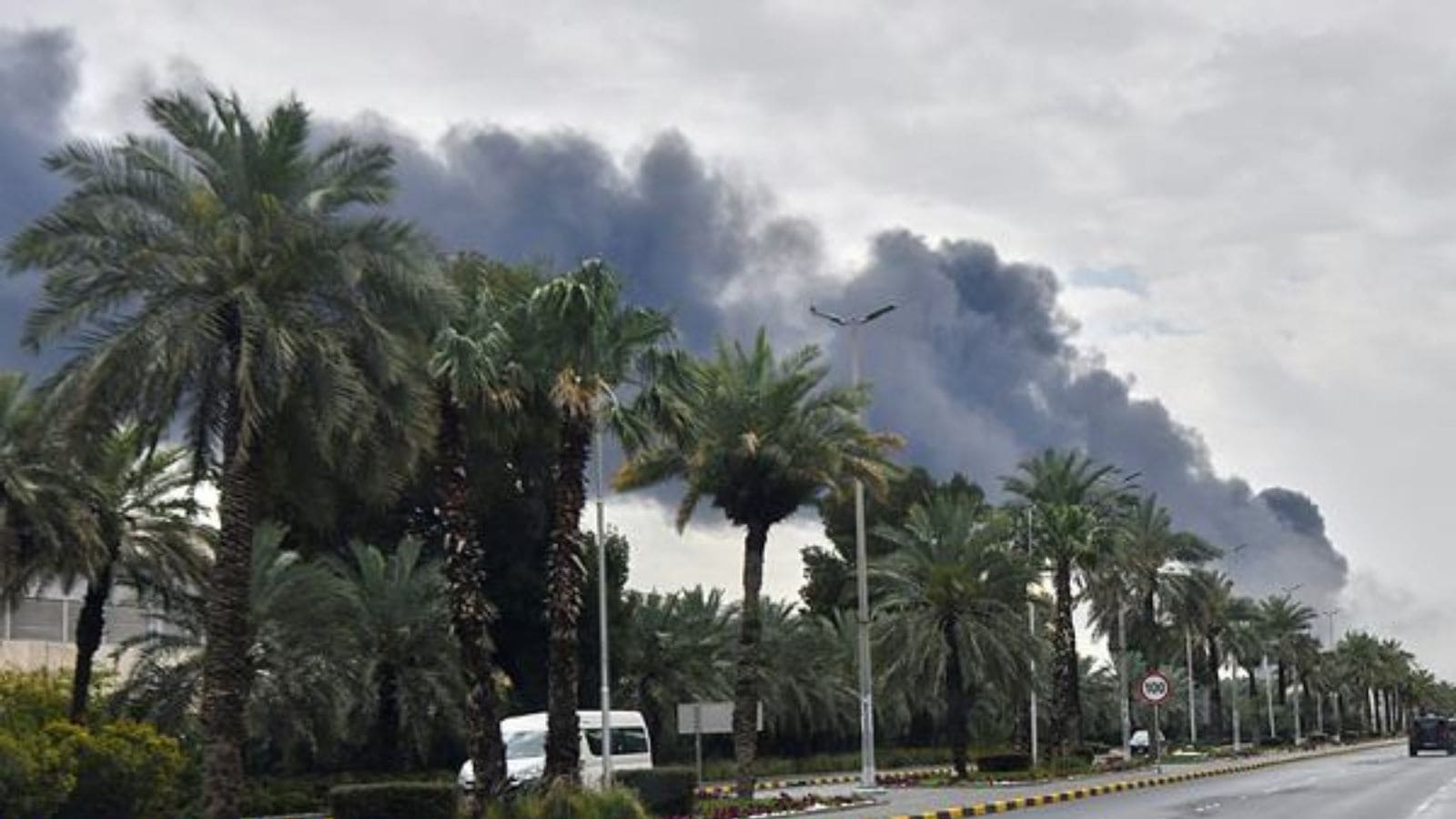
In the glass-and-steel corridors of Dubai, the air conditioning hums with a clinical, indifferent precision. Outside, the heat is a physical weight, but inside the luxury hotels and diplomatic lounges, the atmosphere is dictated by something far more volatile: the breath of a potential war. Everyone here is watching the same tickers. Everyone is reading the same coded cables. The news cycles call it "Live Updates," a phrase that suggests a pulse, but for those living in the shadow of the Levant, it feels more like a countdown.
The latest friction point isn't just a headline about missiles or borders. It is a set of five demands, delivered from Tehran to Washington, etched in the kind of diplomatic ink that carries the scent of gunpowder.
Consider a family in southern Lebanon. They are not "geopolitical assets." They are people who have spent the last decade wondering if the roof over their heads is a permanent shelter or a temporary privilege. When Iran demands a total halt to Israel’s operations against Hezbollah as a condition for regional de-escalation, that family isn't thinking about the "Axis of Resistance" or "Western Hegemony." They are thinking about the silence. They are praying for the kind of silence that doesn’t end in a whistle and a roar.
The Ledger of the Unseen
Diplomacy is often treated like a high-stakes poker game played with chips, but the chips are cities. Iran’s current stance—communicated through backchannels and echoed in the halls of power in the UAE—is a gambit designed to freeze a map that is currently melting. The five conditions laid before the United States aren't just requests. They are an ultimatum wrapped in the language of "stability."
At the heart of these demands is the insistence that Israel must stop its systematic dismantling of Hezbollah's infrastructure. To the strategist in a bunker, this is about "maintaining a deterrent." To the mother in Haifa or the shopkeeper in Beirut, it is about whether the next month belongs to life or to the logistics of burial.
The tension is a taut wire stretched across the Middle East. One end is held by an American administration trying to prevent a total regional collapse before an election cycle. The other is held by an Iranian leadership that knows its primary lever—Hezbollah—is under the most intense pressure it has faced in a generation.
The facts are cold. Israel has intensified its strikes, targeting command centers and senior leaders with a surgical, terrifying frequency. In response, Iran has moved from the shadows to the podium, telling the U.S. that the price of "calm" is the survival of its most potent proxy.
The Language of the Ultimatum
What are these five conditions? On paper, they look like a list. In reality, they are a tightening of the knot.
- An immediate cessation of Israeli strikes in Lebanon. This is the primary pillar. Iran recognizes that a weakened Hezbollah is a weakened Iran.
- A formal guarantee of non-interference. Tehran wants a promise that the Western coalition won't provide the intelligence or hardware necessary for a "final blow."
- Sanctions relief as a gesture of good faith. The economy of the Islamic Republic is a gasping engine; they need the oil to flow to keep the domestic fires from turning into a revolution.
- A seat at the table for the "New Regional Order." This isn't just about Lebanon; it’s about acknowledging Iran as the permanent landlord of the neighborhood.
- The withdrawal of increased U.S. naval assets from the Mediterranean. The presence of those carriers is a physical punctuation mark at the end of every American sentence.
But the real problem lies elsewhere. It’s not in the text of the demands. It’s in the gap between what is said and what is felt. Washington hears "conditions." Israel hears "rearming time." The citizens of Dubai, watching the flight boards at DXB, hear the sound of a closing door.
The Human Cost of a Standoff
We often talk about "geopolitics" because it’s easier than talking about blood. We use words like "escalation" because "the death of a child in a collapsed apartment" is too heavy for a morning briefing.
I remember talking to a journalist who had just returned from the borderlands. He didn't talk about the politics. He talked about the dogs. In the abandoned villages, the pets were the only ones left, wandering through the dust of homes that used to smell like cardamom and laundry. That is the "human element" that gets lost in the five conditions. When Tehran demands a halt to attacks, they aren't just protecting a militia. They are playing for time. And time, in this part of the world, is the only currency that matters.
The U.S. finds itself in a labyrinth of its own making. To reject the demands outright is to invite a broader conflict that could engulf the Gulf, spike oil prices, and drag a weary American public back into a desert war they thought they had left behind. To accept them is to signal to every ally in the region that the red lines are actually drawn in sand, easily shifted by the wind.
The Invisible Stakes
It is a mistake to think this is only about Lebanon. The "Dubai Live Updates" reflect a nervous energy that extends to the boardrooms of the DIFC and the shipping lanes of the Red Sea. If the five conditions aren't met, the threat isn't just a border skirmish. It’s a systemic shock.
Imagine the global supply chain as a delicate watch. A conflict that draws in Iran directly is like dropping that watch onto a concrete floor. The gears—the Strait of Hormuz, the Suez Canal, the tech hubs of Tel Aviv, the oil fields of the Aramco—are all connected. A break in one is a break in all.
The irony of the Iranian demands is that they are framed as a path to peace, yet they require the preservation of a group whose entire existence is predicated on perpetual conflict. It is a paradox. You cannot ask for a fire to stop while insisting on keeping the matches.
The Weight of the Silence
Wait.
Listen to the way the conversation shifts when the cameras are off. In the coffee shops of the Al Fahidi district, the talk isn't about the grand strategy. It’s about the cost of living. It’s about whether the visa rules will change if the "big war" finally starts. It’s about the cousins in Tehran who can’t get medicine because of the sanctions that Iran is trying to trade away.
The five conditions are a mirror. They reflect the vulnerabilities of everyone involved. Iran is vulnerable because its shield is cracking. The U.S. is vulnerable because its patience is thinning. Israel is vulnerable because its security is a disappearing horizon.
There is no "game-changer" here. There are only choices, and most of them are bad. The narrative we are told is one of "negotiation," but the narrative we live is one of endurance. We are all passengers on a ship where the captains are arguing over the map while the hull is taking on water.
The "Dubai Live Updates" will continue. The tickers will scroll. The five conditions will be debated, rejected, modified, and perhaps eventually ignored. But the invisible stakes remain. They are written in the eyes of the people waiting at the airports, the families clutching their phones for a message from across the border, and the silent, heavy heat of a Middle Eastern afternoon that feels like it’s waiting for a storm.
The world is not a map. It is a room full of people holding their breath.
Would you like me to analyze how the specific wording of these Iranian conditions aligns with historical precedents of "freeze-for-freeze" diplomacy in the region?


