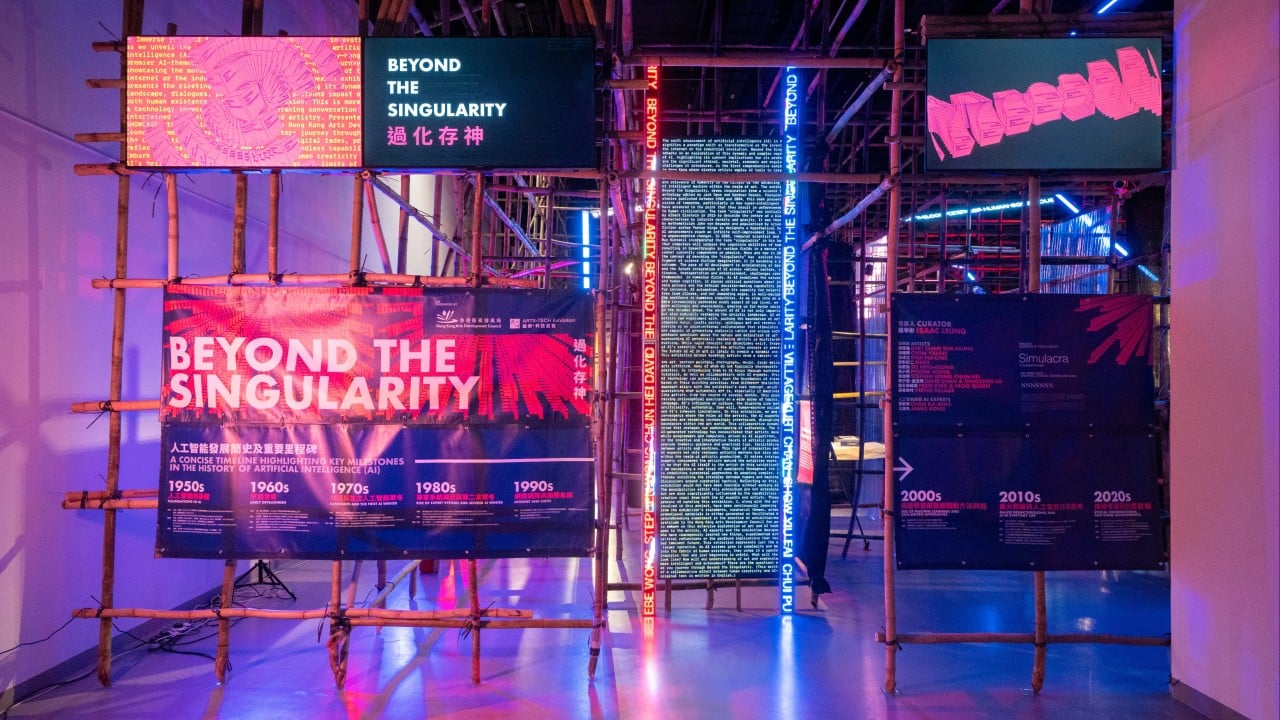
The Hong Kong Arts Development Council (HKADC) has established a three-year budgetary floor by pledging to maintain current funding levels for major arts organizations through 2027. This decision functions as a volatility hedge against the broader contraction in private-sector patronage and shifting audience demographics. By decoupling cultural subsidies from immediate performance metrics or short-term economic fluctuations, the HKADC is attempting to stabilize a creative ecosystem that is currently undergoing a structural transition.
To understand the implications of this fiscal freeze, one must look past the headline of "no cuts" and analyze the underlying mechanics of institutional sustainability in a high-cost urban environment. The "no cut" pledge is not an expansion of resources; it is an exercise in risk mitigation during a period of inflationary pressure.
The Tripartite Framework of Institutional Stability
The decision to freeze funding levels rather than index them to inflation or performance outcomes creates a specific set of operational constraints. This strategy can be deconstructed into three distinct pillars that define the current state of the Hong Kong arts sector.
1. Operational Predictability vs. Purchasing Power Erosion
Financial stability in the arts is rarely about the absolute dollar amount and more about the "planning horizon." Most major theatrical productions or international exhibitions require an 18-to-24-month lead time. By guaranteeing funding through 2027, the HKADC allows organizations to enter long-term contracts for venues, talent, and logistics.
However, the "maintenance" of funding is a de facto budget cut when adjusted for the Consumer Price Index (CPI). If inflation averages 2% annually, an organization receiving the same nominal grant in 2027 as it did in 2024 has effectively lost roughly 6% of its purchasing power. This creates a Structural Margin Squeeze, where fixed costs (rent, utilities, and labor) rise while the primary revenue floor remains static.
2. The Mitigation of "Grant-Seeking Friction"
Bureaucratic overhead is a hidden tax on creative output. When funding cycles are annual or performance-contingent on a micro-scale, leadership teams spend a disproportionate amount of their "human capital" on compliance, reporting, and re-application processes.
A three-year guarantee reduces this friction. It shifts the institutional focus from Survivalist Administration (securing the next check) to Programmatic Development (improving the quality of the output). This is a strategic bet that by removing the immediate threat of insolvency, the HKADC will see a higher "Return on Creativity" from its grantees.
3. Signaling to Private Capital
Public funding in Hong Kong serves as a "Liquidity Signal" to private donors and corporate sponsors. When the government or a quasi-governmental body like the HKADC commits to a three-year term, it de-risks the organization in the eyes of the private sector. A corporate sponsor is more likely to sign a multi-year partnership with an arts group if they know the anchor tenant—the government—is not going to pull out midway through the term.
The Cost Function of Cultural Output
The HKADC’s role is to manage the tension between public utility and artistic excellence. In a data-driven model, the "Value" of an arts organization can be expressed as a function of its reach, its preservation of heritage, and its contribution to the city’s soft power.
The cost of producing this value in Hong Kong is driven by several inelastic variables:
- Space Scarcity: Venue rental and storage for sets/equipment represent a higher percentage of the budget than in almost any other global arts hub.
- Specialized Labor: The technical expertise required for high-end lighting, sound, and stage management is a finite resource. When the commercial sector (concerts, corporate events) recovers, the arts sector must compete for this same talent pool.
- Audience Acquisition: As digital entertainment competes for attention, the "Cost Per Attendee" for physical performances is rising.
By holding funding steady, the HKADC is forcing organizations to optimize their Internal Efficiency Ratios. Since the top-line subsidy is capped, any increase in production quality or scale must come from either a) increased box office revenue or b) operational leanings.
The Risk of Stagnation and the "Incumbent Advantage"
While a three-year pledge provides a safety net for existing players, it inadvertently creates a barrier to entry for emerging groups. This is the Incumbent Lock-in Effect. When the budget is committed to maintaining the status quo for established organizations, there is less "Dry Powder" available to fund disruptive or experimental new entrants.
This creates a bifurcated market:
- The Protected Tier: Established groups with guaranteed three-year lifelines.
- The Gig Tier: Individual artists and small collectives who must compete for the remaining, more volatile pools of project-based funding.
If the HKADC does not find a way to concurrently fund the "bottom-up" innovation while protecting the "top-down" institutions, the ecosystem risks becoming a museum of itself—technically proficient but culturally stagnant.
Measuring Impact Beyond Attendance
The standard metric for "success" in the arts has long been ticket sales. However, this is a flawed KPI for a public agency. If the goal were purely commercial, the government would not need to intervene. The HKADC’s mission implies a "Market Failure" in the arts—the idea that society values these activities more than the individual consumer is willing to pay at the box office.
Therefore, the next three years must be used to develop more sophisticated Impact Metrics:
- Cross-Sector Spillover: How does a vibrant arts scene impact the surrounding retail and F&B ecosystem? (The "Hamilton Effect").
- Educational Integration: The quantifiable impact of arts programming on student engagement and cognitive development in local schools.
- Global Benchmarking: How Hong Kong’s creative output ranks against regional competitors like Singapore or Seoul in terms of international touring and critical recognition.
Strategic Pivot: The Transition to a Mixed-Revenue Model
The "no cuts" pledge should not be viewed as a permanent solution, but as a Transition Window. The message from the HKADC to arts organizations is clear: the safety net is in place, but the floor will not rise.
Organizations that use these three years to diversify their income streams will survive the eventual post-2027 recalibration. Those that treat the grant as a perpetual annuity will find themselves in a fiscal crisis the moment the political or economic climate shifts.
Diversification must move beyond "more donors." It requires exploring:
- Intellectual Property Monetization: Filming live performances for digital distribution or licensing original scripts and compositions.
- Public-Private Partnerships: Moving beyond simple logos on programs to integrated brand collaborations.
- Endowment Building: Transitioning from a "Cash-In, Cash-Out" model to a "Capital Preservation" model.
The strategic play for any Hong Kong arts organization today is to treat the 2024-2027 period as a "Sprint to Sustainability." Use the guaranteed capital to invest in revenue-generating infrastructure—be it a more robust CRM for donor tracking, a professionalized marketing department, or a commercial-grade digital presence. The organizations that thrive will be those that view the HKADC grant not as a salary, but as venture capital intended to build a self-sustaining enterprise.
Wait for the 2027 deadline at your own peril. The smart move is to assume that the current level of support is the peak of the mountain, and the path forward requires a significantly more lean and commercially savvy operational structure.
Strategic Recommendation: Conduct an immediate Structural Audit to identify where the "Inflationary Gap" will hit your organization by Year 3. Identify the exact percentage of your budget that is currently "Unprotected" (exposed to market rate increases) and begin a three-year phase-in of alternative revenue streams to cover that specific delta before the 2027 cycle concludes.
Would you like me to develop a specific template for a Structural Audit that maps these inflationary risks against your current grant allocations?