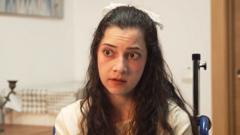
The room was likely silent, save for the rhythmic, mechanical heartbeat of a life sustained by sheer will and legal ink. In a small corner of Spain, a woman named Sandra—known to the courts and the tabloids as a "patient," but to herself as a soul trapped in a failing vessel—finally found the exit she had been searching for. She died. But the tragedy isn't found in her death. The tragedy is the two years it took to get there, a span of time where her own father became the gatekeeper of a prison she never asked to inhabit.
Sandra was 54. She suffered from a neurodegenerative disease that didn't just take her mobility; it took her world. It stripped the colors from the walls and the strength from her lungs. Under Spain’s 2021 euthanasia law, she was the textbook definition of a candidate for a "dignified death." She was conscious. She was suffering. She was certain. Yet, for twenty-four months, her biological reality was secondary to a legal battle that turned her private agony into a public debate.
The conflict wasn't about medicine. It was about ownership.
The Architect of a Delay
Imagine waking up every morning in a body that feels like a tomb. You have the key to the door, and the law of your land says you are allowed to turn it. But someone is holding your wrist. In Sandra’s case, that hand belonged to her father. Driven by a cocktail of paternal grief, religious conviction, and a refusal to let go, he launched a legal crusade to stop her.
He didn't just disagree with her choice; he challenged her capacity to make it. He argued she wasn't in her right mind. He filed injunction after injunction. Every time a medical commission cleared Sandra for the procedure, a new court order would land like a heavy curtain, plunging her back into the waiting game. This is the invisible stake of the euthanasia debate: the terrifying realization that even in your final moments, your autonomy can be hijacked by those who claim to love you most.
The legal system, designed to protect life, often forgets that life is more than a pulse. It is an experience. When a court pauses a euthanasia request to "review the facts," it isn't hitting a pause button on the patient's pain. The pain continues. The degradation accelerates. For Sandra, every legal victory for her father was a fresh sentence of forced existence.
The Weight of the 2021 Law
Spain became one of the few countries in the world to decriminalize euthanasia, joining the ranks of the Netherlands, Belgium, and Canada. The law was celebrated as a triumph for individual liberty. It set strict guardrails: the person must have an "incurable" and "debilitating" condition causing "unbearable suffering."
Sandra met every metric. Multiple doctors signed off. Independent committees reviewed her psychological state. They found a woman who was tired, yes, but remarkably clear-eyed about her departure. She didn't want to die because she was depressed; she wanted to die because her life had already been taken by her nerves and muscles.
But the law has a soft underbelly: the right of family members to intervene. While the legislation prioritizes the patient’s will, the judicial system is often paralyzed by the "precautionary principle." Judges are terrified of making a mistake that cannot be undone. So, they wait. They deliberate. They allow the appeals to climb the ladder from local courts to the High Court of Justice.
During this climb, the patient remains in the hospital bed.
Consider the sheer exhaustion of being a person whose primary occupation is fighting to stop existing. Sandra had to prove, over and over again, that her misery was real. She had to undergo psychiatric evaluations while her body failed her. She had to watch her father, the man who gave her life, transform into the person preventing her from finding peace. It is a specific, modern kind of cruelty.
Beyond the Courtroom Walls
We often talk about these cases in the abstract. We debate the "slippery slope" or the "sanctity of life" in wood-panneled rooms or over coffee. But for Sandra, the "slippery slope" was the wet floor of a bathroom she could no longer navigate. The "sanctity of life" was the sweat on her brow as she struggled to breathe.
There is a fundamental disconnect between the ethics of the healthy and the reality of the terminal. To a healthy observer, another day of life is a gift. To a person in Sandra’s position, another day is a marathon run on broken glass.
Her father’s lawyers argued that euthanasia is an "irreversible act." They are right. It is. But so is a month of agony. You cannot give back the weeks Sandra spent staring at the ceiling, waiting for a judge to decide if her pain was "unbearable" enough. You cannot refund the dignity lost when a private medical decision becomes a battleground for a father’s unresolved trauma.
The Final Verdict
The end didn't come because the father gave up. It came because the legal road finally ran out. The High Court of Justice of Catalonia eventually dismissed the final appeals, ruling that Sandra’s right to self-determination outweighed her father’s objections. The court recognized that "protection of life" cannot be transformed into "obligation of suffering."
When the procedure was finally carried out, it wasn't a murder. It wasn't a defeat. For those who had watched Sandra’s struggle, it was a release.
But we have to ask: what did those two years cost? They cost more than legal fees. They cost the quiet, peaceful exit Sandra had originally requested. By the time she was allowed to die, her story was no longer hers. It belonged to the headlines. It belonged to the activists. It belonged to a legal precedent.
There is a haunting irony in the fact that to exercise her right to a "private" death, Sandra had to become the most public patient in Spain.
She is gone now. The bed is empty. The machines are silent. Her father is left with his grief and the knowledge that he spent his daughter's final years as her adversary. And the rest of us are left with a sobering reality: the law can grant you freedom, but it cannot always protect you from the people who think they know your heart better than you do.
Death is the only thing we truly do alone. Or at least, it should be. Sandra’s legacy isn't the law that allowed her to die, but the shadow it cast on the difficulty of being allowed to leave when the party has long since ended, and the lights have already gone out.
The ink on the death certificate is dry, but the question remains etched into the stone of the courthouse: Who does your life belong to when you no longer want it?


