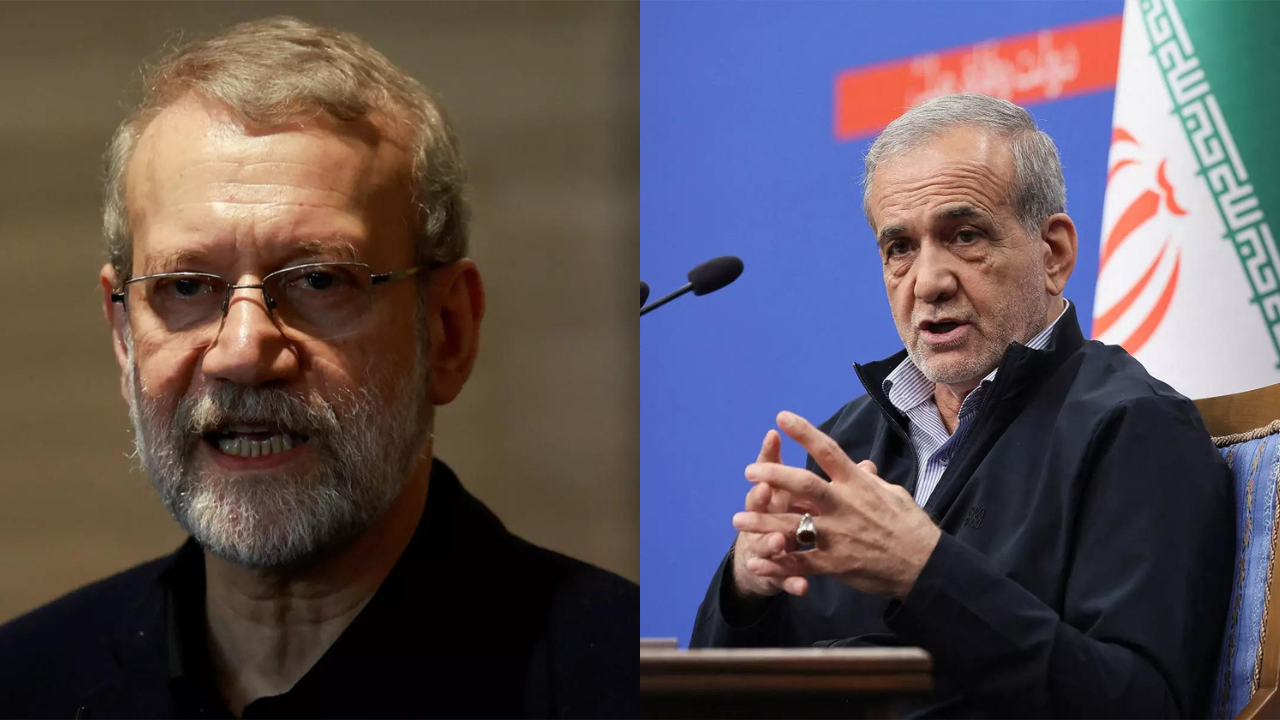
Iran has confirmed the death of Ali Larijani, the long-serving power broker and current Secretary of the Supreme National Security Council, following a targeted Israeli airstrike in Tehran. President Masoud Pezeshkian issued a somber message of condolence on Tuesday, marking the loss of a man who had become the de facto manager of the state’s survival. Larijani was killed alongside his son, Morteza, and several high-ranking security aides in what intelligence sources describe as a "surgical" hit on a safe house. This elimination strips the Islamic Republic of its most experienced crisis navigator at a time when the central command is already fractured by the loss of Supreme Leader Ali Khamenei just weeks ago.
While the official narrative focuses on martyrdom and national resolve, the reality on the ground is far more precarious. Larijani was not just another bureaucrat; he was the connective tissue between the traditional clergy, the military elite, and the diplomatic apparatus. With his removal, the thin line between coordinated defense and total internal fragmentation has effectively vanished.
A Vacuum at the Center of Power
Larijani’s career spanned the entire history of the Islamic Republic, but his final months were his most consequential. Since the escalation of the conflict in early 2026, he had stepped into a role that exceeded his official title. While the new Supreme Leader, Mojtaba Khamenei, remained largely out of the public eye—leading to rampant speculation regarding his health or security—Larijani was the visible face of the regime’s persistence.
He was seen as recently as last week walking through the streets of Tehran during Quds Day rallies. That public appearance was a calculated gamble designed to project stability. Behind the scenes, however, Larijani was reportedly the "mastermind" behind the January 2026 domestic crackdowns, using his deep ties to the Islamic Revolutionary Guard Corps (IRGC) to suppress dissent while simultaneously attempting to manage an increasingly erratic war effort.
His death creates an immediate crisis of succession within the security council. There is no obvious candidate with his specific blend of IRGC credentials and high-level diplomatic experience. Larijani was a philosopher by training, a student of Kant who understood the mechanics of power and the necessity of occasionally speaking the language of his enemies. Without him, the regime’s decision-making process is likely to become more rigid, more reactive, and significantly more dangerous.
The Architecture of the Strike
The operation that killed Larijani suggests a massive breach in the regime’s internal security. According to reports from regional intelligence monitors, the strike hit a residential apartment in Tehran that was not Larijani’s known residence. This was a "ghost" location, a safe house intended for high-stakes coordination meetings.
The precision of the attack indicates that the Israeli Defense Forces (IDF) possessed real-time human intelligence or sophisticated signals data that bypassed the regime’s electronic countermeasures. For a figure as protected as the National Security Chief to be located and eliminated in the heart of the capital sends a chilling message to the remaining leadership: no safe house is truly safe.
This strike occurred alongside the reported killing of Gholamreza Soleimani, the head of the Basij militia. By decapitating both the strategic leadership (Larijani) and the domestic enforcement leadership (Soleimani) in a single window of time, the opposition forces have paralyzed the regime’s ability to synchronize its internal and external fronts.
The Pezeshkian Dilemma
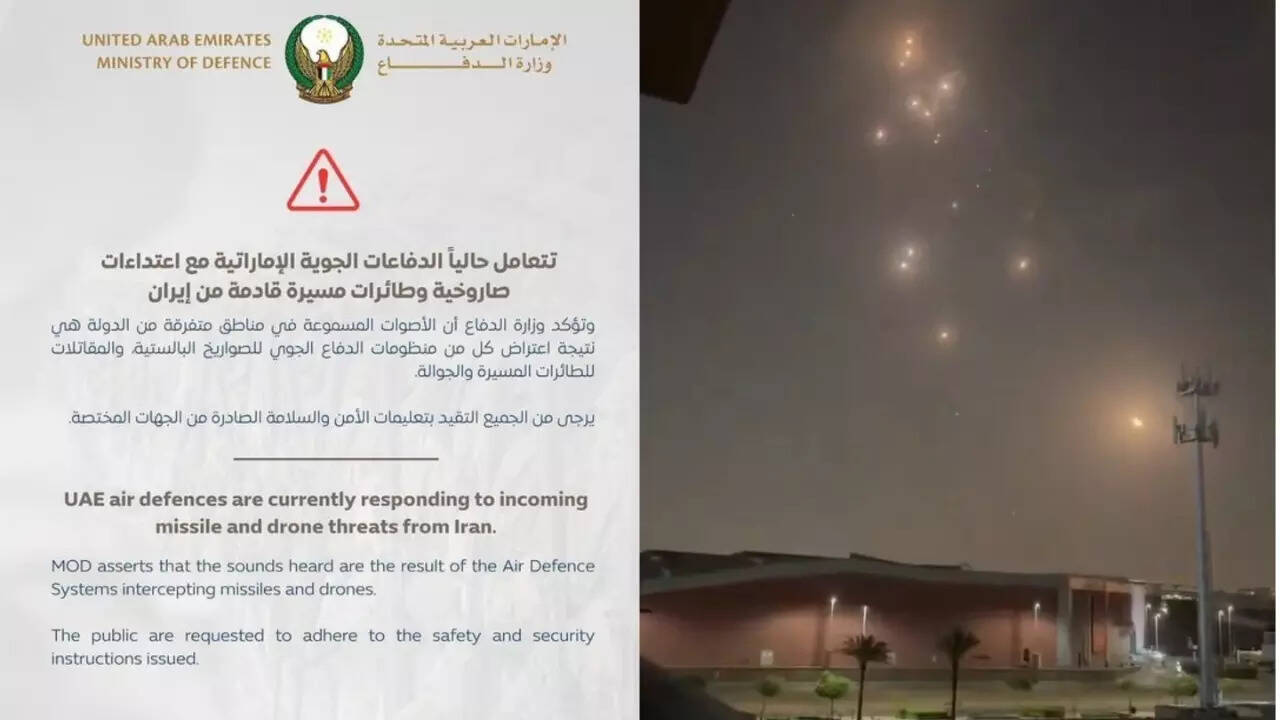
President Masoud Pezeshkian now finds himself in an impossible position. He has spent the last month attempting to project a "good cop" persona to the international community, even offering apologies to neighboring Gulf states for "miscommunications" that led to Iranian strikes on their territory. He has tried to frame the war as a defense of national sovereignty rather than an ideological crusade.
Larijani was Pezeshkian’s most important ally in this balancing act. Although Larijani was a hardliner, he was a pragmatic one. He provided the political cover Pezeshkian needed to keep the IRGC in check while exploring potential diplomatic off-ramps. With Larijani gone, the "civilian" wing of the government has lost its primary bridge to the military.
The IRGC is now likely to exert even greater control over the state's response. In the hours following the confirmation of Larijani’s death, state media tone shifted sharply, focusing on "unforgivable revenge." The pragmatic voices are being drowned out by those who believe that only a massive, asymmetric escalation can restore the regime's shattered deterrence.
Historical Weight of a Dynasty
To understand why this death hits so hard, one must look at the Larijani name. Often referred to as the "Kennedys of Iran," the family has held the levers of the judiciary, the parliament, and the security services for decades. Ali Larijani was the most sophisticated of the brothers, a man who survived multiple political purges because he was simply too useful to discard.
His death marks the end of an era of "managed" Iranian policy. For twenty years, Larijani was the man the West looked to when they wanted to know if a deal was possible. He was the chief nuclear negotiator who knew exactly how much to give and how much to take. His absence means that the West is now dealing with a black box. There is no longer a recognizable "gray zone" in Tehran; there is only the core of the IRGC and a president who is increasingly sidelined by the very generals he is supposed to lead.
The Risk of Fragmentation
The immediate danger is not the collapse of the Iranian state, but its fragmentation. The Islamic Republic is a system built on redundant layers of authority. When the top layer is stripped away, the sub-units—various IRGC commands, local militias, and intelligence branches—often begin to act independently.
We saw the first signs of this after the death of the elder Khamenei, when Iranian units fired "at will" toward neighboring countries. Larijani was the person tasked with reining in that chaos. Without his hand on the wheel, the risk of a catastrophic miscalculation in the Strait of Hormuz or against regional US assets increases exponentially.
The regime has proven its ability to absorb losses in the past, but it has never faced a sequence of assassinations this high-level, this fast, and this accurate. The "sweet grace of martyrdom" mentioned in the official statement is a religious comfort, but it offers no solution to the cold, hard reality of a disappearing command structure.
Tehran is now a city of shadows and safe houses, governed by a council of men who are watching their colleagues vanish one by one. The death of Ali Larijani isn't just a headline about a fallen official; it is the loudest signal yet that the old guard has no shield left.
Would you like me to analyze the potential successors for the Secretary of the Supreme National Security Council?