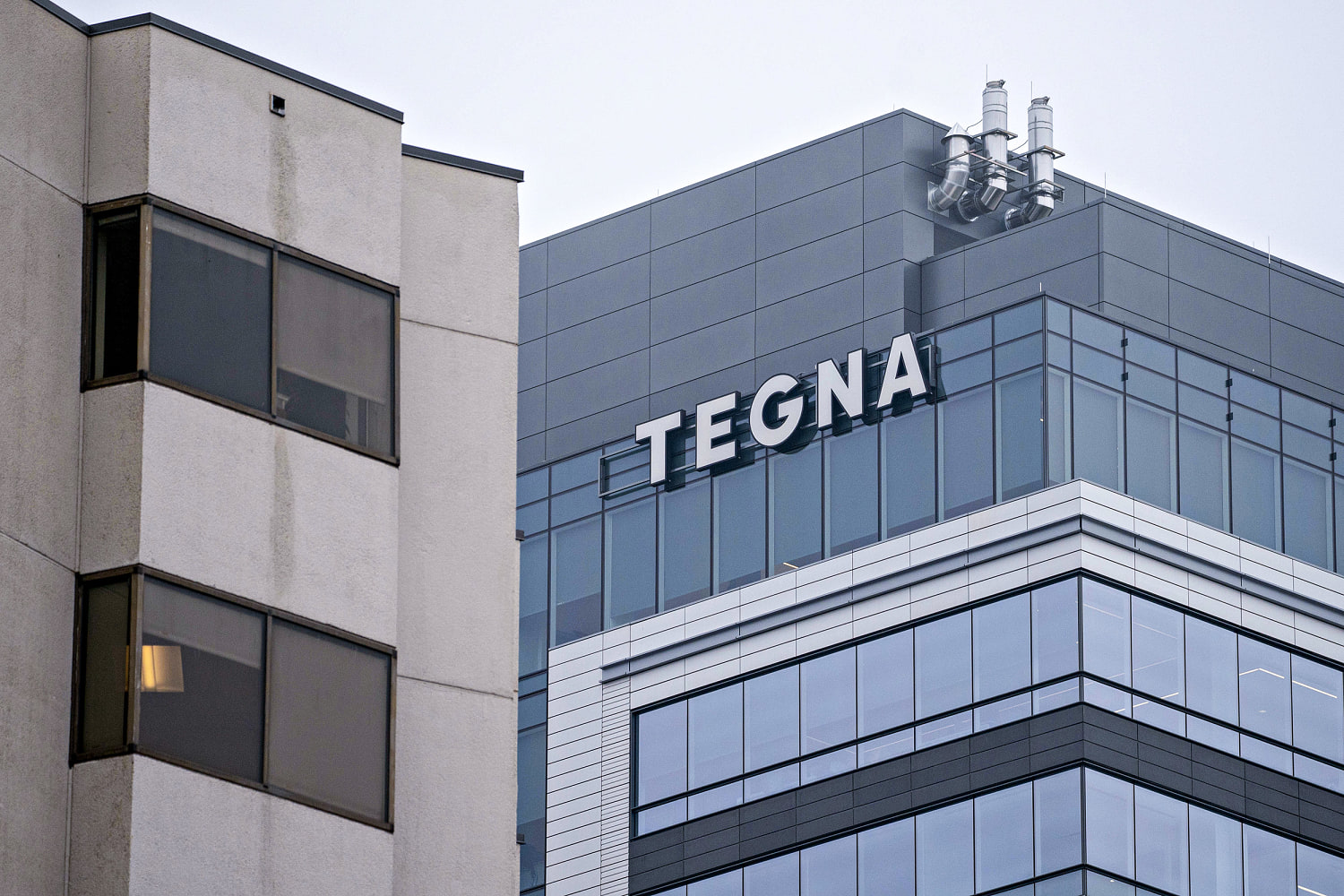
The judicial halt of the proposed merger between Nexstar Media Group and Tegna represents more than a temporary pause in corporate paperwork. It is a fundamental signal that the era of unchecked local television consolidation has hit a legal and regulatory wall. For years, these companies operated on the assumption that regional monopolies were the only way to survive the rise of streaming. This week, a federal judge disagreed. By blocking the union, the court protected local news competition and signaled that the FCC’s ownership caps are not mere suggestions.
The logic behind the merger was simple, if predatory. Nexstar, already the largest owner of local television stations in the United States, sought to swallow Tegna to create a broadcasting behemoth with unprecedented control over local advertising and retransmission consent fees. If you own the majority of the newsrooms in a single market, you dictate the price cable companies pay to carry those channels. Those costs are invariably passed down to the consumer.
The Fiction of Efficiency
Corporate leaders often mask these deals in the language of "operational efficiencies." They argue that merging allows for better investment in local journalism and more sophisticated technology. The reality in the newsroom is usually the opposite. When two major station groups merge, the result is almost always a "hub-and-spoke" model where one central office produces content for multiple cities.
This gutting of local newsrooms is the silent casualty of the Nexstar-Tegna ambitions. Investigative teams are expensive. Local reporters who know the specific history of a city council’s corruption are expensive. It is much cheaper to have a single anchor in a studio five states away read the same script for ten different markets. The court's intervention stops this specific brand of cultural erosion, at least for the current fiscal cycle.
The Retransmission Shakedown
To understand the gravity of this paused merger, one must look at retransmission consent fees. These are the payments that cable and satellite providers—like Comcast or DirecTV—pay to broadcasters to carry their local signals.
Over the last decade, these fees have skyrocketed. In 2010, they were a negligible part of a station's balance sheet. Today, they are a primary driver of revenue. Nexstar has been particularly aggressive in these negotiations, often leading to prolonged "blackouts" where viewers lose access to their local news and NFL games because the broadcaster and the cable company are fighting over pennies per subscriber.
A combined Nexstar-Tegna entity would have held the keys to nearly 40% of American households. That is a terrifying amount of leverage. If a single company can threaten to pull the local news for nearly half the country, the cable providers have no choice but to pay. The consumer, who is already struggling with a $200 monthly bill, sees another "broadcast fee" hike. The judge’s decision to pause the merger effectively keeps these fees from hitting a vertical spike.
The Shell Game of Ownership Caps
Nexstar has a history of navigating around FCC ownership limits using what the industry calls Joint Sales Agreements (JSAs) or Shared Services Agreements (SSAs). This is a legal shell game. A company "sells" a station to a shell corporation—often owned by a business partner or a close associate—but Nexstar continues to run the station’s advertising, hiring, and daily operations.
In the eyes of the law, they are two separate companies. In the eyes of the employees and the advertisers, it is a single monopoly. This merger was seen as the ultimate test of whether these "sidecar" deals would continue to be tolerated. The pause suggests that the regulatory appetite for these loopholes is vanishing. The court is finally looking past the paperwork and seeing the concentration of power for what it is.
Wall Street vs Main Street
The reaction from investors was swift and predictable. Tegna’s stock price took a hit, reflecting the market's realization that the payday for shareholders is no longer a certainty. Nexstar’s aggressive growth strategy is now under the microscope. If they cannot grow through massive acquisitions, they have to grow through innovation—something the local broadcast industry hasn't prioritized in twenty years.
For the journalists working in these newsrooms, the pause is a momentary reprieve. Merger integration is usually a polite term for layoffs. When two companies merge, you don't need two HR departments, two legal teams, or two sets of investigative reporters. You cut until the bone shows. The judicial intervention hasn't just saved a few billion dollars in corporate value; it has likely saved thousands of jobs in cities like Austin, Seattle, and Washington D.C.
The Ghost of Sinclair
The shadow of the failed Sinclair-Tribune merger hangs heavy over this case. In that instance, Sinclair’s arrogance and refusal to divest stations led to the deal's collapse and a massive fine. Nexstar attempted a more surgical approach, promising to sell off specific stations to remain under the 39% national audience reach cap.
However, the skepticism remains. How do you measure "reach" in a world where everyone is watching on mobile devices? The math used by the FCC is outdated, often relying on "UHF discounts" that don't reflect how modern digital signals actually work. The judge's decision to pause indicates a need for a modern accounting of what a media monopoly looks like in 2026.
The Advertising Squeeze
Local businesses are the ones who feel the pinch of these mergers first. If you are a local car dealership or a law firm, you rely on local TV spots to reach your community. When one company owns the top two stations in town, your bargaining power evaporates. You pay their price or you don't get on the air.
By preventing Nexstar from absorbing Tegna’s inventory, the court is maintaining a semblance of a free market in local advertising. This isn't just about television; it's about the economic health of local business ecosystems that depend on competitive rates to survive.
The Future of the Station Model
The broadcast industry is at a crossroads. Cord-cutting is accelerating. The median age of a local news viewer is climbing every year. The "merge or die" mentality is driven by a fear that individual stations are no longer viable on their own.
But if the only way to survive is to become a monolithic entity that ignores local needs, perhaps the model itself is broken. This court case forces a conversation that the industry has avoided for a decade: how do you provide local value without needing to own half the country? The pause on Nexstar and Tegna isn't the end of the story, but it is the beginning of a new, much more difficult chapter for the giants of the airwaves.
Companies can no longer rely on the FCC to rubber-stamp their expansion plans under the guise of "strengthening the industry." The burden of proof has shifted. Now, the broadcasters must prove that their deals actually benefit the public, rather than just the executive suite.
The next time you see a "blackout" message on your screen during a contract dispute, remember this merger. The fight for your screen is really a fight for the data, the dollars, and the very definition of what it means to be a "local" station. The court has decided that, for now, "local" still has to mean something.