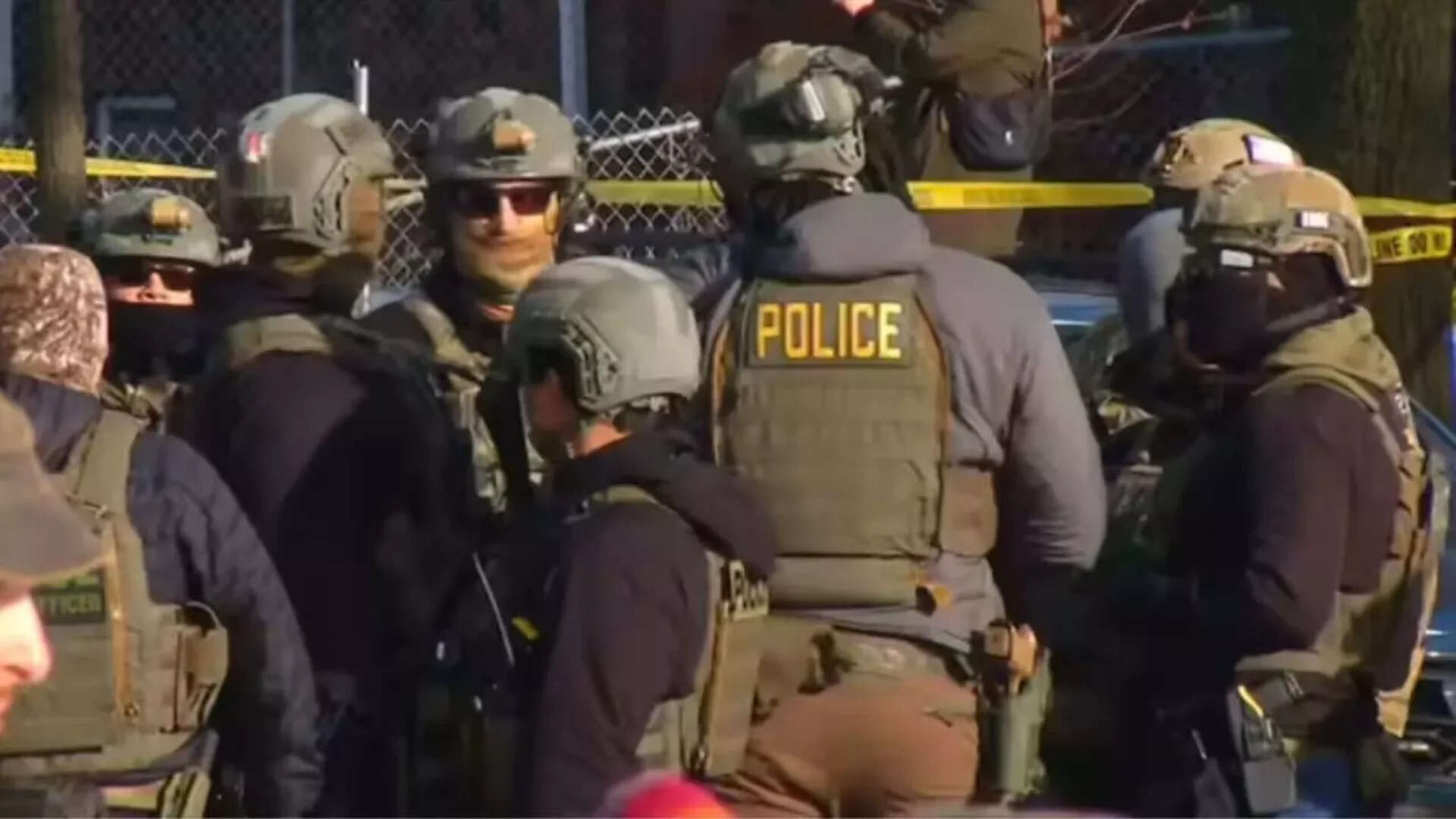
The Department of Justice has dramatically expanded its prosecution of the activists involved in the chaotic demonstration at a Minneapolis-area church, bringing the total number of defendants to 30. This wave of indictments signals a hardline shift in how federal authorities handle protests that cross the threshold of private religious property. While the initial arrests focused on the immediate scuffle between demonstrators and ICE-contracted security, these new charges target the logistical spine of the operation. Prosecutors are no longer just looking at who threw a punch; they are looking at who planned the breach of a sanctuary.
The core of the government's argument rests on a simple, ancient principle. You cannot turn a house of worship into a battlefield, regardless of your political grievances.
The Breaking Point in Minnesota
For months, the tension between immigration activists and federal enforcement agencies had been simmering across the Twin Cities. But the specific incident that triggered this massive DOJ response occurred when a group of protesters attempted to disrupt what they believed was a private meeting of immigration officials held inside a local church. What started as a picket line quickly dissolved into a physical confrontation.
Video evidence from the scene shows a coordinated effort to bypass security. Masked individuals used umbrellas to shield their faces from cameras—a tactic now frequently cited in the indictments as evidence of "conspiratorial intent." This wasn't a spontaneous outburst of anger. It was a tactical maneuver. The DOJ’s decision to pursue 30 individuals suggests they have successfully flipped witnesses or gained access to encrypted communications that map out the hierarchy of the group.
The Weaponization of Trespassing
In typical protest cases, local police issue citations for trespassing or disturbing the peace. Those are often dropped or settled with community service. This is different. By bringing federal charges, the DOJ is utilizing statutes that carry significant prison time and heavy fines. They are effectively raising the "cost of doing business" for radical activist groups.
The indictments detail a series of actions that go beyond simple dissent.
- Physical Obstruction: Blockading entrances to prevent clergy and congregants from moving freely.
- Assaulting Federal Officers: Any contact made with contract security working under federal mandates is being treated as an attack on the government itself.
- Conspiracy to Riot: The heavy hitter in the charging documents, used to link individuals who may not have been violent themselves but provided the "scouts" or "lookouts" for those who were.
This legal strategy reflects a broader trend of federal intervention in local civil unrest. When the state or city fails to maintain order on private property, the feds are stepping in to provide the muscle. It’s a message to local municipalities as much as it is to the protesters: if you won't enforce the law, we will.
The Sanctuary Argument
The defense teams for the Minnesota 30 are expected to lean heavily on the "Sanctuary" tradition. They argue that churches have historically been spaces for political refuge and that the presence of ICE-affiliated personnel within those walls was a provocation that violated the sanctity of the space. To the activists, they weren't attacking a church; they were defending it from perceived state overreach.
However, the DOJ has anticipated this. The charging documents meticulously separate the religious identity of the building from the illegal actions of the defendants. The prosecution isn't arguing against the right to protest ICE. They are arguing that the moment a foot crosses a private threshold against the will of the owner, the First Amendment protection ends. It is a cold, clinical application of property law that ignores the emotional weight of the "sanctuary" label.
Follow the Money and the Metadata
One of the most revealing aspects of this case is the sheer volume of digital evidence. The FBI didn't just rely on bodycam footage. They subpoenaed travel records, Venmo transactions for "protest supplies," and cell tower pings. This level of investigative depth is usually reserved for organized crime or high-level drug trafficking.
It reveals a new reality for modern activism. There is no such thing as an anonymous protest in the age of the smartphone. Every "like" on a planning post and every shared location pin is a breadcrumb leading straight to a federal grand jury. The Minnesota 30 are finding out that the digital trail is far more permanent than the spray paint on the church walls.
The Pressure on Local Leaders
This federal surge puts Minnesota’s local leadership in a precarious position. For years, city officials in Minneapolis have tried to balance a progressive stance on immigration with the need for public safety. By bypassing local prosecutors, the DOJ has taken the decision out of their hands. This creates a friction point between state and federal authorities.
Local police departments often find themselves caught in the middle. They are tasked with maintaining the peace during the event, but they are also the ones who have to live in the community after the federal agents leave. When the DOJ moves in with 30 indictments, it changes the chemistry of the neighborhood. It hardens the lines between the "law and order" crowd and the social justice movements.
Examining the Counter Argument
Critics of the DOJ's move point to the "chilling effect" this has on legitimate speech. If every protest carries the risk of a federal conspiracy charge, will people still show up? There is a legitimate fear that the government is overreaching to make an example of these individuals. They argue that 30 indictments for a single afternoon of chaos is an intentional display of overwhelming force designed to decapitate the local activist leadership.
But the counter-argument from the legal community is just as firm. If you allow groups to dictate who can and cannot enter a private building through physical force, you have abandoned the rule of law. The identity of the protesters—and the popularity of their cause—should be irrelevant to the application of the law. If a group of right-wing activists had stormed a mosque to protest a speaker, the DOJ would likely use the exact same playbook.
Beyond the Twin Cities
What happens in Minnesota will serve as the blueprint for the next two years of federal law enforcement. We are seeing a shift away from the "hands-off" approach that defined much of the early 2020s. The DOJ is no longer content to let local DA's handle the fallout of high-profile civil unrest.
This case is a warning shot to activist organizations across the country. The "black bloc" tactics—the masks, the umbrellas, the coordinated movements—are no longer seen by the FBI as a nuisance. They are seen as evidence of a criminal enterprise. The 30 defendants in Minnesota are the test case for whether these charges will hold up in front of a jury.
The focus now shifts to the pre-trial motions. Defense attorneys will likely move to dismiss based on selective prosecution, arguing that other, similar protests haven't faced this level of federal scrutiny. They will face an uphill battle. The DOJ’s paperwork is tight, focused on the specific mechanics of the breach and the physical harm caused to the security staff.
The reality of the situation is that the legal landscape for protest has fundamentally changed. The era of the "slap on the wrist" for trespassing on federal or sensitive private property is over.
If you are planning to organize or participate in a high-stakes demonstration, your first call should no longer be to a printer for signs; it should be to a defense attorney who understands federal conspiracy law.
Ask your legal counsel how the "common plan" doctrine applies to your specific organizational structure before you set foot on the street.