The Santa Ana winds usually arrive with a certain predictable violence. They are the "red winds," the ones that Joan Didion famously claimed made the city uneasy, drying out the nerves until every interaction felt like a match scraping against sandpaper. But this past February, the heat didn't arrive with a scream. It arrived with a deceptive, sun-drenched shrug.
By midday in Downtown Los Angeles, the digital thermometers over the bank buildings began a slow, rhythmic climb. 82 degrees. 85 degrees. 89 degrees. By the time the mercury hit 90, the record books weren't just being consulted; they were being rewritten in real-time.
We are used to the idea of seasons as rigid containers. Winter is for sweaters. February is for rain, or at least the grey, "June Gloom" precursor that keeps the hillsides from turning into tinder by April. When that container breaks, the initial feeling isn't dread. It is a strange, misplaced euphoria.
The Short Sleeve Mirage
Consider a hypothetical barista named Elena, working a shift in Santa Monica. She woke up expecting to pull on a hoodie. Instead, she found herself hunting for a tank top she’d packed away in a plastic bin labeled Summer.
On the surface, Elena’s day is better because of the heat wave. The boardwalk is packed. The light has that golden, cinematic quality that makes everyone look like a movie star. She sells more iced lattes than hot ones. The air smells like salt and expensive sunblock. It feels like a gift. It feels like we’ve cheated the system.
But beneath the tan lines, something is wrong.
The heat wave that gripped Southern California at the tail end of winter wasn't just a "warm spell." It was a statistical anomaly that saw temperatures spike 15 to 20 degrees above the seasonal average. In places like Burbank and Riverside, the heat didn't just break records; it shattered them, peaking at levels usually reserved for the dog days of July.
The problem with a 90-degree day in February is that the earth isn't ready for it.
The Memory of Water
To understand the stakes, you have to look at the soil.
In a standard California winter, the ground acts as a sponge. The cool air allows moisture from occasional rains to sink deep, nourishing the roots of the chaparral and the majestic oaks that define the canyons. This moisture is the only thing standing between a vibrant hillside and a catastrophic fire season.
When a record-breaking heat wave hits in the middle of this "recharging" period, the process reverses. The atmosphere becomes a giant vacuum. It sucks the moisture out of the topsoil and the vegetation before it has a chance to settle.
Botanists call this "vapor pressure deficit." It sounds technical, but for the plants, it’s a desperate, thirsty gasping. The plants shut down their pores to save water, which means they stop growing. They enter a state of stress when they should be in a state of renewal.
We see a beautiful, sunny day. The hills see a countdown.
The Human Cost of the "Perfect" Day
While the beachgoers are celebrating, the city's infrastructure is quietly straining under the weight of an unseasonable demand.
Our bodies are calibrated to the rhythm of the year. In February, our hearts and circulatory systems aren't "heat-acclimated." This is a physiological reality. When a heat wave hits in August, we’ve had months to adjust. When it hits in the middle of winter, the ERs see a different kind of patient.
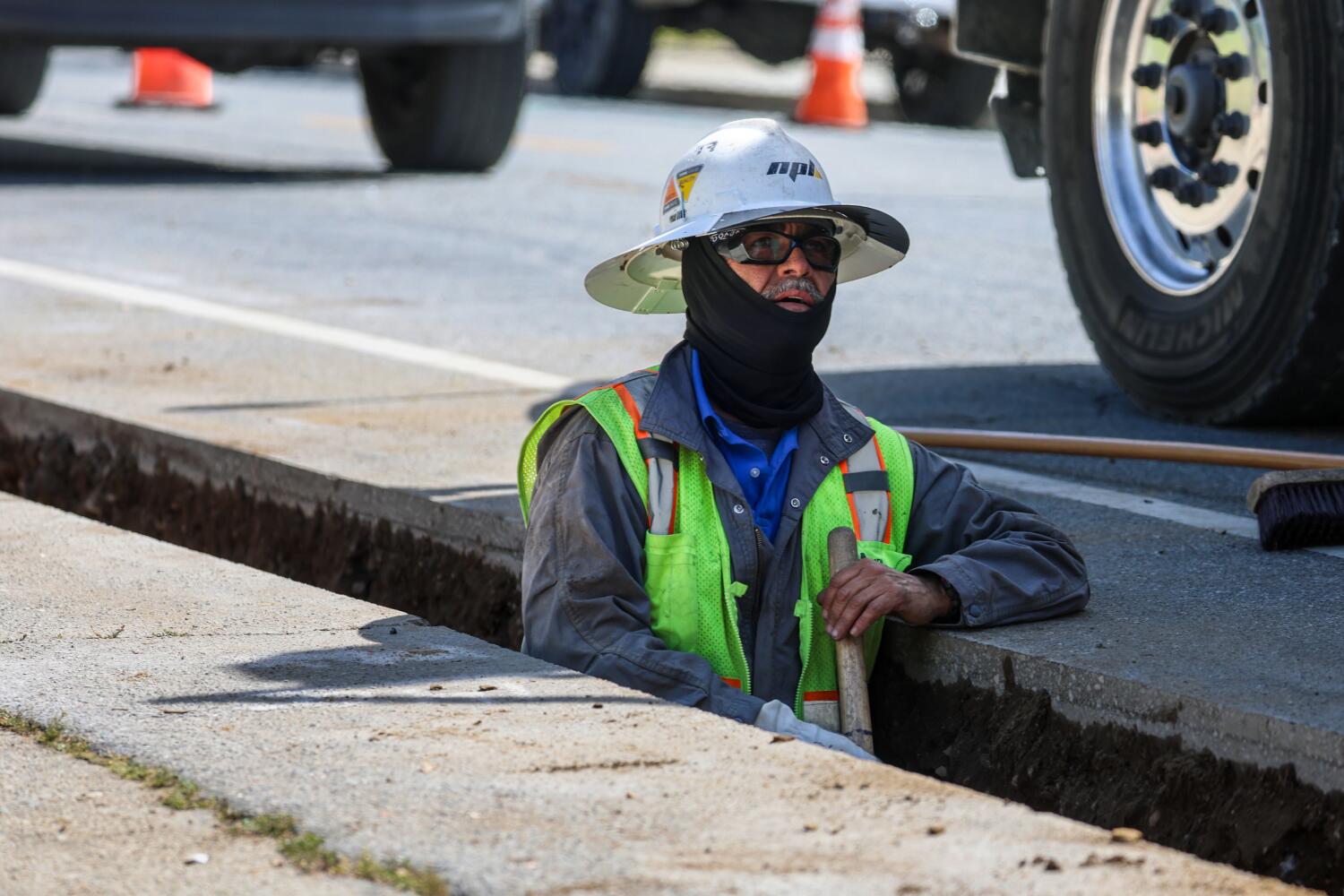
It’s the elderly man who went for his usual walk, forgetting that 88 degrees in the sun hits differently when your body thinks it’s still winter. It’s the construction worker who didn't pack enough water because the morning news said "clear skies," a phrase we’ve been trained to associate with safety rather than a threat.
There is also the psychological displacement. There is a specific kind of "climate anxiety" that stems from the loss of seasonal cues. When you can’t rely on the calendar to tell you what the world looks like, the world starts to feel untethered. The "eternal summer" of Los Angeles, once its greatest selling point, starts to feel like a gilded cage.
Why This Time Was Different
Meteorologically, this wasn't just a random spike. It was the result of a high-pressure ridge that parked itself over the Great Basin, acting like a lid on a pot.
This ridge blocked the polar jet stream, pushing the cool, moist air far to the north and leaving the Southland to simmer in its own juices. While the East Coast was shivering through standard winter storms, the West was experiencing a preview of a future that is becoming increasingly regular.
We often talk about "global warming" as a slow, linear rise—a steady climb of a few degrees over decades. But that isn't how we experience it. We experience it through these "events." These jagged spikes in the graph. These weeks where the seasons go missing.
The data shows that these winter heat waves are becoming longer and more frequent. What used to be a "once in a century" February scorcher is now happening every few years. The records don't just stand for decades anymore; they are toppled like dominoes.
The Invisible Stakes
The real danger of a record-breaking winter heat wave isn't the heat itself. It’s what the heat leaves behind.
By the time the temperatures finally dipped back into the 70s, the damage was done. The mountain snowpack—California’s "frozen reservoir"—had taken a hit. When it’s 90 degrees in the valleys, the freezing level in the Sierras climbs. Instead of snow falling and staying put, we get rain that washes away the existing pack or a premature melt that sends water rushing into the ocean before we have the capacity to store it.
We are living in a time of "weather whiplash."
We swing from extreme drought to atmospheric rivers, and then, in the middle of what should be our wettest months, we get a week of July. This volatility is the new baseline. It’s a transition from a climate we understood to one we are learning to fear.
The Evening Chill
As the sun finally sets over the Pacific, the heat begins to bleed out of the asphalt. The Santa Monica pier glows in the twilight. If you walked down the street right now, you would see people lingering outside, reluctant to let the "perfect" day end.
They are laughing. They are taking photos of a sunset that looks like a painting of an apocalypse—all deep violets and bruised oranges, colored by the dust and the dryness of the air.
It is easy to be seduced by the warmth. It is easy to forget that a winter without a winter is a debt that eventually comes due.
The record-breaking heat of this past February wasn't a fluke of nature. It was a message. It was the Earth telling us that the boundaries we’ve relied on for centuries are dissolving. We are moving into a season that doesn't have a name yet, a time where the "red winds" might never truly stop blowing, and the sweaters stay in their plastic bins until they are eventually forgotten.
Elena the barista closes up her shop. She walks to her car in the dark, the air still uncomfortably warm against her skin. She looks up at the palm trees, silhouetted against a sky that should be pouring rain, and for the first time in her life, the sunshine feels heavy.
The record wasn't just broken. The rhythm was.