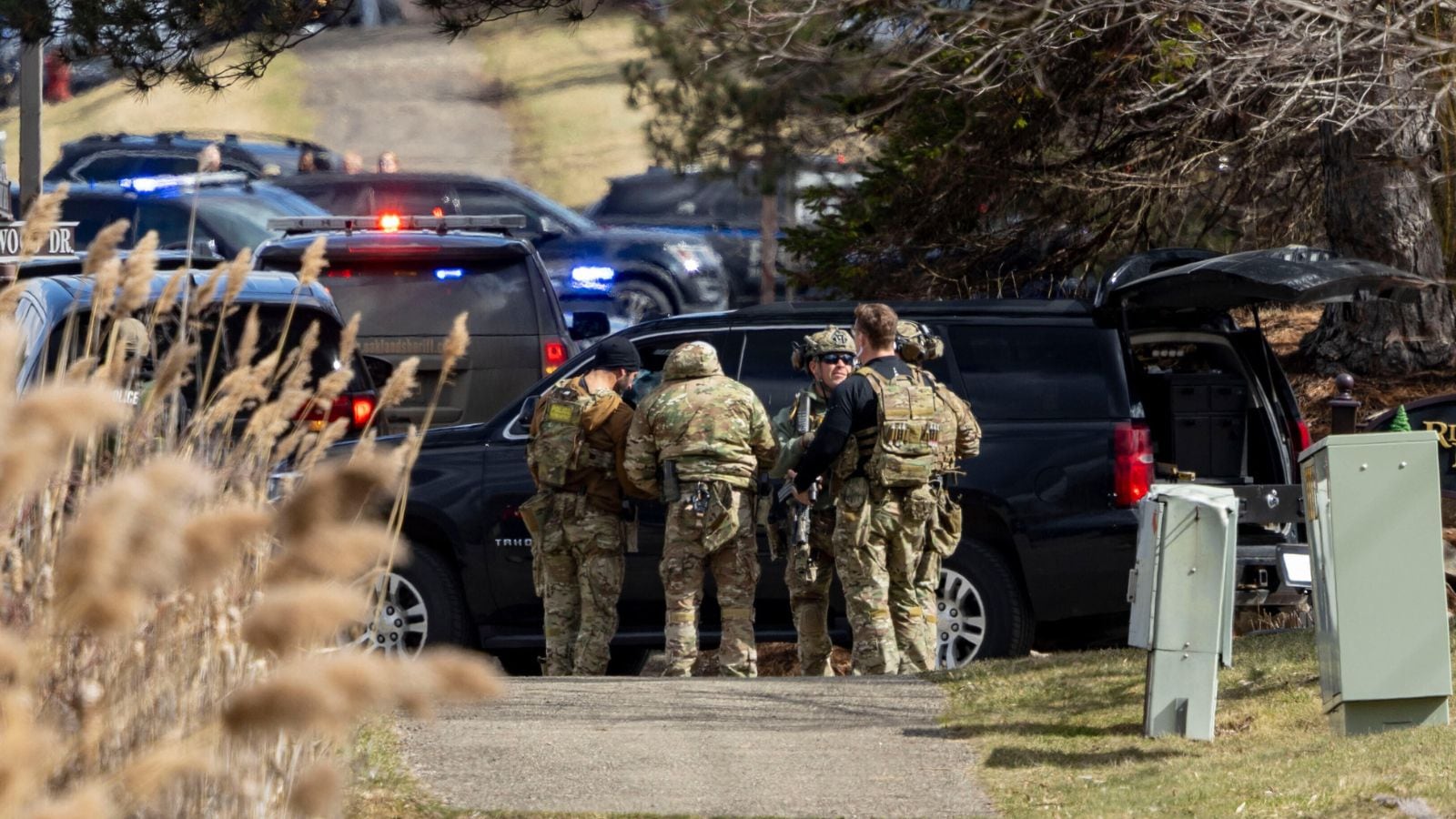
The Federal Bureau of Investigation doesn't throw around words like "targeted act of violence" just to fill a press release. When a vehicle slammed into a Michigan synagogue, the immediate chaos of the scene was quickly replaced by a much heavier realization. This wasn't just a traffic accident or a driver losing control in a moment of medical distress. It was a deliberate strike.
If you've been following the rise in antisemitic incidents across the United States, this news feels like another grim milestone. Law enforcement officials in Michigan, working alongside federal agents, have made it clear that the evidence points toward a specific intent to harm the Jewish community. It's a wake-up call that local incidents often carry the weight of national trends.
The Shift From Local Crime to Federal Investigation
When a car hits a building, local police usually handle the report. Maybe it’s a DUI or a reckless driver. But the moment the FBI steps in, the math changes. They aren't looking at brake marks; they're looking at digital footprints, manifestos, and prior threats. In the case of this Michigan synagogue, the transition from a "crash" to a "targeted act" happened because investigators found proof of premeditation.
Security footage often tells part of the story, but the "why" usually lives in the suspect’s pocket. Agents look for encrypted messages or social media rants that turn a bad day into a hate crime. You don't just accidentally end up inside a house of worship with your gas pedal floored. The FBI’s involvement signifies that this threat might not be isolated to one zip code. They're tracking whether this individual acted alone or was spurred on by a broader network of radicalized rhetoric.
What Targeted Act of Violence Actually Means in Court
Labeling something a "targeted act of violence" isn't just a descriptive phrase. It has massive legal teeth. In a standard assault or property damage case, the prosecution just has to prove you did the thing. When you add the "targeted" element against a specific group, you're entering the territory of hate crime enhancements.
This matters because it changes the sentencing guidelines. It turns a few years in state prison into a decade or more in a federal facility. It also sends a message to the community. When the government calls it what it is, they're validating the fear felt by the congregants. They're saying, "We see that you were hunted, and we're going to prosecute it with that specific context in mind."
The Pattern of Modern Antisemitism
We can't look at Michigan in a vacuum. The Anti-Defamation League has been sounding the alarm for years about the spike in physical assaults and harassment. What makes the synagogue crash particularly terrifying is the use of a vehicle as a weapon. It’s low-tech, hard to prevent, and high-impact. It doesn't require a background check or a waiting period. It just requires a steering wheel and a hateful ideology.
For the people inside that building, the walls that were supposed to be a sanctuary became a trap. That's the psychological goal of targeted violence. It’s not just about the physical damage to the brick and mortar. It’s about making a group of people feel like they're never truly safe, even when they're praying.
How Communities Build Resilience After a Strike
You might think the reaction to a targeted attack is to hide. Honestly, that’s what the perpetrator wants. But what we've seen in Michigan—and in Pittsburgh and Poway before it—is a different reflex. Communities usually double down on visibility. They hold vigils. They invite their neighbors in.
Security is the other side of that coin. Synagogues across the country are now functioning like high-security facilities. It’s a sad reality, but it’s the practical one. We're talking about bullet-resistant glass, armed guards, and specialized training for "stop the bleed" scenarios. Most religious organizations now have to hire security consultants who are former Mossad or FBI agents. It’s a massive financial burden on top of the emotional one.
Identifying the Signs Before the Crash
Preventing these acts is the real challenge. The FBI often talks about "left of bang"—the timeline before an event occurs. Most attackers don't go from zero to "ramming a building" overnight. There’s a pathway to violence. It starts with grievance, moves to radicalization, and ends with planning.
- Flashpoint Rhetoric: Watch for individuals who move from general political anger to specific, dehumanizing language about a particular group.
- Invasive Interest: People who suddenly start asking odd questions about building layouts or service times without being members.
- Sudden Isolation: Many perpetrators cut off normal social ties as they descend into extremist rabbit holes online.
Taking Personal and Communal Action
If you're wondering what you're supposed to do with this information, start by looking at your own circles. Silence is often interpreted as permission by those on the edge of radicalization. When you hear "targeted act of violence," don't just check the news and move on.
Support local interfaith initiatives. These aren't just feel-good meetings; they're essential intelligence networks. When different communities talk to each other, they share information about threats that might otherwise go unnoticed. If a suspicious person is hanging around a mosque one week and a synagogue the next, that's a pattern local police need to know about immediately.
Advocate for increased federal funding for the Nonprofit Security Grant Program (NSGP). This is the money that helps houses of worship install those bollards and cameras. It’s often the only way smaller congregations can afford to protect themselves. Don't wait for a tragedy in your own town to realize that security isn't a luxury—it's a necessity in 2026.
Check in on your Jewish friends and neighbors. They're likely exhausted by the constant stream of these headlines. A simple "I'm thinking of you" goes further than you think in breaking the sense of isolation that targeted violence aims to create. Be the person who refuses to let hate become the background noise of your community.