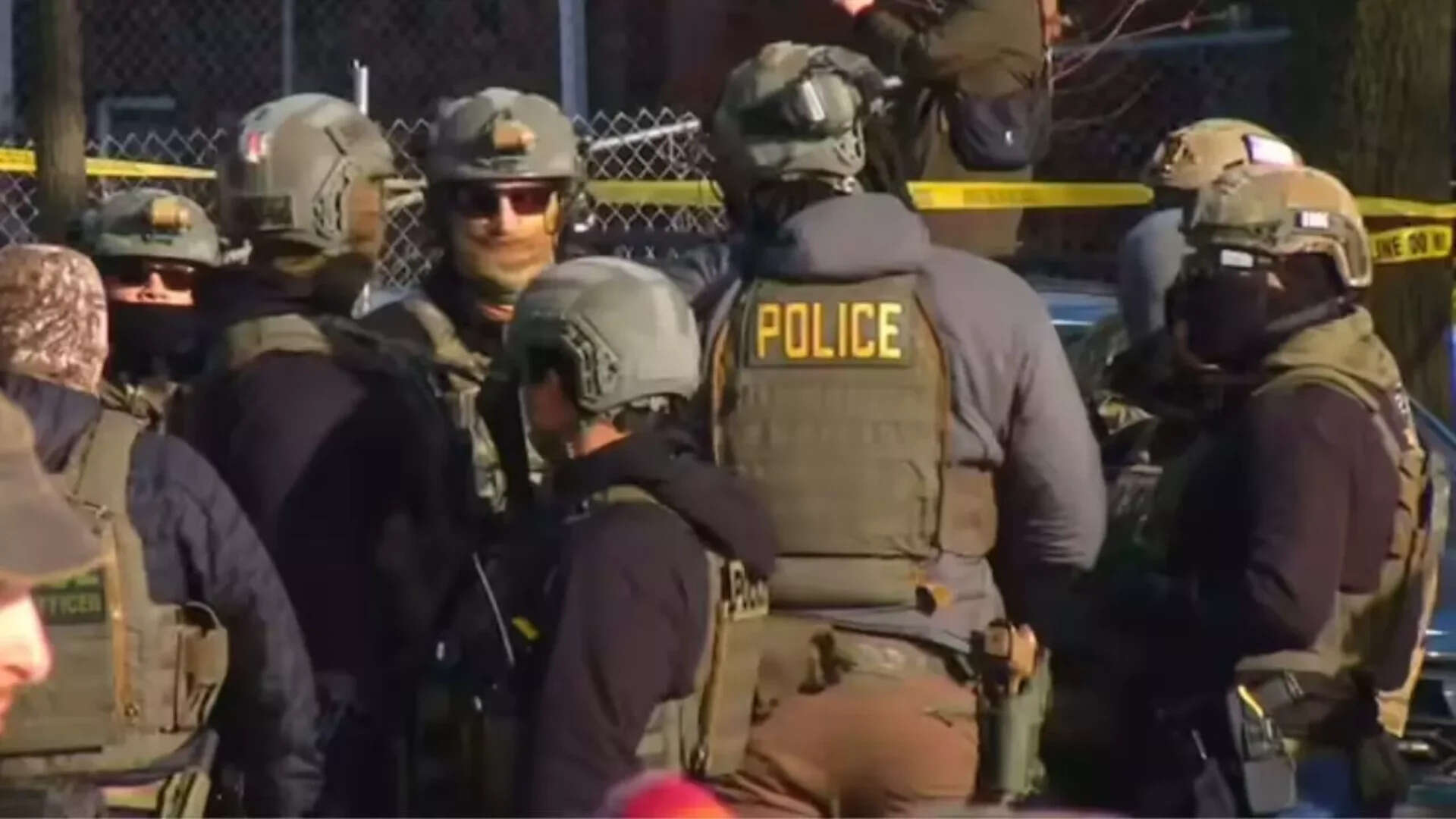
The death of a 19-year-old Mexican national in a Florida detention center is not a statistical anomaly. It is a systemic failure. When Yael Omar Camarena-Sánchez was found unresponsive at the Baker County Detention Center, he became the youngest individual to die in the custody of U.S. Immigration and Customs Enforcement (ICE) during the current fiscal year. While the agency’s official statements often lean on the language of "unforeseen medical emergencies," a closer look at the oversight mechanisms suggests these tragedies are baked into the infrastructure of civil detention.
Camarena-Sánchez had been in custody for less than a month. He was young, presumably healthy enough to survive the rigors of migration, and yet he expired in a facility that is legally required to provide a standard of care equivalent to community hospitals. The immediate cause of death remains under investigation by the medical examiner, but the broader cause is already visible. It is a mixture of bureaucratic inertia, the privatization of correctional healthcare, and a profound lack of transparency in how "unresponsive" cases are handled behind closed doors. Read more on a similar issue: this related article.
The Baker County Black Box
The Baker County Detention Center has long been a flashpoint for civil rights advocates. It is a contract facility, meaning the federal government pays a local sheriff’s office to house detainees. This creates a fragmented chain of command. When a teenager dies in a facility like this, the responsibility is often shuffled between the local jailers, the federal oversight bodies, and the third-party medical providers contracted to keep costs low.
The reality of medical care in these settings is stark. Resources are frequently stretched thin. Wait times for basic triage can stretch into days. For a 19-year-old, symptoms that might appear minor—a lingering fever, a sharp pain in the chest—can escalate into a terminal event without rapid intervention. In the case of Camarena-Sánchez, the "found unresponsive" tag suggests a lapse in active monitoring. If a detainee is not checked regularly, a treatable condition becomes a death sentence. More analysis by USA Today highlights similar perspectives on the subject.
Why Youth Provides No Shield in Detention
There is a common misconception that the primary health risks in detention belong to the elderly or those with preexisting chronic conditions. This is false. The detention environment itself is a catalyst for rapid physiological decline. Sleep deprivation, high-density housing, and the psychological weight of indefinite incarceration create a physical toll that the human body is not designed to handle.
For a teenager, the risk is often exacerbated by a lack of medical history on file. Without a baseline of health records, ICE medical staff are flying blind. They are reacting to symptoms rather than managing health. When Camarena-Sánchez entered the system, he was likely given a perfunctory screening. These screenings are often conducted by staff who are incentivized to move people through the system as quickly as possible. If a teenager doesn't advocate for themselves—or if they speak a different dialect of Spanish that the staff doesn't quite grasp—the nuances of their health are lost.
The High Cost of Outsourced Care
The economics of detention healthcare are brutal. Most ICE facilities rely on private contractors who operate on a fixed-fee model. This means they receive a set amount of money per head, regardless of the complexity of the medical needs. Every specialized test, every trip to an outside hospital, and every life-saving intervention eats into the profit margin.
This creates a perverse incentive to minimize care. We see this play out in the form of "conservative management," a medical term used to justify doing as little as possible. In a community setting, a 19-year-old with sudden respiratory distress gets an X-ray and a blood panel immediately. In detention, they might get an ibuprofen and a "wait and see" approach. By the time the situation turns critical, the window for effective treatment has closed.
The Myth of the Independent Investigation
Whenever a death occurs in ICE custody, a standard press release is issued. It promises a thorough investigation by the Office of Professional Responsibility (OPR) and the Department of Homeland Security’s Office of Inspector General. However, these reports are rarely released to the public in a timely fashion. They often take years to surface, by which time the political cycle has moved on and the facility has likely renewed its contract.
The "investigation" is a self-policing mechanism. It looks for procedural compliance rather than medical negligence. If the facility can prove they filled out the right forms, even if those forms didn't prevent a death, they are often cleared of wrongdoing. This focus on paperwork over patients is why we see the same patterns of neglect repeating in Florida, Texas, and Arizona.
The Problem with Mandatory Reporting
- Lag Time: Reports on detainee deaths often lack specific medical details for months, citing privacy laws or ongoing investigations.
- Selective Data: ICE tracks "deaths in custody," but doesn't always provide context on the number of "near-misses" where a detainee was stabilized only after significant, avoidable decline.
- Accountability Gaps: Rarely are individual medical providers or facility administrators held personally or legally liable for systemic failures.
Florida as a Testing Ground for Detention Policy
Florida has become a central hub for the expansion of the detention complex. The state's political climate has encouraged a more aggressive approach to immigration enforcement, which in turn fills facilities like Baker County to capacity. When facilities are overcrowded, the quality of care drops exponentially.
The death of Camarena-Sánchez happened in a state where the oversight of these facilities is increasingly shielded from public scrutiny. State-level bills have aimed to limit the ability of outside groups to monitor conditions inside jails and prisons. This creates a "dark zone" where a 19-year-old can die without any immediate external witnesses. The only narrative we get is the one provided by the agency that failed to keep him alive.
The Psychological Weight of the 19-Year-Old Detainee
We must consider the developmental stage of the victim. At 19, an individual is legally an adult but biologically still maturing. The stress of the "icebox"—the notoriously cold holding cells used during initial processing—can trigger latent health issues or worsen acute ones.
The isolation of the Florida facility likely played a role in Camarena-Sánchez's mental and physical state. When detainees are cut off from their families and legal representation, they lose their primary advocates. They become a number in a ledger. If they fall ill in the middle of the night, their only lifeline is a "panic button" that may or may not be answered by an overworked guard with no medical training.
Rethinking the Standard of Care
If the United States is going to maintain a massive civil detention system, the medical infrastructure must be decoupled from the correctional one. As long as medical care is viewed as a security function, people will continue to die from preventable causes.
The standard must move toward transparency by default. This means real-time reporting of medical emergencies and independent, third-party medical audits that are not funded by the agencies they are investigating. Without these changes, the death of Camarena-Sánchez will simply be the first in a new wave of youth fatalities.
Beyond the Official Narrative
The official ICE statement on Camarena-Sánchez is brief. It lists his date of entry, his country of origin, and the time he was pronounced dead. It says nothing of the man himself, his aspirations, or the specific medical failure that ended his life. This erasure is a deliberate part of the process. By reducing a human being to a set of data points, the agency avoids the moral weight of the loss.
Journalists and advocates are left to piece together the truth from the fragments. We look at the history of the facility, the track record of the medical contractor, and the patterns of similar deaths across the country. What we find is a system that is not "broken" in the traditional sense. It is functioning exactly as it was designed—to process bodies at the lowest possible cost, with the minimum amount of public visibility.
The Immediate Need for Congressional Oversight
The current oversight of ICE medical operations is largely performative. Congressional committees hold hearings, but they rarely result in the termination of contracts for facilities with high death rates. There is a persistent "shrug" at the federal level when it comes to the lives of young migrants.
True oversight would require unannounced inspections by independent medical professionals who have the power to shut down units that do not meet basic health standards. It would require a mandatory federal inquiry into any death of an individual under the age of 25 in custody, acknowledging that these are not natural occurrences.
The Silence of the Florida Medical Examiner
The medical examiner’s report will eventually name a physiological cause. It might say "cardiac arrest" or "pulmonary embolism." But these are outcomes, not explanations. The real question is what happened in the 48 hours leading up to that heart stopping. Was there a fever ignored? Was there a request for a doctor that was laughed off? Was there a lack of oxygen in a cramped cell?
Until those questions are answered, the "investigation" is a hollow exercise. We are witnessing the normalization of death in a system that claims to be "civil." If a 19-year-old is not safe in a government-run facility, then the concept of "safety" in the American immigration system is a myth.
The Path Forward is Not More Paperwork
We do not need more "best practices" or "updated guidelines." We need a fundamental shift in how the state treats the bodies in its care. The privatization of these facilities has turned human life into a line item. When a line item dies, it is simply replaced by another. To stop this cycle, the profit motive must be removed from the medical care of detainees.
The death of Yael Omar Camarena-Sánchez is a warning shot. It signals that the vulnerabilities of the detention system are moving down the age bracket. If the youngest and presumably strongest are failing to survive their stay in Florida’s facilities, the system has reached a point of total medical insolvency.
Demand the release of the full medical logs from Baker County for the 72 hours preceding the death of Camarena-Sánchez.