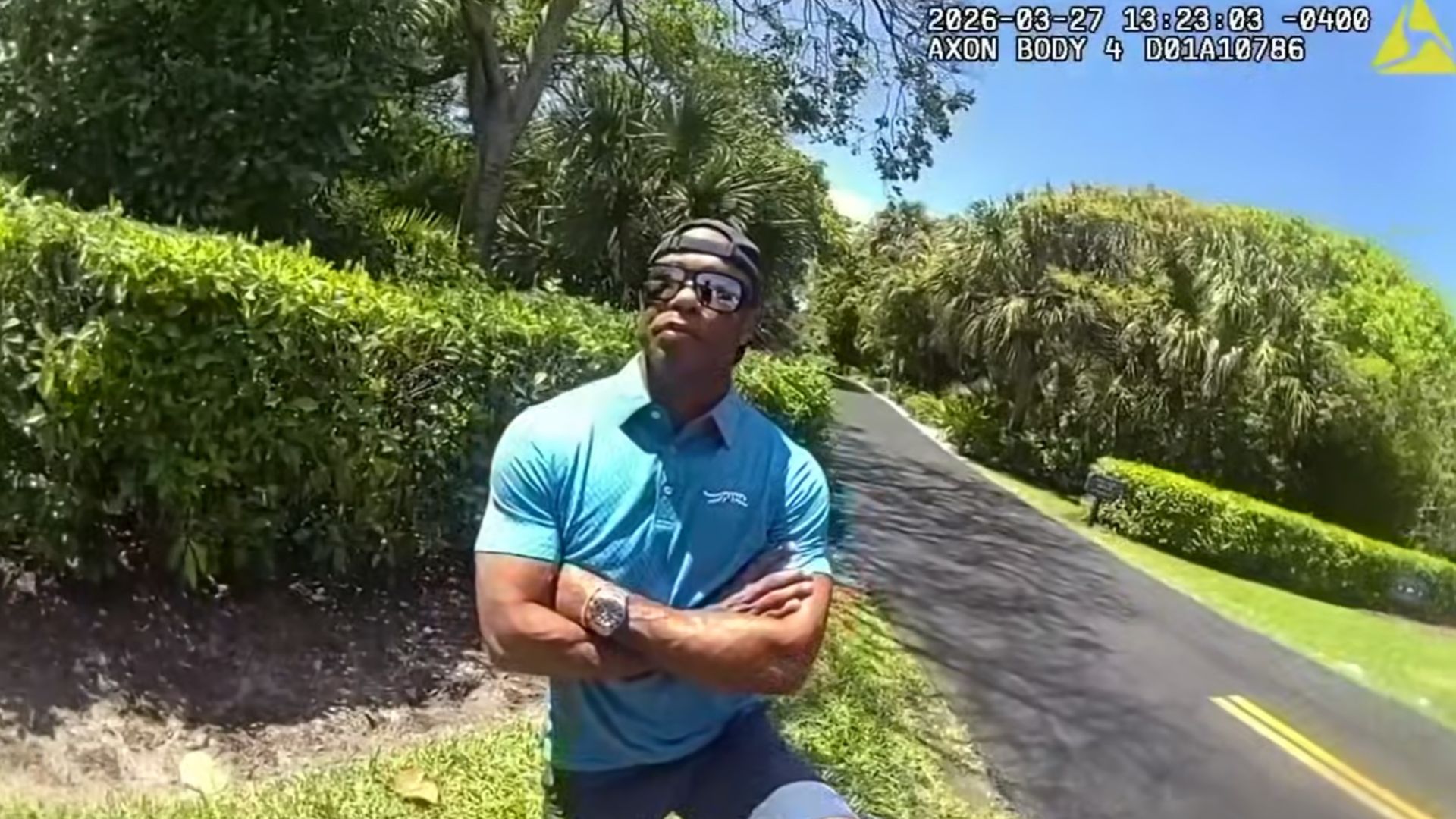
The image of Tiger Woods slumped over the steering wheel of a Mercedes-Benz, followed by a mugshot that stripped away decades of carefully curated invincibility, was not just a news cycle event. It was the definitive end of an era of athletic exceptionalism. When Jupiter, Florida police discovered Woods asleep in his running vehicle with the brake lights on and the turn signal blinking, they didn't just find a golfer in legal trouble. They found a man whose body and brand were both breaking under the weight of a decade of physical trauma and the chemical solutions used to mask it.
The arrest on suspicion of driving under the influence (DUI) in May 2017 revealed a toxicology report that told a much darker story than simple alcohol consumption. In fact, Woods had zero alcohol in his system. Instead, he was a walking—or rather, a non-walking—pharmacy of painkillers, sleep aids, and anxiety medication. The cocktail included Vicodin, Dilaudid, Xanax, Ambien, and THC. This wasn't a party gone wrong. This was a clinical collapse.
The Anatomy of a Physical Breakdown
To understand why a billionaire athlete ended up in the back of a patrol car, you have to look at the surgical history that preceded it. By the time of the arrest, Woods had undergone four back surgeries, including a spinal fusion just weeks prior. The narrative of the "Tiger Slam" and the Sunday Reds had been replaced by a reality of chronic, debilitating nerve pain.
High-performance sports at the level Woods played them require a level of physical sacrifice that the average spectator cannot comprehend. He didn't just play golf; he revolutionized the physical requirements of the game, training with the intensity of a Special Forces operative. He ran in combat boots. He lifted heavy. He pushed a frame designed for torque and rotation past its natural limits. Eventually, the bill came due.
Chronic pain management is the silent ghost in the locker rooms of professional sports. When the world expects you to be a titan, admitting to a fundamental inability to get out of bed feels like a betrayal of the brand. For Woods, the medications weren't for recreation. They were tools for survival in a world that demanded he remain the greatest of all time even as his vertebrae fused together.
The Public Relations Fortress Crumbles
For years, the Woods camp maintained a vacuum-sealed public image. This was a man who handled press conferences with a cold, calculated efficiency, rarely letting a single authentic emotion slip through the cracks. The 2017 arrest shattered that wall because it was raw and undeniable. You cannot spin a dashcam video of a man unable to walk a straight line or recite the alphabet.
This incident exposed the vulnerability of the modern athlete-as-a-corporation model. When the individual at the center of the enterprise fails, the entire infrastructure around them—the sponsors, the agents, the handlers—scrambles to protect the bottom line. Yet, the Jupiter police footage offered something the public had never seen from Woods: human frailty.
The Toxicology of Success
The specific substances found in his system highlight the cyclical nature of high-stakes injury recovery.
- Vicodin and Dilaudid: These are heavy-duty opioids used for severe pain. They are also notoriously difficult to manage in terms of tolerance and cognitive impact.
- Xanax: Prescribed for anxiety or panic disorders, often a byproduct of the intense pressure and isolation of elite stardom.
- Ambien: A sedative used to combat the insomnia that frequently accompanies chronic pain.
When these drugs interact, the result isn't just impairment; it is a total disconnection from reality. Woods told officers he didn't know where he was. He thought he was in Los Angeles, not Florida. This level of disorientation is a classic sign of "sleep driving," a known side effect of Ambien, especially when mixed with opioids. It was a perfect storm of modern medicine failing a man who had used it to keep his career on life support.
The Double Standard of the Elite Athlete
There is a recurring theme in the way we treat the downfalls of sporting icons. We build them into gods, and when they prove to be flesh and blood, we react with a mixture of horror and voyeuristic fascination. The "Tiger Woods in handcuffs" headline was a commodity sold to millions who wanted to see the king brought low.
However, the investigative reality is that Woods was a symptom of a larger issue within the PGA and professional sports at large. The "play through the pain" culture creates a pipeline to the very pharmacy that nearly killed him. We celebrate the Willis Reeds and the Curt Schillings who bleed through their socks for the win, but we rarely discuss the decades of chemical dependency that follow those legendary moments.
The arrest was a wake-up call for the industry regarding the oversight of athlete wellness. It forced a conversation about whether the teams and organizations surrounding these stars are truly looking out for the person, or simply maintaining the asset. In Woods' case, the asset was worth billions, but the person was falling apart in a roadside ditch.
Rebuilding From the Rubble
The aftermath of the arrest saw a shift in how Woods approached his life and his public persona. He entered a private intensive program to manage his medications and his pain. For the first time in his career, the focus wasn't on the next Major; it was on the next day of sobriety.
This period of forced reflection led to one of the most improbable comebacks in the history of the sport. But it’s vital to separate the 2019 Masters victory from the 2017 arrest. One was a sporting achievement; the other was a human rescue mission. The comeback was only possible because the arrest happened. It was the rock bottom necessary to stop the pharmaceutical spiral that was heading toward an early grave.
The Legacy of the Mugshot
We often look at these moments as isolated scandals, but they are actually the most honest parts of an athlete's biography. The mugshot of Tiger Woods, with his eyes half-closed and his hair unkempt, is just as important to his legacy as his 15 Major championships. It represents the cost of the pursuit of perfection.
It serves as a grim reminder that no amount of wealth or talent can bypass the basic biological realities of the human body. When you push a machine too hard for too long, it breaks. If you try to fix it with chemicals instead of rest, it explodes.
The real story isn't that a famous man got a DUI. The real story is that we watched a man disappear into his own myth until there was nothing left but a list of prescriptions and a car that wouldn't go any further. The police officer who put those handcuffs on wasn't just arresting a suspect; he was interrupting a slow-motion tragedy that had been years in the making.
Professional sports thrives on the idea that these people are different from us. We want them to be faster, stronger, and more resilient. But the dashcam footage from that night in Jupiter proved that when the lights go down and the crowds go home, the pain is the same for everyone. The only difference is how far you're willing to go to pretend it isn't there.
The road back for Woods was long, and while his leg was eventually shattered again in a later, unrelated car accident, the 2017 incident remains the moment the mask stayed off for good. It was the day the world stopped looking at a scorecard and started looking at a man who desperately needed help.