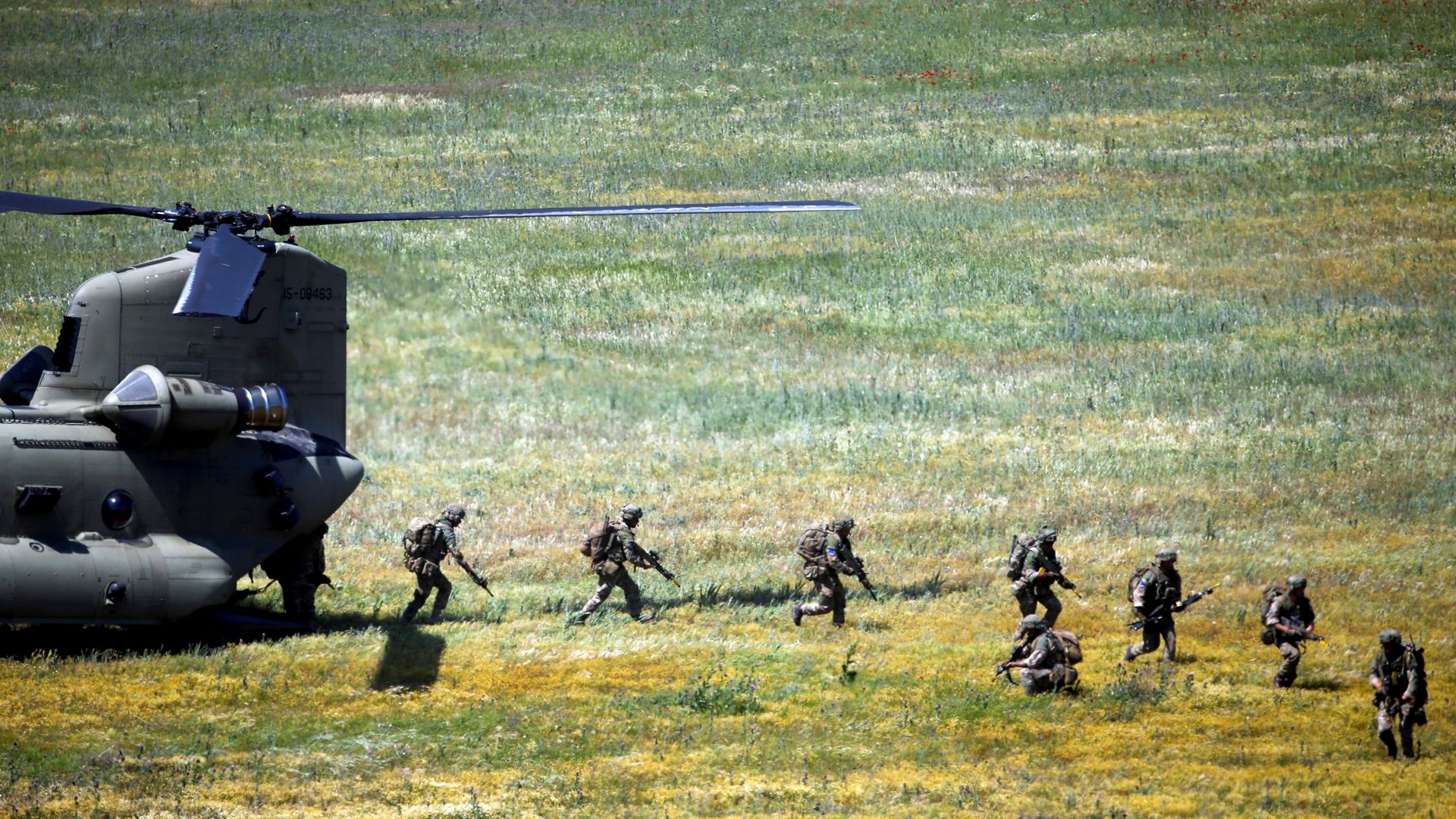
European security is currently facing its most significant structural shift since 1945. For decades, the North Atlantic Treaty Organization (NATO) functioned under a simple, unspoken agreement: Europe provided the geography, and the United States provided the overwhelming muscle. That era is over. Regardless of who sits in the White House, the strategic focus of the United States has moved toward the Indo-Pacific. The result is a continent suddenly realizing that its safety depends on a hollowed-out industrial base and a fragmented military command structure that was never designed to operate alone.
To understand the scale of the problem, one must look at the math of modern warfare. If the United States were to withdraw its logistical and intelligence support tomorrow, the United Kingdom and its European allies would struggle to sustain a high-intensity conflict for more than a few weeks. This is not a matter of bravery or intent; it is a cold reality of ammunition stockpiles, satellite coverage, and heavy-lift transport capabilities. For another look, see: this related article.
The Illusion of Collective Strength
On paper, the combined military spending of European NATO members is impressive. When added together, the figures suggest a superpower. The reality is far messier. Europe does not have one military; it has dozens of smaller ones that often cannot talk to each other.
A primary hurdle is the lack of standardization. While the U.S. military benefits from economies of scale, European nations buy different tanks, different jets, and even different calibers of specialized munitions. This creates a logistical nightmare. Imagine a frontline where three different allied units require three different sets of spare parts and three different supply chains. In a fast-moving conflict, that friction is lethal. Similar analysis on the subject has been shared by NBC News.
The United Kingdom has attempted to bridge this gap by positioning itself as the "leading" European power in NATO, but the British Army is currently at its smallest size since the Napoleonic era. While the Royal Navy and RAF remain potent, they rely heavily on American technology and data-sharing. If the "plug" is pulled on American geospatial intelligence, European commanders would effectively be fighting blind.
The Industrial Vacuum
Building a tank takes time. Replacing a lost one takes even longer. For thirty years, Europe enjoyed a "peace dividend," cutting defense budgets and allowing manufacturing lines to rust. The current conflict in Ukraine has exposed the terrifying speed at which modern shells are consumed.
European factories are currently unable to match the production rates required for a sustained continental defense. It is one thing to pledge support; it is another to have the steel, the chemicals, for explosives, and the skilled labor to keep the guns firing.
- Stockpile Depletion: Most European nations hold enough "first-day" munitions for less than a month of intense combat.
- Production Lead Times: Ordering a new sophisticated missile system today often results in a delivery date three to five years in the future.
- Dependency on Foreign Components: Many "European" weapon systems rely on microchips or raw materials sourced from the very regions NATO might find itself at odds with.
The Nuclear Gap
The most uncomfortable conversation in London, Paris, and Berlin involves the nuclear deterrent. The U.S. "nuclear umbrella" has been the ultimate insurance policy for Europe. If that umbrella is folded, the burden falls almost entirely on France and the United Kingdom.
However, the British nuclear deterrent—the Vanguard-class submarines carrying Trident missiles—is inextricably linked to American cooperation. The missiles themselves are part of a shared pool maintained in the United States. France maintains a truly independent "Force de Frappe," but whether Paris would risk its own cities to defend Warsaw or Tallinn remains the most sensitive unanswered question in European geopolitics.
Without a unified, credible, and independent nuclear strategy, Europe remains vulnerable to "salami slicing" tactics, where an adversary takes small pieces of territory, betting that no single European capital will risk a total war to stop them.
The Intelligence Sovereignty Problem
Modern war is won in the electromagnetic spectrum. It is won through satellite imagery, signals intelligence, and cyber-defense. Currently, Europe is a consumer, not a producer, of top-tier strategic intelligence.
The "Five Eyes" agreement keeps the UK in the loop, but the infrastructure—the satellites and the massive data-processing centers—is largely American. For Europe to defend itself, it must build its own eyes in the sky. This requires an investment in space technology and AI-driven data analysis that currently dwarfs the combined research budgets of the major European powers.
Turning the Supertanker
Fixing this requires more than just hitting the 2% GDP spending target. That number is an arbitrary baseline, not a strategy. The real work involves "Europeanizing" the defense industry—forcing national champions to collaborate on single platforms rather than competing for prestige.
It means the UK must decide if it is a global power with a tiny, specialized force or a regional leader with the mass required for a land war. It means Germany must overcome its historical reluctance to lead militarily. It means Poland and the Baltic states must be integrated into a command structure that actually functions without an American four-star general at the top.
The window for this transition is closing. The geopolitical center of gravity has shifted, and the protection that Europe took for granted for eighty years is evaporating. The choice is no longer between spending on social programs or spending on defense; it is between a sovereign Europe or a continent that exists only at the mercy of others.
Move toward a unified procurement model immediately. Every pound or euro spent on a non-interoperable weapon system is a waste of resources that the continent no longer possesses.