Brussels is playing a high-stakes game of chicken with its own thermostat. Despite a widening conflict in the Middle East that’s choked off Qatari gas and sent prices screaming toward record highs, the European Union isn't budging on its plan to kick the Russian LNG habit.
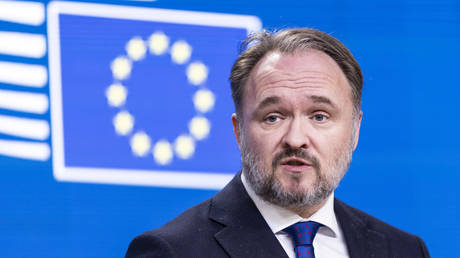
You’d think a looming energy crisis would force a little pragmatism. Instead, EU Energy Commissioner Dan Jørgensen just doubled down. He told the Financial Times that there will be no U-turn on the legislation designed to phase out Russian liquefied natural gas. The message is clear: Europe would rather risk a cold winter than give Vladimir Putin another cent of "blood money." It’s a bold stance, but if you’re looking at your heating bill right now, you might be wondering if it’s a suicidal one.
The perfect storm hitting European gas markets
The timing of this resolve is, frankly, chaotic. We aren't just dealing with a Russian standoff anymore. The recent closure of the Strait of Hormuz due to the Iran conflict has essentially decapitated a huge chunk of the global LNG supply. Qatar, which provides about 8% of the EU’s LNG, is struggling to get its tankers through.
Usually, when one tap turns off, you look for another. But the EU has spent the last three years dismantling the very infrastructure that kept it warm for decades. We’re seeing a massive bidding war between Europe and Asia for what’s left of the global supply.
- Price Spikes: Gas prices have already jumped 100% in some regions.
- Storage Woes: As of March 2026, storage levels are lower than they were this time last year.
- Record Imports: Ironically, while the politicians talk about bans, the EU actually imported a record 2.46 billion cubic meters of Russian LNG in March alone.
It’s the ultimate contradiction. Brussels is shouting "never again" while quietly topping off its tanks with the very gas it’s trying to ban. Why? Because right now, there isn't enough gas coming from anywhere else to keep the lights on.
Why the ban isn't moving
You might ask why the EU doesn't just pause the ban until the Middle East settles down. Honestly, it’s about credibility. Jørgensen argues that reverting to Russian gas would be a "strategic blunder." The logic is that if Europe blinks now, it proves that energy can always be used as a leash.
There’s also a legal trap involved. This isn't just a "pinky swear" anymore. The EU recently turned these phase-out goals into binding law. Under the new regulations, short-term LNG contracts for Russian gas are set to be illegal by April 25, 2026. Changing that would require a level of political gymnastics that the European Parliament just doesn't have the stomach for right now.
But let’s be real. Not everyone in the bloc is a happy soldier. Belgium’s Prime Minister, Bart De Wever, has been vocal about wanting "cheap" Russian gas back. He’s argued that while everyone pretends to be tough in public, the private consensus is that Europe is deindustrializing itself into a corner. When energy costs three times more in Berlin than it does in Houston or Beijing, your factories don't stay in Berlin.
The American dependency trap
So, where does the gas come from if Russia is out and Qatar is blocked? The answer is almost always the United States. The EU is effectively trading one dependency for another.
We’re currently seeing about 25% of all EU gas imports coming from the US. That’s great for security until you realize that the US market is a "free market." If a buyer in Tokyo offers a nickel more than a buyer in Amsterdam, that tanker turns around. We’ve already seen LNG cargoes diverted from Europe to Asia this month because the bidding war is getting that intense.
Reliance on "market partners" sounds better than reliance on "autocrats," but the "market" doesn't care if your grandmother can afford to heat her apartment in January. It cares about the highest bid.
What this means for your wallet
If you’re waiting for energy prices to "normalize," don't hold your breath. The EU is bracing for what Jørgensen calls a "long-lasting" energy shock. This isn't a temporary spike; it’s a structural shift.
The strategy now is less about finding cheap gas and more about "demand destruction"—a fancy way of saying we all just need to use less. Expect to see more talk about:
- Mandatory Fuel Rationing: It’s not off the table for "critical" industries like diesel and jet fuel.
- Coal Revivals: Countries that swore off coal are quietly firing up the old plants to save gas for heating.
- Strategic Reserve Releases: The EU already did a massive oil release last month; gas might be next.
Practical steps to take now
Since the EU isn't coming to save you with cheap Russian gas, you have to play defense. If you're running a business or a household, the "wait and see" approach is dead.
- Lock in fixed-rate contracts: If you can still find a fixed energy contract that doesn't require a kidney as a down payment, take it. The volatility through 2026 is going to be wild.
- Audit your efficiency: This isn't just about LED bulbs anymore. Look at heat pumps and industrial insulation. The "payback period" for these investments used to be ten years; at current prices, it's more like three.
- Watch the April 25 deadline: That’s when the short-term Russian LNG ban hits. Expect a massive price tremor around that date as traders scramble to replace those "ad hoc" cargoes.
The EU has made its choice. It’s choosing sovereignty over solvency, at least in the short term. It’s a noble goal, but the price of that nobility is going to be written on every utility bill for the foreseeable future. Get ready for a very expensive year.