The global economy is currently holding its breath while staring at a map of the Persian Gulf. You've probably seen the headlines about the European Union's latest demand: open the Strait of Hormuz immediately and stop blowing up energy and water infrastructure. It sounds noble. It sounds authoritative. But if you look at the reality on the water, it’s mostly a desperate plea from a continent that’s terrified of its own energy bill.
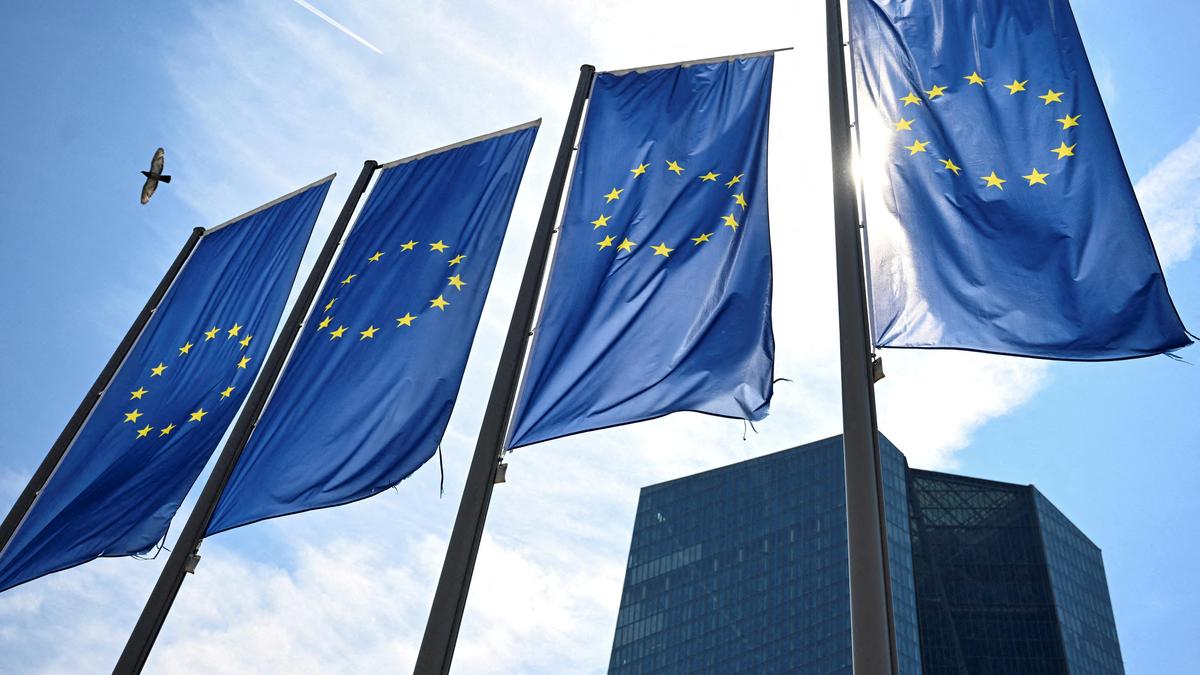
Brussels is in a bind. The 27-nation bloc issued a joint statement this week during a summit that felt more like a crisis meeting than a diplomatic gathering. They’re calling for a "moratorium" on strikes against civilian infrastructure. They want the world's most important oil chokepoint reopened. The problem? Nobody in the actual conflict seems to be listening, and the EU doesn't have the stomach to enforce its own "demands."
The chokepoint that could break the world
Let's talk numbers because they're staggering. The Strait of Hormuz is the jugular vein of global energy. Normally, about 20% of the world’s oil and liquefied natural gas (LNG) flows through this narrow strip of water. Since the conflict between the U.S., Israel, and Iran kicked off three weeks ago, that flow has slowed to a trickle.
Iran has effectively closed the door. They aren't just using big warships; they’re using mines, drones, and shore-based missiles. It’s classic asymmetric warfare. You don't need a massive navy to make a shipping lane unusable; you just need to make it dangerous enough that insurance companies refuse to cover the tankers. Right now, insurance premiums are through the roof, and over 150 tankers are just sitting outside the Gulf, waiting for a miracle.
What the EU is actually asking for
The European Council’s statement is a laundry list of "pleases" wrapped in diplomatic jargon. They want:
- An immediate reopening of the Strait to commercial shipping.
- A halt to strikes on refineries, gas fields, and desalination plants.
- De-escalation from all parties, including a nudge to Iran to stop targeting its neighbors.
The EU is worried about a "structural" price spike. Belgian Prime Minister Bart De Wever put it bluntly: energy prices were already high, but this conflict created a spike that could wreck the European economy if it stays this way. We're talking about Brent crude hitting $120 a barrel and natural gas prices jumping 40% in a single day.
The big divide in the "Coalition of the Willing"
Here's where it gets messy. U.S. President Donald Trump has been leaning hard on NATO and European allies to send ships and help "clear" the Strait. He’s looking for a repeat of past maritime coalitions. But Europe is fractured.
Kaja Kallas, the EU’s foreign policy chief, admitted there’s "no appetite" among leaders to join the fray. Germany’s Friedrich Merz is even more cautious. He’s basically said Germany will only help after the shooting stops. "We can and will commit ourselves only when the weapons fall silent," he said. That’s like offering to help put out a fire once the house has already burned down.
There’s a small group—France, Italy, the Netherlands, and Germany—alongside the UK and Japan, who say they’re doing "preparatory planning." But don’t expect a massive European naval armada to go charging into the Gulf anytime soon. They’re terrified of being "blackmailed" into a war they didn't start and don't want to finish.
Why this isn't just about oil
While everyone watches the tankers, there’s a quieter crisis brewing: water and electricity. The EU is specifically calling for an end to strikes on water infrastructure. Why? Because the Gulf states rely almost entirely on massive desalination plants for their fresh water.
If those plants go dark because of missile strikes or a lack of fuel, you aren't just looking at an economic crisis; you're looking at a humanitarian catastrophe. Millions of people would be without drinking water within days. Europe knows that if the Middle East collapses into that kind of chaos, the next thing hitting their borders won't be expensive oil—it’ll be millions of refugees.
The LNG nightmare for Europe
Europe’s vulnerability isn't just about the gas in your car. It’s about the gas in their heaters. After cutting off Russian pipeline gas back in 2022, the EU went all-in on LNG. Much of that comes from Qatar.
Guess where Qatar’s LNG has to go to get to Europe? Right through the Strait of Hormuz.
QatarEnergy has already hinted they might have to declare "force majeure"—a legal term basically meaning "we can't fulfill our contracts because of a war"—on their long-term deals. If that happens, Europe’s plan to refill its gas storage before next winter is toast.
Stop waiting for a diplomatic solution
If you're waiting for a piece of paper from Brussels to fix this, you're going to be waiting a long time. The reality is that Iran sees the Strait as its ultimate leverage. They aren't going to give that up just because the European Council "deplores the loss of life."
The U.S. and Israel are targeting Iranian energy assets like the South Pars gas field, and Iran is hitting back at refineries in Kuwait and Saudi Arabia. It’s a tit-for-tat cycle that doesn't care about "international law" or "freedom of navigation" right now.
What you should actually do
If you're running a business or just trying to manage your own finances, stop expecting prices to "normalize" next week.
- Hedge your energy costs if you have the ability to do so. The volatility isn't going away.
- Watch the insurance markets, not just the news. When Lloyd's of London starts lowering risk ratings for the Gulf, that's when you'll know the Strait is actually safe.
- Prepare for supply chain lag. This isn't just about fuel; it's about the fertilizers and chemicals that also move through that water. Expect a secondary wave of price hikes in food and manufacturing in about three months.
The EU's demand is a signal of weakness, not strength. They're telling the world they're out of options and desperate for someone else to fix the problem. Until a naval force actually enters the Strait to challenge the blockade—or a ceasefire is signed—the "jugular vein" of the world remains pinched shut.