The Price of Cheap is Too High
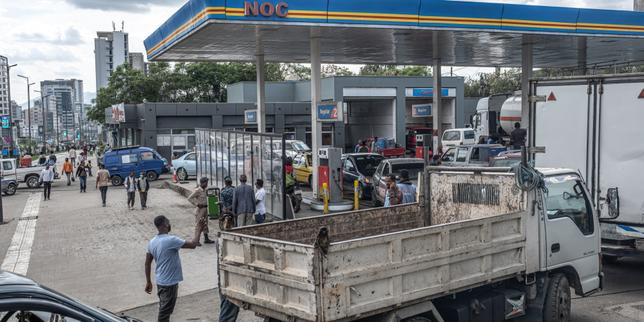
The mainstream media loves a tragedy, and the current narrative surrounding Ethiopia’s fuel "crisis" is a textbook example of missing the forest for the trees. Reporters wring their hands over three-mile queues at the pumps in Addis Ababa and the soaring cost of black-market benzene. They call it a breakdown of the system. They call it a failure of governance.
They are wrong.
What we are witnessing isn't the death of a functioning economy; it’s the violent, necessary birth of a post-fossil fuel state. Ethiopia is currently running one of the most aggressive, unintentional experiments in macroeconomic shock therapy the world has ever seen. The "crisis" isn't the shortage. The crisis was the decades of artificial price bloating and state-sponsored addiction to an imported commodity that Ethiopia neither produces nor controls.
For years, the Ethiopian government burned through hard currency to subsidize fuel, effectively handing out cash to vehicle owners while the rural poor—who don't own cars—subsidized the lifestyle of the urban elite. That era is over. It’s painful, it’s messy, and it’s exactly what the country needs to decouple from a global supply chain that treats East Africa as an afterthought.
The Subsidy Trap and the Myth of Stability
Let’s talk about the math that the "lazy consensus" ignores. Ethiopia spends billions in foreign exchange (FX) annually to import refined petroleum. When you subsidize that fuel, you aren't helping the economy; you are bleeding it dry.
Every liter of subsidized petrol sold at a pump in Mekelle or Hawassa represents a fraction of a medical supply, a piece of industrial machinery, or a telecommunications upgrade that wasn't imported because the FX was wasted on combustion.
The standard complaint is that "the people can't afford the new prices." This is a flawed premise. When you keep prices artificially low, you create a massive incentive for smuggling. Why sell fuel in Addis for a regulated pittance when you can move it across the border to neighboring countries for triple the price? The shortage isn't just about a lack of supply; it's about a rational market responding to irrational price controls.
By allowing prices to float—or failing to secure the supply to keep them down—the market is finally forcing a reality check. I have seen governments in emerging markets blow their entire sovereign reserves trying to "stabilize" energy prices. It never works. It just delays the inevitable and makes the eventual crash more catastrophic. Ethiopia is ripping the bandage off.
The Electric Leapfrog
While the world cries about empty gas tanks, they are ignoring the most significant policy shift in African history: Ethiopia’s ban on the import of non-electric passenger vehicles.
Critics call it "premature." They point to the spotty charging infrastructure and the frequent power outages. They are thinking like 20th-century oil barons.
Ethiopia has something that most of the world envies: a massive surplus of cheap, renewable energy thanks to the Grand Ethiopian Renaissance Dam (GERD). The country has a theoretical capacity to generate over 60,000 megawatts of power from hydro, wind, solar, and geothermal sources.
Why on earth would a nation with an abundance of "homegrown" electricity continue to beggar itself to buy oil from the Middle East?
The fuel shortage is the ultimate marketing campaign for the Electric Vehicle (EV). When you spend twelve hours in a queue for 20 liters of benzene, a car you can plug into a wall starts to look like a miracle, not a luxury.
Why the Infrastructure Argument is a Red Herring
- The Grid is Local: You don't need a transcontinental pipeline to charge a car. You need a transformer and a cable.
- Decentralized Power: Solar-integrated charging stations are already bypassing the limitations of the national grid in rural areas.
- The Cost of Maintenance: An Internal Combustion Engine (ICE) vehicle has roughly 2,000 moving parts. An EV has about 20. In a country where spare parts are tied to the same FX scarcity as fuel, the ICE vehicle is a ticking financial time bomb.
The Logistics Revolution Nobody is Writing About
The fuel crisis is forcing a radical efficiency in logistics that "stable" economies never achieve. In the West, we have the luxury of "just-in-time" delivery and half-empty trucks driving across states because diesel is relatively accessible.
In Ethiopia, every drop of fuel is now calculated. This is forcing the rapid digitization of freight. We are seeing the rise of logistics platforms that optimize load sharing and route planning with a brutality that Silicon Valley would admire. You don't drive a truck empty in Ethiopia anymore. You can't afford to.
This isn't "suffering"; it’s the optimization of a nation’s metabolic rate.
The Hidden Cost of "Fixing" the Crisis
People ask: "How can the government fix the fuel lines tomorrow?"
The honest, brutal answer? They shouldn't.
If the government magically secured a $5 billion credit line to flood the country with cheap fuel, they would effectively be sabotaging their own green transition. They would be telling the entrepreneurs currently building charging networks, the mechanics retraining for EV motors, and the fleet managers investing in electric buses that their investments were a mistake.
The pain is the point.
Policy-driven transitions are slow and usually fail because of lobbying and inertia. Crisis-driven transitions are fast and permanent. Once a delivery company switches its fleet to electric motorcycles because they can't find petrol, they aren't going back. The infrastructure for the old world is being dismantled by the sheer weight of its own inefficiency.
The Brutal Reality of the Transition
Let’s be clear: this isn't a victimless shift. The small-scale trader who relies on a 30-year-old Isuzu truck is getting crushed. Inflation is rampant because transport costs are baked into the price of every onion and every brick.
But the alternative—continuing to prop up a fossil fuel economy with money the country doesn't have—is a slow-motion suicide.
The downside of this contrarian view is obvious: social unrest. History shows that when people can’t move and prices rise, governments tremble. But the true test of leadership in Addis isn't whether they can shorten the fuel lines; it's whether they can stay the course on electrification while the lines exist.
Stop Asking for More Oil
The "People Also Ask" sections of the internet are filled with queries like "When will the fuel shortage end?" or "How can Ethiopia secure more oil?"
These are the wrong questions.
The right question is: "How fast can we decommission the internal combustion engine?"
The premise that a modern economy needs imported oil is a 20th-century delusion. For a landlocked nation with massive hydroelectric potential, oil is a strategic vulnerability. Every gas station in Ethiopia is a monument to foreign dependency.
The Playbook for the Bold
If you are an investor or a business leader in East Africa, stop waiting for the "return to normal." The old normal was a subsidized fantasy that nearly bankrupted the state.
- Ditch the ICE Fleet: If you are still buying diesel trucks for urban delivery, you are burning capital.
- Invest in Micro-Grids: The energy crisis and the fuel crisis are the same problem. Solve one with the other.
- Bet on Data: The companies that will thrive are those using AI and machine learning to cut waste in their supply chains. If you can’t get more fuel, you have to get more out of the fuel you have.
The tragedy in Ethiopia isn't that the pumps are dry. The tragedy is that it took this long for the country to realize that oil was a noose around its neck.
Burn the noose. Keep the lights on.
Stop looking at the queues and start looking at the grid. The future of Ethiopia isn't found at the bottom of an oil well in a foreign land; it’s flowing through the turbines of the Blue Nile. The fuel crisis isn't a hurdle; it’s the firing-squad execution of an obsolete way of life.
Move on.