The recent executive push to force transparency on unidentified anomalous phenomena (UAP) is a masterclass in bureaucratic theater. Everyone is obsessing over the wrong question. We are so busy asking "What would they think of us?" that we have failed to realize that the very premise of the question is an exercise in terminal narcissism.
The mainstream media and political opportunists are feeding a narrative that suggests an intergalactic mirror is about to be held up to humanity. They want you to believe that "disclosure" will trigger a global reckoning or a spiritual awakening. It won't. If the data dumps actually happen, the reality will be far more boring—and far more chilling—than a Hollywood first-contact scenario.
The Anthropic Fallacy and the Disclosure Trap
The competitor narrative suggests that aliens, should they exist and visit, would be interested in our morality, our wars, or our environmental stewardship. This is the "Star Trek" delusion. It assumes that a civilization capable of manipulating spacetime to traverse interstellar distances shares our primate-derived cognitive architecture.
It is a statistical impossibility.
When we look at an anthill, we don’t judge the ants for their lack of a democratic process. We don't wonder if they’ve achieved carbon neutrality. We step over them. Or, if we are building a highway, we pave over them without a second thought.
The "Lazy Consensus" dictates that aliens would be "visitors" or "observers." In reality, a sufficiently advanced intelligence is more likely to view us as biological background noise. If they are here, they aren't here to judge us; they are here for the physics.
Your Tax Dollars at Work: The Great Data Nothingburger
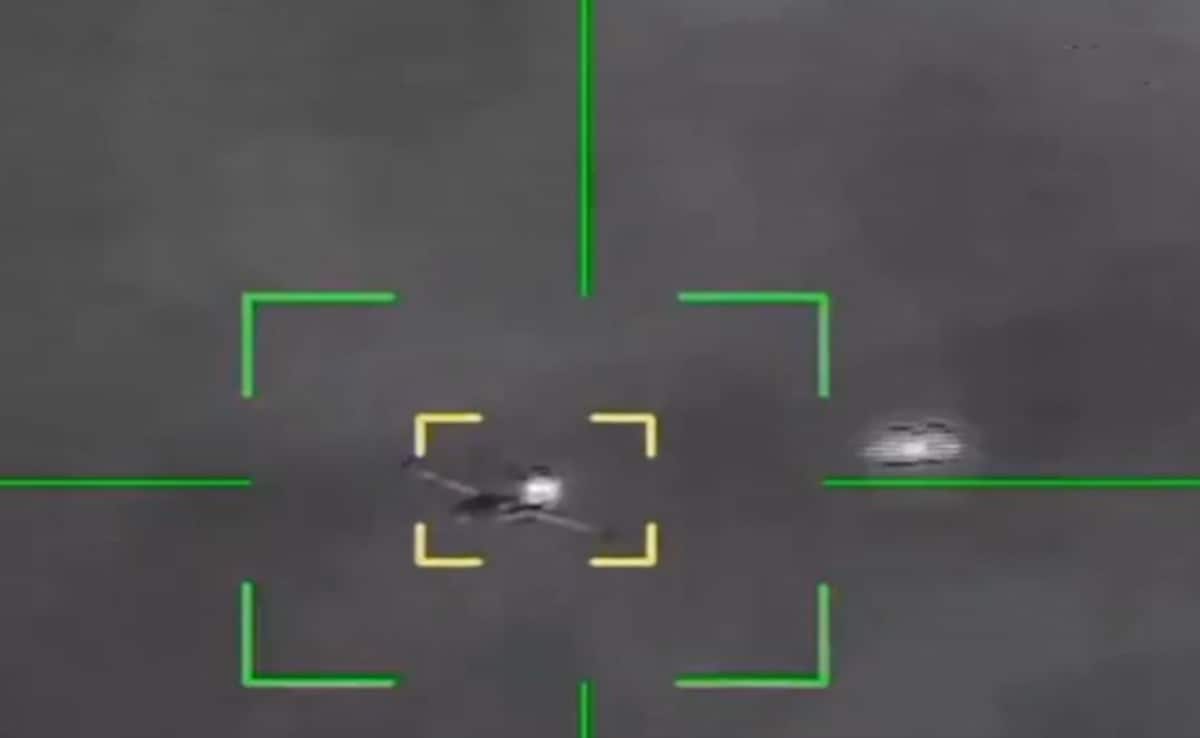
Politicians love the UFO topic because it’s the ultimate distraction. It allows them to appear "transparent" without actually fixing anything tangible. By ordering the release of UFO data, the administration isn't giving you the keys to the universe. They are dumping thousands of pages of sensor glitches, grainy thermal footage of weather balloons, and classified electronic warfare signatures.
I have spent years looking at how high-end sensor arrays—specifically the Raytheon AN/ASQ-228 ATFLIR pods used in the "Gimbal" and "GoFast" videos—actually function. Most "unexplainable" maneuvers are the result of parallax effects, sensor glare, or software interpolation errors.
When a pilot sees an object "zip" across the ocean at Mach 10, they are often seeing a visual artifact created by the gimbal head’s rotation speed relative to the aircraft’s velocity. This isn't "interdimensional travel." It’s math. But "Math Explains Blurry Video" doesn't get clicks. "Trump Orders UFO Reveal" does.
The Fermi Paradox vs. The Great Filter
People also ask: "If they are out there, why haven't they contacted us?"
The standard answer is that they are waiting for us to "evolve." This is nonsense. The more likely, and far more brutal, answer is found in the Great Filter theory. This suggests that at some point in the development of life, there is a barrier that is almost impossible to cross.
If we find "evidence" of ancient alien civilizations, it’s the worst possible news for humanity. It means the Filter is ahead of us, not behind us. It means civilizations inevitably destroy themselves before they can become multi-planetary.
We shouldn't be begging the government to show us evidence of aliens. We should be praying the sky is empty. An empty sky means we might be the first ones to make it through the bottleneck. A crowded sky means we are just another casualty in the waiting.
The Technology Gap is an Ontological Shock
Let’s run a thought experiment. Imagine a scenario where a Roman centurion is handed a modern smartphone. He wouldn't see a communication device. He would see a smooth, magical stone that occasionally glows. He lacks the conceptual framework for electricity, silicon wafers, or satellite networks.
Now, apply that to UAPs. If these objects are truly non-human technology, we aren't "ten years behind" or "fifty years behind." We are biologically incapable of perceiving their "hardware."
We talk about "craft" and "propulsion" because those are the only words we have. An advanced intelligence wouldn't use a "craft." They would likely use programmable matter or localized gravitational distortions that don't "move" through space so much as they rewrite the coordinates of existence.
Our military-industrial complex is trying to "reverse engineer" these things like a caveman trying to reverse engineer a microwave by hitting it with a rock. It’s not just a technical failure; it’s a failure of imagination.
Stop Looking for "The Truth" in Government Files
The idea that a centralized government is "hiding" the secrets of the universe is a comforting bedtime story. It suggests that someone is in control. It suggests that there is a secret room where the answers are kept.
The scarier truth is that nobody is in control. The government is a collection of fragmented agencies, many of which don't talk to each other, losing trillions of dollars in accounting errors every decade. The "UFO data" is scattered across legacy databases, private aerospace contractors like Lockheed Martin, and sensor logs that were deleted twenty years ago to save server space.
If you want the truth, stop waiting for a press release. The truth is found in the study of high-energy physics, the observation of fast radio bursts (FRBs), and the search for technosignatures in deep space.
The Actionable Pivot: Invest in Detection, Not Disclosure
If you actually care about the UAP phenomenon, stop lobbying for "disclosure" and start building.
We need a decentralized, global network of high-resolution optical and thermal sensors that are not owned by the Department of Defense. We need open-source data that can be crunched by independent AI models to filter out the noise of birds, balloons, and drones.
Relying on the government to tell you what’s in the sky is like asking a magician to explain his own trick while he’s still on stage. They have every incentive to keep the mystery alive because mystery equals funding.
The industry is currently obsessed with "threat potential." This is just a way to secure more defense spending. If a civilization can travel between stars, our F-35s are as threatening to them as a wet toothpick is to a tank. The "national security" angle is a grift.
The Ego Check
The competitor's article asks: "What would they think of us?"
They wouldn't think of us.
The hard truth is that humanity is likely a local anomaly, a brief flash of biological complexity on a mediocre planet orbiting a boring star. Our obsession with being "seen" by a higher power—whether it’s a god or an alien—is just a symptom of our inability to accept our own insignificance.
The data release won't change your life. It won't lower your taxes. It won't solve the energy crisis. It will just be more noise in an already deafening world.
Stop looking up for a savior. The only intelligence that can save this species is the one between our own ears, and so far, the data on that front is looking pretty grim.