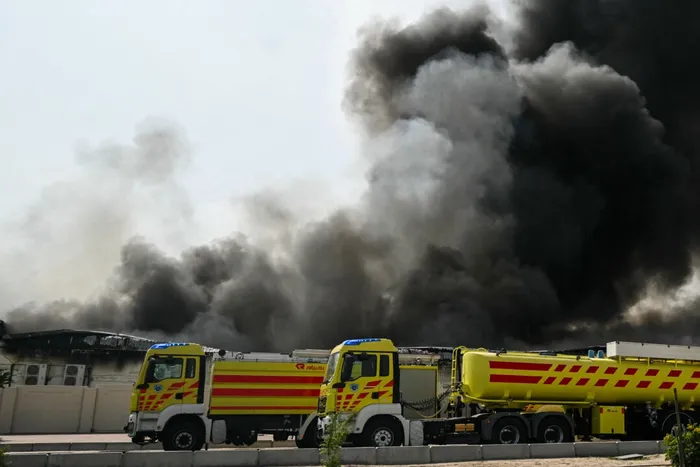
The smoke rising from the Dahiyeh district of Beirut is more than a byproduct of Israeli munitions. It is the visual evidence of a failed diplomatic framework. Following a barrage of Hezbollah rockets aimed at northern Israel—retaliation for what the group calls a defense of Iranian interests—Israel’s military response has shifted from targeted assassinations to broad structural degradation. This is no longer a border skirmish. It is a full-scale recalibration of the Middle Eastern power balance, where the civilian infrastructure of Lebanon has become the involuntary chessboard for a high-stakes confrontation between Jerusalem and Tehran.
The Mechanics of the Cycle
Military strategy in the Levant usually operates on the "tit-for-tat" principle. You hit a command center; they hit a surveillance post. However, the current intensity suggests that the unwritten rules of engagement have been discarded. When Hezbollah launched its latest salvo, it wasn't just aiming for military outposts. It was signaling to its base and its patrons in Iran that it remains a viable kinetic force despite months of intelligence breaches.
Israel’s response was immediate and overwhelming. By targeting specific blocks in southern Beirut, the Israel Defense Forces (IDF) are attempting to sever the logistical arteries that connect Hezbollah’s political leadership with its operational cells. The logic is simple but brutal. If the cost of hosting Hezbollah becomes unbearable for the Lebanese state and its people, the social contract protecting the militia might finally crack.
Why Iron Dome Supremacy Isn't Enough
For years, the narrative surrounding Israeli security centered on the Iron Dome and the David’s Sling missile defense systems. These are marvels of engineering. They track, calculate, and intercept threats with a success rate that would have seemed like science fiction two decades ago. But reliance on interceptors has created a psychological trap.
The math of attrition is working against the defender. An interceptor missile costs significantly more than the "dumb" rockets or low-cost drones being fired from across the border. While Israel can stop 90% of incoming fire, the 10% that gets through—or the sheer volume of fire that depletes the stockpile—eventually forces a ground or air offensive. Proactive destruction of launchers in Beirut is not just a choice; it is a financial and logistical necessity for the IDF. They cannot afford to play defense forever.
The Iranian Shadow Over Lebanese Sovereignty
One cannot analyze the craters in Beirut without looking at the spreadsheets in Tehran. Hezbollah is often described as a "proxy," but that term undersells the relationship. They are the forward-deployed division of the Islamic Revolutionary Guard Corps (IRGC).
Every rocket fired from Lebanon serves a specific purpose in Iran’s broader regional strategy.
- Diversion: Drawing Israeli resources away from the Gaza front and the Red Sea.
- Deterrence: Reminding the West that any strike on Iranian nuclear facilities will result in the immediate incineration of northern Israel.
- Political Survival: Maintaining the image of the "Axis of Resistance" to justify domestic crackdowns within Iran.
The tragedy for Lebanon is that its capital is being dismantled to settle scores that originated hundreds of miles away. The Lebanese Armed Forces (LAF) remain a bystander, well-equipped by Western powers but politically paralyzed and unable to challenge Hezbollah’s hegemony without sparking a civil war.
The Intelligence Gap and the Pager Precedent
The recent air campaign follows a series of staggering intelligence failures for Hezbollah. The detonation of communication devices and the pinpointing of underground bunkers suggest that Israeli intelligence has deeply compromised Hezbollah’s internal security. When an organization can no longer trust its hardware, it reverts to more primitive, and often more visible, methods of operation.
This visibility makes them easier to hit but also makes the hits more spectacular and damaging to the surrounding urban environment. When a missile hits an apartment building because a commander is hiding in the basement, the tactical victory for Israel is often offset by a strategic loss in the court of global public opinion. This is the "asymmetric dilemma" that defines modern urban warfare.
The Failure of International Mediation
The United Nations Interim Force in Lebanon (UNIFIL) was designed to prevent exactly this scenario. Under Resolution 1701, the area south of the Litani River was supposed to be free of any armed personnel other than the LAF and UNIFIL. That resolution is currently a dead letter.
Diplomats from Washington and Paris have spent months shuttling between capitals, offering economic incentives for Lebanon to distance itself from the conflict. These efforts ignore the reality on the ground. You cannot offer a "deal" to a government that does not have a monopoly on the use of force. As long as Hezbollah holds the keys to the southern border, the Lebanese government is merely a landlord with no control over its tenants.
The Economic Aftershocks
Lebanon’s economy was already in a state of terminal collapse before the first bomb fell. The currency is worthless, and the central bank is a shell. The destruction of Beirut’s outskirts further ensures that foreign investment will remain non-existent for a generation.
Israel, too, faces a mounting bill. The cost of mobilizing hundreds of thousands of reservists and the total shutdown of the northern economy—from tech hubs in Haifa to agriculture in the Galilee—is creating a deficit that will require years of austerity to fix. Both nations are burning their futures to pay for a war of choice that neither can decisively win.
Urban Warfare and the Doctrine of Necessity
The IDF justifies the strikes in Beirut by citing the "human shield" argument. It is an argument grounded in the reality of Hezbollah’s deployment. The group stores mid-range missiles in civilian garages and maintains command nodes in the shadows of hospitals and schools.
From a purely military perspective, if the enemy places a battery in a school, the school becomes a legitimate target under certain interpretations of international law, provided the strike is proportional. But "proportionality" is a subjective term in the heat of a regional war. To the mother in Beirut, the distinction between a "legitimate military target" and her home is irrelevant. The rubble looks the same.
The Strategy of Disproportionate Response
There is a school of thought in Israeli military circles known as the Dahiyeh Doctrine. It suggests that in a conflict with an asymmetric enemy like Hezbollah, the IDF should use overwhelming, disproportionate force against the infrastructure of the area where the enemy draws its support. The goal is to create a deterrent so visceral that the population will never again allow the militia to operate from their midst.
We are seeing the Dahiyeh Doctrine in its purest form. The strikes are not just about killing fighters; they are about dismantling the ecosystem that sustains them. It is a high-risk gamble. History shows that such tactics often radicalize the survivors rather than pacifying them.
Regional Contagion Risks
The danger of the current Beirut-Jerusalem exchange is the potential for a "ladder of escalation" that ends in a direct confrontation between Israel and Iran.
- Level 1: Border skirmishes and rocket fire.
- Level 2: Targeted strikes on capital cities and leadership.
- Level 3: Attacks on strategic national infrastructure (power plants, oil refineries).
- Level 4: Direct state-on-state ballistic missile exchanges.
We are currently hovering at Level 2, with occasional forays into Level 3. If a Hezbollah rocket hits a major Israeli population center or a chemical plant in Haifa, the leap to Level 4 becomes almost inevitable. At that point, the "Iran war" ceases to be a proxy conflict and becomes a world-altering event that could choke the Strait of Hormuz and send global energy markets into a tailspin.
The Endgame of Ambiguity
Both sides are currently trapped by their own rhetoric. Hezbollah cannot stop firing without appearing defeated, which would jeopardize its standing in the Arab world and its funding from Tehran. Israel cannot stop striking Beirut without ensuring that the displaced citizens of its northern panhandle can return home safely—a condition Hezbollah refuses to grant.
The result is a war of attrition where the "victory" condition is simply outlasting the other side’s willingness to bleed. There are no grand peace treaties on the horizon. There are only temporary pauses, fueled by exhaustion, which allow both sides to rearm for the next round. The fires in Beirut are not the end of the story; they are the opening credits of a much longer, much darker chapter in Mediterranean history.
The international community continues to call for "restraint," a word that has lost all meaning in a region where restraint is viewed as a tactical weakness. Realistically, the only thing that will stop the bombs is a fundamental shift in the strategic calculus of Iran, or a military breakthrough that renders Hezbollah’s rocket units permanently neutralized. Neither seems likely in the immediate future. Until then, the residents of Beirut and northern Israel remain hostages to a conflict that serves everyone’s interests except their own.
The craters will be filled, the glass will be replaced, and the rockets will be replenished. The cycle is self-sustaining because the underlying causes—religious ideology, regional hegemony, and the total absence of a Lebanese state—remain untouched by the fire.
Immediate Practical Implications
For those tracking the geopolitical risk, the focus must move beyond the daily casualty counts. Watch the Mediterranean shipping lanes and the stability of the Lebanese-Syrian border. If Hezbollah begins moving its most advanced precision-guided munitions from Syrian warehouses into the Bekaa Valley, the Israeli response will move from the outskirts of Beirut into the heart of the country's remaining infrastructure. The window for a "controlled" conflict is closing fast.
Check the status of regional air defense deployments. When the US or other allies move additional assets into the Eastern Mediterranean, it is rarely a bluff; it is a preparation for the moment the "proxy" war ends and the real one begins.