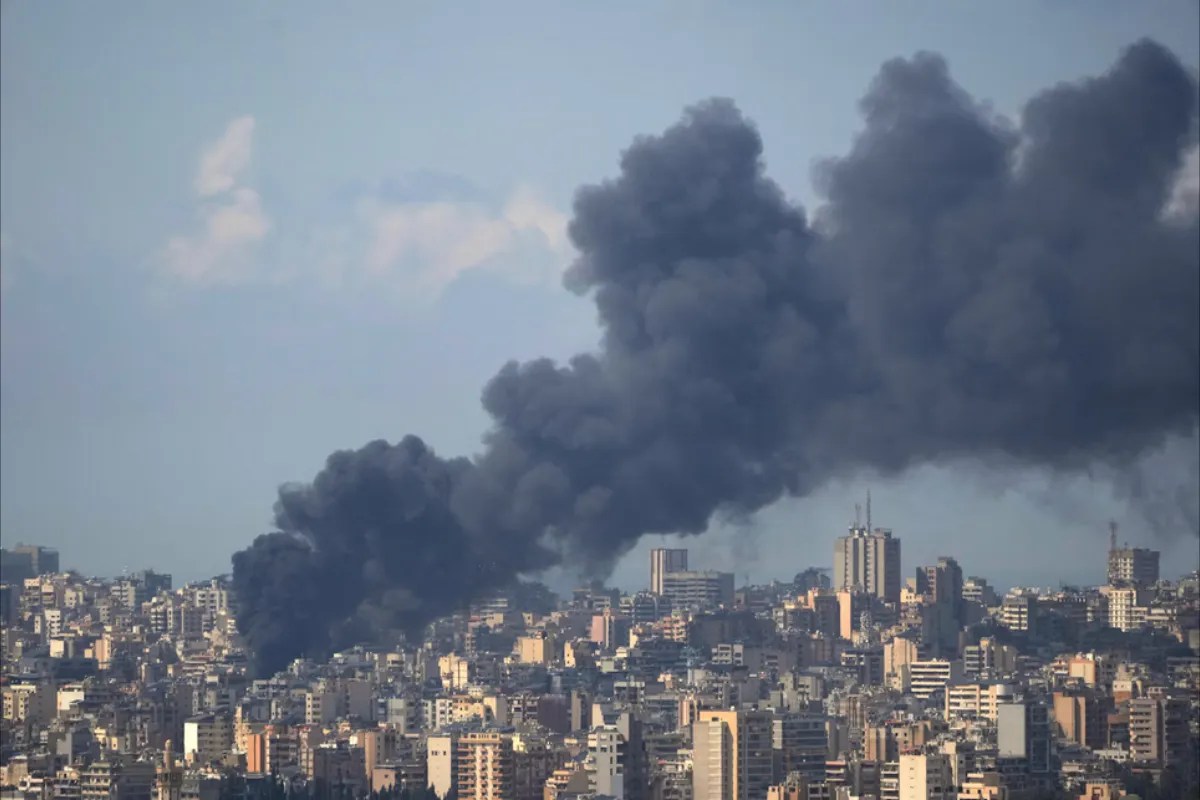
The current friction between Hezbollah and Israel has moved beyond sporadic border skirmishes into a phase of deliberate kinetic signaling. When Hezbollah issues a "karara jawab" (crushing response) threat, it is not merely rhetoric; it is a public articulation of a revised cost-benefit analysis. The stability of this conflict rests on a fragile equilibrium of mutual destruction, but recent shifts in Israeli operational depth and Hezbollah’s inventory management have altered the threshold for total war.
Understanding this friction requires a transition from viewing the conflict as a series of emotional outbursts to analyzing it as a mathematical function of theater-wide deterrence.
The Triad of Hezbollah’s Strategic Constraints
Hezbollah’s decision to escalate or maintain "active defense" is governed by three specific pillars. Each pillar acts as a structural limit on how far the group can push its military response without triggering a systemic collapse.
- The Domestic Legitimacy Barrier: Unlike a conventional army, Hezbollah operates within a fractured Lebanese state. The economic cost of a full-scale war—specifically the destruction of critical civilian infrastructure—serves as a domestic check. If the cost of "resistance" exceeds the perceived benefit of border sovereignty for the Lebanese populace, Hezbollah’s internal political capital depreciates.
- The Iranian Proxy Utility: From a regional perspective, Hezbollah serves as Iran's primary deterrent against a direct strike on its nuclear or energy infrastructure. Using the bulk of its precision-guided munitions (PGMs) in a secondary conflict over border villages diminishes the strategic value of the "Lebanon card" in the broader Tehran-Tel Aviv rivalry.
- The Asymmetric Capability Gap: While Hezbollah possesses an estimated 150,000 rockets, the quality of its delivery systems is non-uniform. The transition from unguided Katyusha rockets to long-range, GPS-integrated Fateh-110 missiles represents a point of no return. Using the latter forces Israel into a preemptive "clearance" operation, which Hezbollah may not be prepared to sustain over a multi-month timeline.
Defining the Threshold of 'Crushing Response'
The phrase "karara jawab" serves as a linguistic placeholder for a specific military doctrine: Proportionality Plus One. In this framework, Hezbollah seeks to respond to Israeli strikes with a slightly higher intensity or a deeper geographical reach, without crossing the red line that necessitates a ground invasion.
The variables that determine this response include:
- Geographic Depth: If Israel strikes targets in the Bekaa Valley or north of the Litani River, Hezbollah’s calculus shifts from border defense to theater-wide engagement.
- Target Classification: The shift from hitting military outposts to targeting "dual-use" infrastructure (power grids, communication hubs) marks a transition from tactical signaling to strategic warfare.
- Casualty Density: High-ranking commander assassinations force a response that is visible to the Hezbollah rank-and-file, regardless of the tactical risk.
The Logistics of Deterrence: Why Threats Are Quantifiable
The credibility of a threat in a high-tension corridor is measured by the "Logistics of Readiness." This involves the visible movement of assets and the activation of specific communication protocols.
The Missile Silo Bottleneck
Hezbollah’s primary advantage is its underground tunnel network and concealed launch sites. However, these assets have a "first-strike" expiration date. Once a launch site is used, its location is compromised by Israeli SIGINT (Signals Intelligence) and satellite thermal imaging. Therefore, every "crushing response" threat carries a hidden cost: the permanent loss of a concealed firing position.
The Iron Dome Saturation Math
A "crushing response" relies on the principle of saturation. Hezbollah knows that Israel’s Iron Dome and David’s Sling systems have a high interception rate but a finite number of interceptor missiles (Tamir missiles) available at any given battery.
To achieve a "crushing" blow, Hezbollah must calculate the $N+1$ variable, where $N$ is the maximum number of simultaneous intercepts an Israeli battery can handle. If Hezbollah launches 100 rockets at a single coordinate and the battery can only process 80, the 20 that get through represent the "success" of the threat. This is a cold, numerical reality that bypasses political bravado.
Israeli Counter-Logic: Preemption vs. Containment
Israel’s strategy is currently defined by a "Mowing the Grass" philosophy, which has recently evolved into "Proactive Degradation." This involves:
- Intelligence-Driven Attrition: Targeting mid-level commanders to disrupt the chain of command. This creates a "leadership vacuum" that slows down the execution of any promised "crushing response."
- Economic Pressure: By targeting financial institutions or logistics routes linked to the group, Israel attempts to increase the "Cost Function of War" for Hezbollah’s leadership.
This creates a paradox: the more Israel degrades Hezbollah’s capabilities to prevent a response, the more Hezbollah feels it must respond to maintain its deterrent credibility. This is a classic "Security Dilemma" where actions taken to increase one’s own security directly decrease the security of the opponent, leading to an involuntary escalation spiral.
The Intelligence Gap and the Risk of Miscalculation
The primary danger in the current environment is not a planned war, but an "Accidental Escalation." This occurs when one side misreads the other's "red lines."
- Faulty Signal Interpretation: Hezbollah might view a specific Israeli strike as a prelude to invasion, when it was actually a limited retaliatory move.
- The "Success" Trap: If a Hezbollah rocket accidentally hits a high-occupancy civilian target (like a school or hospital), the Israeli government loses the political maneuverability to respond proportionately. The resulting massive retaliation then forces the "crushing response" Hezbollah originally threatened, even if they no longer wish to execute it.
The Strategic Play: Navigating the Buffer Zone
The most likely outcome is not a sudden peace or a total war, but a permanent state of "High-Intensity Friction." To analyze the next 90 days, one must monitor the following technical indicators:
- UAV Flight Paths: Increased drone surveillance north of the Litani indicates Israel is mapping "Response Cells" for a preemptive strike.
- GPS Jamming Patterns: Widespread GPS spoofing in Northern Israel and Southern Lebanon suggests that both sides are preparing for or defending against PGM (Precision-Guided Munition) usage.
- Reserves Mobilization: Any quiet call-up of Israeli reservists or the movement of Hezbollah’s Radwan Force units toward the Blue Line serves as a more accurate predictor of intent than any televised speech.
Hezbollah’s threat of a "karara jawab" is a tool of psychological warfare designed to freeze Israeli decision-making. However, in a theater where both sides have perfect or near-perfect surveillance of the other, the room for "bluffing" has narrowed significantly. The conflict has transitioned into a "Transparent Battlefield," where every move is tracked, and every threat is weighed against the physical reality of the munitions available and the political will to use them.
The final strategic move for Hezbollah is to maintain the threat without ever having to fully execute it. For Israel, the goal is to degrade the capability to execute the threat while managing the optics of the border. This is a game of attrition where the winner is not the one who strikes hardest, but the one who can sustain the most pressure without the system fracturing. Any "crushing response" that results in the total destruction of Lebanese infrastructure is, by definition, a strategic failure for Hezbollah, regardless of the damage inflicted on Israel. The objective is survival through perceived strength, not victory through total engagement.
Maintain focus on the deployment of short-range ballistic missiles (SRBMs) near the border. If these units move from storage to active launch platforms, the transition from "threat" to "kinetic reality" is complete. Until then, the "karara jawab" remains a component of a sophisticated deterrence algorithm designed to maintain a status quo that is increasingly untenable for both parties.