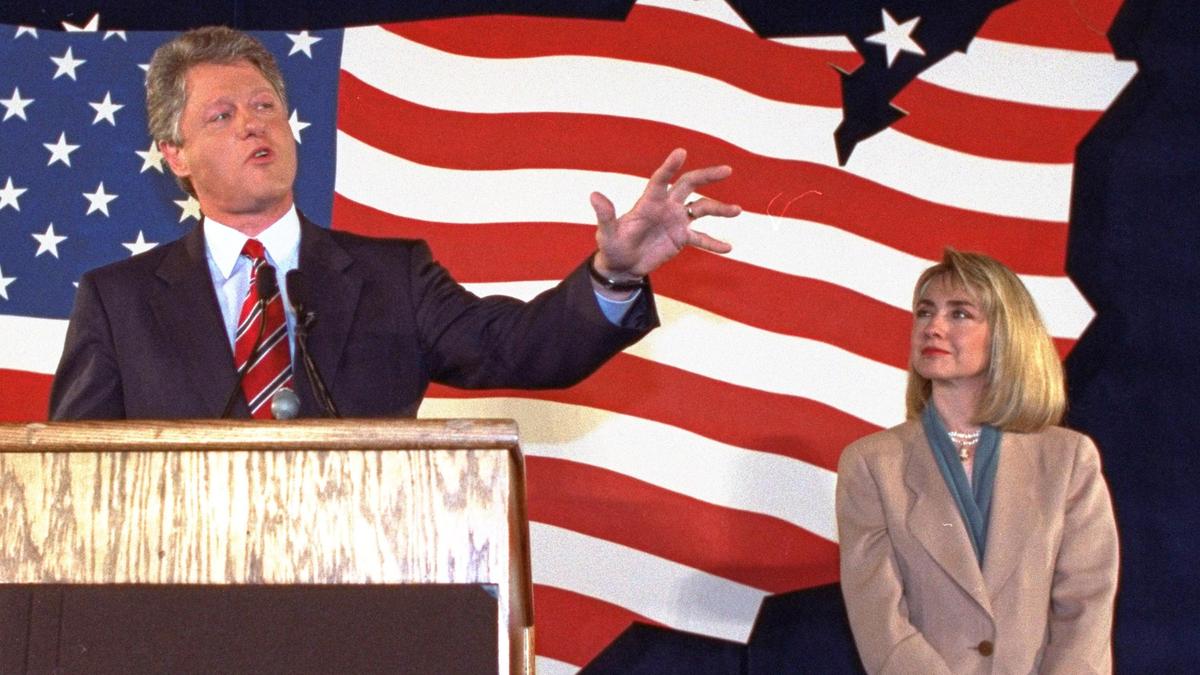
The recent release of archived video testimony by a House oversight panel has reignited a firestorm surrounding the long-documented association between Bill and Hillary Clinton and the late convicted sex offender Jeffrey Epstein. While the existence of these interviews was previously known to high-level investigators, the unsealing of the footage offers the public a first-hand look at the defensive posturing and carefully calibrated denials that have characterized the Clintons’ response to the scandal for over two decades. This is not merely a look back at an old controversy. It is a calculated political maneuver that forces a confrontation with the uncomfortable intersection of elite social circles and systemic exploitation.
The footage, spanning several hours of intense questioning, focuses on the specific timeline of the former president’s travels aboard Epstein’s private jet, the "Lolita Express." For years, the official line from the Clinton camp was that the relationship was strictly professional and limited to work related to the Clinton Foundation. However, the House panel’s investigation highlights discrepancies in flight logs and personal schedules that suggest a more frequent and familiar connection than previously admitted. The videos capture a specific kind of political theater—one where memory becomes selective and the definition of "socializing" is debated with surgical precision.
The Mechanics of Selective Memory
The most striking element of the newly released tapes is the body language of the subjects. Bill Clinton, known for his charismatic and expansive oratory style, appears remarkably constrained under the heat of the depositions. His answers are often punctuated by long pauses and a recurring reliance on the phrase "I do not recall." This isn't just a legal tactic. It is a structural defense mechanism used by those who understand that in a court of law, a failure to remember is far safer than a verifiable falsehood.
Investigators pushed hard on the 2002 and 2003 trips to Africa and Europe. These trips were billed as philanthropic missions, yet the presence of Epstein’s associates—individuals with no clear ties to global health or economic development—remains the central point of friction. When pressed on why Epstein was included in these high-level delegations, the responses remain frustratingly opaque. The strategy is clear: distance the office of the presidency from the personal conduct of the host, even when the two are inextricably linked by shared logistics.
Hillary Clinton’s testimony, by contrast, focuses on the periphery of the relationship. Her questioning delves into the social invitations and the presence of Epstein and Ghislaine Maxwell at family events, including Chelsea Clinton’s wedding. The defense here is one of social distance. By framing Epstein as a "friend of a friend" or a minor donor who managed to secure an invite, the goal is to minimize the intimacy of the connection. Yet, the sheer volume of contact points makes the "casual acquaintance" narrative difficult to maintain under sustained scrutiny.
Logistics of the Lolita Express
To understand why these videos matter now, one must look at the flight logs. Data doesn't have a political agenda. The logs show Bill Clinton traveled on Epstein's plane at least 26 times. The House panel has focused on the discrepancies between Secret Service records and the pilot’s manifests. On several occasions, the former president was reportedly without his security detail—a claim the Clinton team has vigorously denied.
If a former president did indeed waive his security detail to travel on a private jet owned by a man later revealed to be a serial predator, it represents a catastrophic failure of judgment and protocol. The videos show the committee trying to pin down exactly when the Secret Service was present and when they were bypassed. The responses are a masterclass in deflection. They pivot from the specifics of the manifests to the broader "intent" of the travel, effectively moving the goalposts whenever the data becomes too damning.
The Maxwell Connection
The role of Ghislaine Maxwell in these depositions cannot be overstated. She was the gatekeeper. Investigators are seen in the footage trying to establish how much direct contact Hillary Clinton had with Maxwell. The goal was to determine if the Clintons were aware of the allegations circulating about Epstein as early as the mid-2000s.
The testimony reveals a pattern of compartmentalization. By treating Maxwell as a legitimate socialite and Epstein as a wealthy benefactor, the Clintons were able to navigate these circles without—according to their testimony—ever seeing the darkness beneath the surface. Critics argue this is a form of willful blindness. It is hard to believe that the most briefed individuals on the planet were unaware of the rumors that had already begun to surface in Florida law enforcement circles by 2005.
Political Motivations and the House Panel
The timing of this release is, of course, inextricably linked to the current political climate. The House panel, led by opposition members, is transparently using the footage to damage the Clinton brand and, by extension, the broader party establishment. This does not, however, invalidate the content of the videos. Journalism requires us to separate the motive of the messenger from the truth of the message.
The "why now" is simple. By putting the Clintons back in the spotlight alongside Epstein, the committee is reminding voters of a specific era of "pay-to-play" politics and elite insulation. They are betting that the public’s appetite for accountability regarding Epstein has not been sated by his death or Maxwell’s conviction. They are looking for the bigger fish.
The counter-argument from Clinton supporters is that this is a "nothingburger"—a rehashing of old news designed to distract from current legislative failures. They point out that no criminal charges were ever filed against the Clintons in relation to Epstein. This is true. However, the standard for a public official isn't just "not being indicted." It is the maintenance of public trust and the avoidance of even the appearance of impropriety. On those counts, the videos offer a much bleaker assessment.
The Systemic Protection of the Elite
The Epstein saga is a case study in how wealth buys silence and how power creates a vacuum where the law struggles to enter. The depositions show how the legal system is navigated by those who can afford the best counsel. Every word is weighed. Every admission is hedged.
We see a recurring theme in the questioning: the "normalization" of Epstein. By inviting him into the inner sanctum of American power, the Clintons and others provided him with a level of prestige that acted as a shield. When a man is seen flying with a former president, local police departments are less likely to kick down his door. This is the "halo effect" of power. The House panel is attempting to dismantle that halo, showing that the association wasn't just a lapse in judgment—it was a crucial component of Epstein’s ability to operate with impunity for decades.
The interrogators focus heavily on the financial ties. While the Clinton Foundation has returned some donations linked to Epstein, the investigation suggests the financial web was more complex. They explore whether Epstein’s influence helped secure deals or access for other Clinton associates. This is the "why" that the competitor's article missed. It’s not just about the flights; it’s about the currency of access.
Accountability in the Post-Epstein Era
The death of Jeffrey Epstein in a federal jail cell left a vacuum of accountability. Victims were denied their day in court against the primary perpetrator, leading to a desperate search for justice elsewhere. This has put the "enablers" and "associates" in the crosshairs.
The House panel's release of these videos serves as a proxy trial. Since Bill and Hillary Clinton will likely never face a jury regarding their ties to Epstein, the court of public opinion is the only venue left. The footage is raw. It shows the frustration of the questioners and the iron-clad resolve of the witnesses. It is a document of a time when the elite thought they could outrun their associations.
The most damning takeaway isn't a single "smoking gun" quote. It is the cumulative weight of the evasiveness. When asked simple questions about travel and social gatherings, the complexity of the answers suggests a need to hide something more significant than a mere dinner party.
The Unanswered Questions
Despite the hours of footage, several key questions remain unanswered. The panel failed to secure a definitive explanation for the 2002 trip to the Azores, where flight logs and Secret Service records appear to diverge most sharply. They also failed to get a straight answer on the nature of the "consulting" Epstein allegedly provided on philanthropic initiatives.
The investigation also touches on the 2011 period—long after Epstein's first conviction in Florida. The committee wants to know why contact, even indirect, continued. The responses in the video suggest a total breakdown in vetting, or a belief that Epstein had "served his time" and was back in good standing. Both explanations are deeply problematic for a political dynasty that prides itself on meticulous optics.
The reality of these depositions is that they represent a stalemate. The Clintons are too experienced to be caught in a simple perjury trap, and the committee is too partisan to be seen as a neutral arbiter of truth. But for the public, the value lies in the transparency. Seeing the former leaders of the free world forced to answer for their proximity to a predator is a necessary, if uncomfortable, exercise in democracy.
The footage serves as a reminder that power is often a closed loop. The people at the top of the pyramid move in the same circles, fly on the same planes, and attend the same parties. When one of their own is revealed to be a monster, the first instinct is rarely to seek justice for the victims; it is to protect the perimeter of the circle. The House panel has, for a brief moment, breached that perimeter.
Demand a full audit of the Secret Service logs from the years 2001 to 2005.