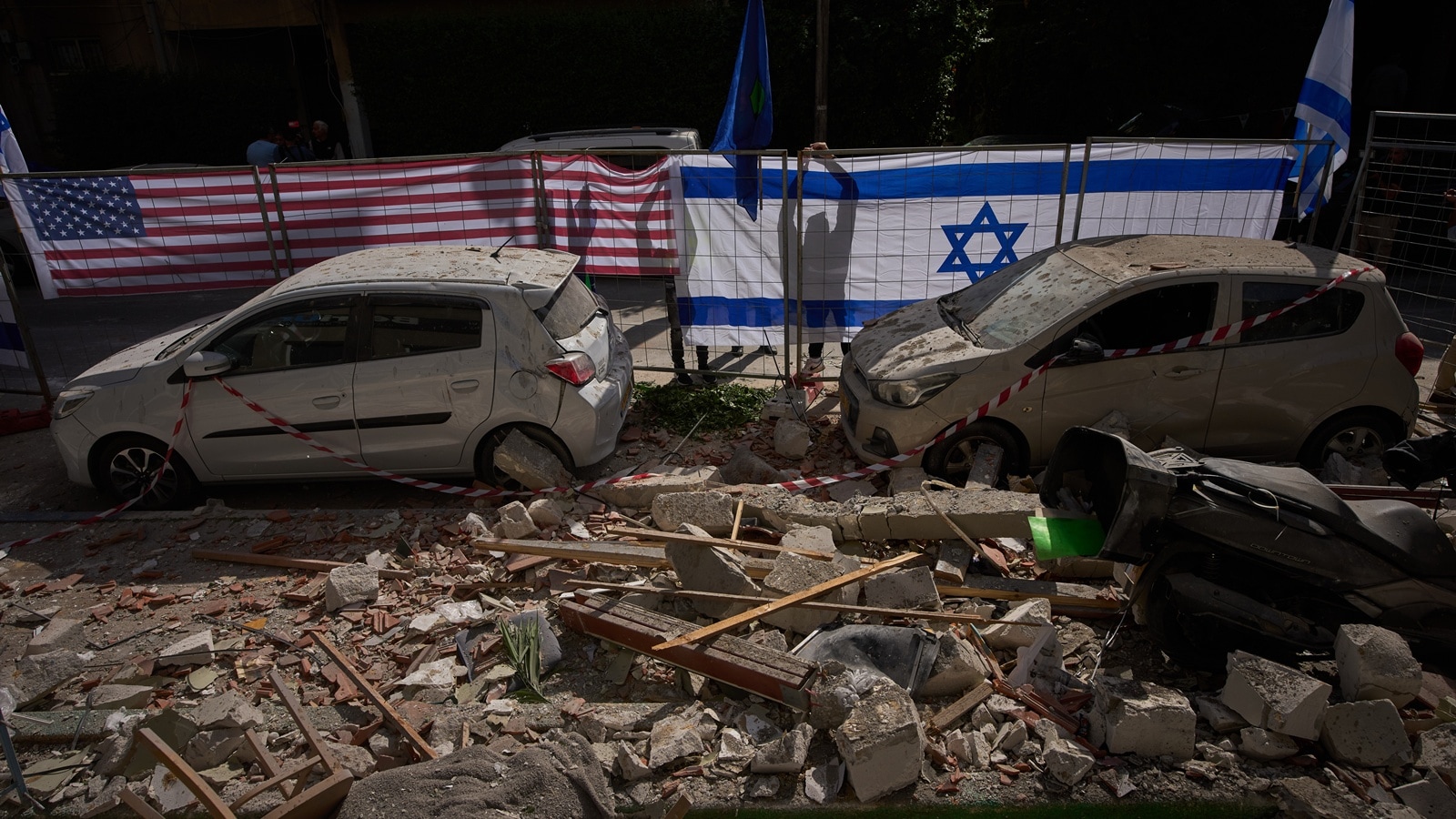
The global energy market just lost its safety net. When Iranian missiles impacted the Ras Laffan Industrial City in Qatar, they didn't just hit storage tanks and processing units. They struck the jugular of the global liquefied natural gas (LNG) trade. This wasn't a random act of aggression. It was a calculated, symmetrical response to the degradation of Iran’s own South Pars infrastructure. For decades, the narrative of Middle Eastern conflict focused on the Strait of Hormuz as a physical chokepoint. That era is over. We have entered the age of "infrastructure attrition," where the goal isn't to block a waterway, but to systematically dismantle the opponent’s ability to participate in the modern economy.
Ras Laffan is the nerve center of Qatar’s economic might. It sits atop the North Field, the world’s largest non-associated gas reservoir, which it happens to share with Iran’s South Pars. This geographic reality makes the strike particularly chilling. Iran isn't just attacking a neighbor; it is attacking the other half of its own lung. By targeting the processing facilities that turn raw gas into the liquid energy that heats European homes and powers Asian factories, Tehran has signaled that if its own energy exports are neutralized, no one in the region will be allowed to profit. Crude prices spiked 12% within ninety minutes of the first confirmed detonation. But the real story isn't the oil. It’s the gas.
The Myth of the Gas Buffer
For years, energy analysts argued that the transition toward LNG provided a layer of security that traditional oil pipelines lacked. The logic was simple. LNG is mobile. If one supplier goes down, ships can be diverted from another. That theory died today. Qatar provides roughly 20% of the world's LNG supply. When you take a fifth of any essential commodity off the board instantly, there is no "diversion" that can fill the void. The tankers currently sitting idle in the Persian Gulf are now floating liabilities, unable to dock at damaged berths and too vulnerable to risk the journey past Iranian coastal batteries.
The technical reality of an LNG terminal makes it an incredibly "soft" target for modern precision-guided munitions. Unlike a reinforced military bunker, an LNG train—the massive complex of pipes and heat exchangers used to liquefy gas—is a web of pressurized volatility. You don't need a nuclear warhead to cause a catastrophe. A well-placed drone or cruise missile can trigger a chain reaction of cryogenic failure and thermal radiation that renders a multi-billion dollar facility useless for months, if not years.
Asymmetric Escalation and the South Pars Factor
To understand why Ras Laffan was targeted, you have to look at the state of Iran’s South Pars. Reports indicate that recent "kinetic interference"—a polite term for sabotage and targeted strikes—has crippled Iran’s ability to maintain pressure in its wells. Iran has struggled for years under sanctions to get the spare parts needed for its compressors. When the South Pars facilities were hit earlier this month, it wasn't just a blow to their treasury; it was a threat to their domestic stability. Iran uses that gas to keep its own lights on.
Tehran’s military doctrine has long relied on "strategic envy." If they cannot have a functional energy sector, they will ensure their competitors face the same stagnation. By hitting Ras Laffan, they are forcing the international community to choose. Either the world steps in to de-escalate and allow Iranian energy to flow again, or the world watches the entire Gulf energy architecture crumble piece by piece. It is a hostage situation on a global scale.
The Failure of Regional Missile Defense
The strike also exposes a glaring hole in the high-tech defense umbrellas sold to Gulf monarchies over the last decade. Billions of dollars have been spent on Patriot batteries and sophisticated radar arrays. Yet, the saturation of the airspace above Ras Laffan proved that even the best defense can be overwhelmed by a mix of low-cost loitering munitions and high-speed ballistic missiles. The "cost-per-kill" ratio is tilted heavily in favor of the attacker. An Iranian-made drone costs a fraction of the interceptor missile used to shoot it down. When you fire fifty of them at once, the math becomes the enemy of the defender.
This isn't just a military failure; it's a structural one. Most defensive systems are designed to protect discrete high-value targets. But an industrial city like Ras Laffan is too sprawling to be fully encased in a protective bubble. The sheer surface area of the cooling towers, storage tanks, and loading docks makes total defense an impossibility. The attackers only have to be right once. The defenders have to be right every single time.
The Shadow of the Global Supply Chain
We are already seeing the secondary effects of the Ras Laffan strike in the shipping industry. Insurance premiums for vessels entering the Persian Gulf have tripled overnight. Some of the world’s largest shipping conglomerates are now considering a total suspension of routes through the region. If this happens, the "spike" in crude prices we saw today will look like a minor fluctuation.
Consider the ripple effect on European industry. Germany, having pivoted away from Russian pipeline gas toward global LNG, is now uniquely exposed. Their energy security was built on the assumption that the Persian Gulf would remain a stable, predictable conveyor belt of fuel. That assumption was a gamble, and today, the house lost. Factories in the Ruhr Valley are already looking at emergency rationing plans. This is how a regional conflict becomes a global recession.
Logistics of a Prolonged Outage
Repairing an LNG facility isn't like fixing a broken power line. These are bespoke, highly engineered environments. The specialized turbines and heat exchangers required at Ras Laffan often have lead times of eighteen to twenty-four months. Even if the shooting stopped tomorrow, the damage to the global energy supply is already baked in. We are looking at a multi-year deficit in gas availability.
The immediate shift will be toward coal and oil-fired power generation, ironically pushing global emissions targets into the bin. But even that shift requires infrastructure that many nations have spent the last decade decommissioning. There is no easy button. There is no strategic reserve of LNG that can be tapped to replace the Qatari output. What we have is a zero-sum game where every cargo of gas sent to London is a cargo taken away from Tokyo or Seoul.
The Intelligence Gap
The most troubling aspect of the Day 20 strike is the intelligence failure that preceded it. The "shadow war" between Iran and its rivals has been simmering for years, but the scale and precision of the Ras Laffan attack suggest a leap in capability that Western intelligence agencies clearly underestimated. The coordination required to hit multiple specific nodes within the industrial city simultaneously indicates a level of surveillance and planning that goes beyond simple satellite imagery. It suggests deep-seated vulnerabilities in the cyber-physical security of these plants.
Modern industrial facilities are controlled by SCADA (Supervisory Control and Data Acquisition) systems. If those systems are compromised, physical defenses become irrelevant. While there is no evidence yet of a cyber-attack accompanying the physical missiles, the synchronized nature of the strikes hints at a sophisticated understanding of the plant’s internal logic. You don't just hit the tanks; you hit the pumps that move the gas and the valves that prevent explosions.
The New Rules of Engagement
The strike on Ras Laffan has rewritten the rules of engagement in the Middle East. For years, there was an unspoken agreement that "critical infrastructure" of global importance was off-limits, or at least targeted with restraint. That taboo is gone. By striking a facility that the entire world relies on, Iran has moved from a regional power struggle to a direct challenge to the global order. They are betting that the world's hunger for energy will eventually force a concession.
This is a high-stakes play that could backfire. If the disruption is severe enough, it might trigger a multinational military intervention to "secure" the gas fields—a scenario that would lead to a full-scale regional war. But for now, Tehran is banking on the world’s risk aversion. They believe that the West is too fragile, too dependent on cheap energy, to risk a total conflagration. They are testing the limits of how much pain the global economy can endur before it breaks.
The Cost of Interdependence
The current crisis highlights the dangerous flip side of our interconnected world. We have optimized our global energy systems for efficiency and cost, but we have sacrificed resilience. We built a system that relies on a handful of massive hubs like Ras Laffan. When those hubs fail, the entire system enters a state of shock.
Investment in energy "islands"—localized, decentralized power sources—has never looked more attractive. But those projects take decades to build. In the short term, the world is tethered to the fate of a few square miles of Qatari coastline. The smoke rising from the storage tanks at Ras Laffan is a signal that the era of "safe" energy is over. Every nation now has to reckon with the fact that their power grid is only as secure as a pipeline or a tanker route thousands of miles away.
The crude price spike is a fever. The destruction of the LNG infrastructure is the underlying disease. As the fires at Ras Laffan continue to burn, the global economy is beginning to feel the first shivers of a long, cold transition. The question is no longer when prices will come down, but whether the system as we knew it can ever be rebuilt. The security of the global energy supply was always an illusion maintained by a fragile peace. Today, that illusion evaporated.
Monitor the Baltic Dry Index and the Platts LNG freight rates over the next forty-eight hours to see the true scale of the shipping freeze.