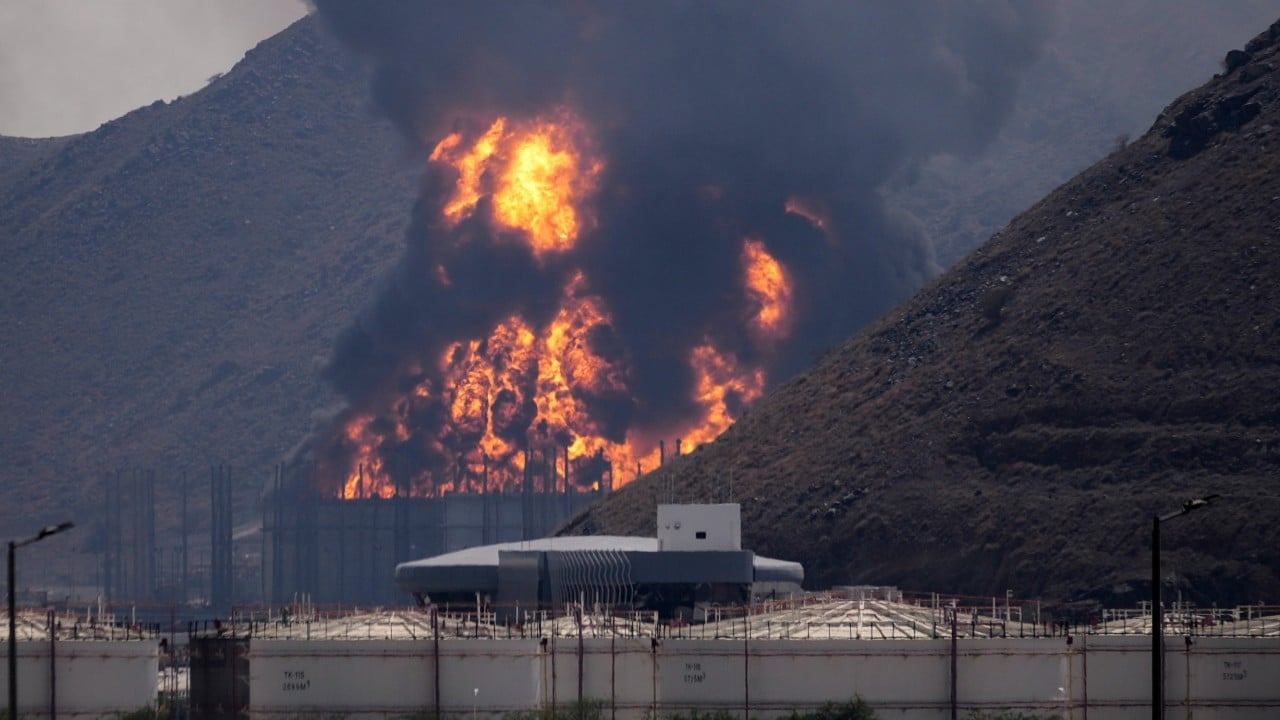
The global energy supply chain is currently navigating a period of forced adaptation as the conflict involving Houthi rebels and Iranian-backed maritime interference extends beyond initial tactical estimates. While political rhetoric often frames these disruptions as fleeting spikes, the underlying data suggests a shift in the Risk Premium Architecture of global shipping. Current projections from energy leadership indicate that the "several more weeks" of active kinetic engagement is not a countdown to a return to the previous status quo, but rather a transition toward a permanent high-friction maritime environment.
The duration of this conflict is dictated by a specific Asymmetric Attrition Loop. In this model, the cost of offensive hardware (unmanned aerial vehicles and anti-ship missiles) is orders of magnitude lower than the defensive countermeasures (Standard Missile-2 or Sea Viper interceptions) and the resultant insurance premiums for commercial vessels. This economic delta ensures that the conflict persists as long as the offensive actor maintains a baseline replenishment rate, regardless of the tactical success of Western naval coalitions.
The Three Pillars of Maritime Energy Vulnerability
To understand why the conflict's timeline is expanding, one must analyze the structural dependencies of the Suez Canal and the Bab el-Mandeb Strait. These are not merely geographic points; they are logistical bottlenecks that define the global Energy Throughput Velocity.
1. Tactical Decoupling of Pricing and Flow
The immediate impact of extended warfare in the Red Sea is not a physical shortage of oil, but a temporal delay. When tankers are rerouted around the Cape of Good Hope, it adds approximately 10 to 14 days to the voyage. This creates a "floating storage" effect.
- Inventory Lag: 12% of seaborne oil and 8% of liquefied natural gas (LNG) pass through this corridor. A three-week delay effectively removes millions of barrels from the immediate spot market, even if the total global volume remains constant.
- Vessel Tightness: Longer routes require more hulls to move the same amount of product. This reduces the available supply of Suezmax and VLCC (Very Large Crude Carrier) vessels, driving up charter rates globally.
2. The Insurance-Risk Feedback Loop
War risk premiums are not static. They function as a Cost Function of Perceived Persistence. As the conflict enters its second or third month, insurers transition from "event-based" pricing to "systemic-risk" pricing.
- Hull Stress: Premiums have surged from 0.01% to over 0.7% of a vessel's value.
- Threshold of Avoidance: Once the insurance cost exceeds the fuel savings of the Suez route, the rerouting becomes a permanent operational directive for shipping firms, regardless of whether a specific ship is targeted.
3. Supply Chain Elasticity Limits
The energy sector operates on a just-in-time delivery model. The "several more weeks" signaled by energy officials represents the timeframe in which existing onshore inventories in Europe and Asia can absorb the delay. Beyond this window, the Elasticity of Supply breaks, necessitating a drawdown of strategic reserves or a significant price correction to destroy demand.
Quantifying the Iran Variable: The Force Multiplier
The involvement of Iran serves as a strategic "force multiplier" that prevents a rapid resolution. The conflict is not a localized rebellion; it is a manifestation of Proxy Geometry.
The Replacement Rate Equation
The persistence of the war depends on the $R_{rep}$ (Replacement Rate) of Houthi munitions vs the $D_{cap}$ (Destruction Capacity) of coalition forces.
$$R_{rep} > D_{cap}$$
As long as this inequality holds, the maritime threat remains. Iranian logistical support provides a continuous flow of low-cost, high-impact components that circumvent traditional blockade measures. This allows the threat to remain "active" with minimal resource expenditure, effectively pinning down multi-billion dollar naval assets.
Strategic Ambiguity as a Market Tool
By maintaining a timeline of "weeks" rather than "months" or "years," energy officials attempt to prevent market panic. However, this creates a Information Gap. If the market expects a resolution in 21 days and the conflict reaches 45, the subsequent price correction is often more violent than if the market had priced in a six-month disruption from the start.
Technical Bottlenecks in Energy Infrastructure
The crisis reveals specific technical limitations in how the world moves and processes fuel. These are the physical realities that dictate the conflict's end-game.
- LNG Specialized Logistics: Unlike crude oil, LNG tankers are highly specialized and few in number. The diversion of LNG shipments from Qatar to Europe away from the Suez Canal is particularly disruptive because these ships operate on tightly choreographed delivery windows linked to regasification terminal schedules.
- Refinery Synchronization: European refineries are optimized for specific grades of crude. If Red Sea disruptions force a shift to North American or West African grades, the refinery "yield" changes. This creates localized shortages of specific distillates like diesel or jet fuel, even if the headline price of Brent crude remains stable.
The Strategic Shift to "Hardened" Logistics
The persistence of the war is forcing a pivot toward Logistical Hardening. This involves moving away from the efficiency-first models of the 2010s toward a resilience-first model.
- Strategic Pipeline Redundancy: Expect an accelerated focus on the East-West Pipeline in Saudi Arabia, which allows crude to bypass the Bab el-Mandeb entirely, though its capacity remains limited compared to total regional output.
- Autonomous Maritime Escorts: The transition to unmanned or remote-operated defensive platforms to lower the cost-per-interception for naval forces.
- Onshoring Energy Storage: A structural increase in the "days of cover" required for national energy security, moving from 60 days toward 90-120 days of inventory.
The duration of this conflict is ultimately a function of how long the global economy can subsidize the increased cost of transit. If the conflict lasts through the next fiscal quarter, we will see a fundamental repricing of global commodities to reflect the "Suez Bypass" as the new baseline for logistics.
The operational directive for energy firms and national treasuries is clear: treat the "several weeks" estimate as a floor, not a ceiling. Diversification of transit routes and the buildup of distillate inventories must be prioritized immediately to mitigate the inevitable transition from a tactical disruption to a structural shift in global trade. The window for low-cost maritime transit has closed; the new objective is the stabilization of a higher-cost, high-friction energy economy.
Energy stakeholders should initiate a tiered procurement strategy that locks in long-term charter rates for non-Suez routes now, before the broader market recognizes the permanency of the current risk profile. Waiting for a "return to normal" is no longer a viable risk management strategy.