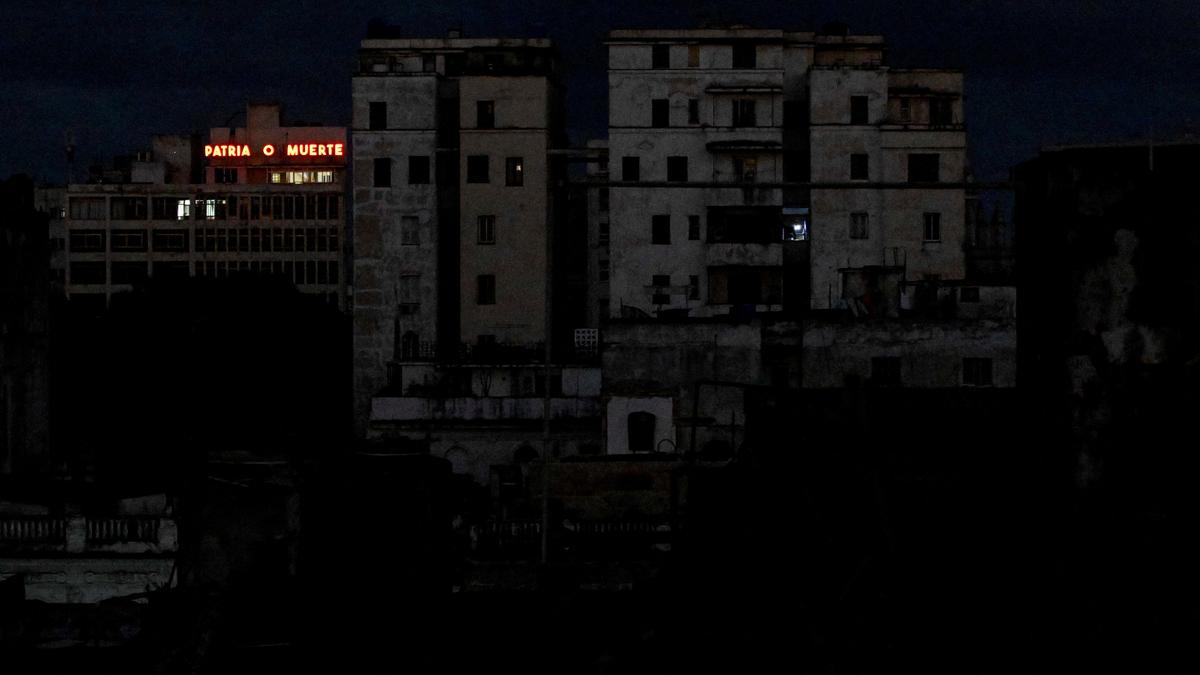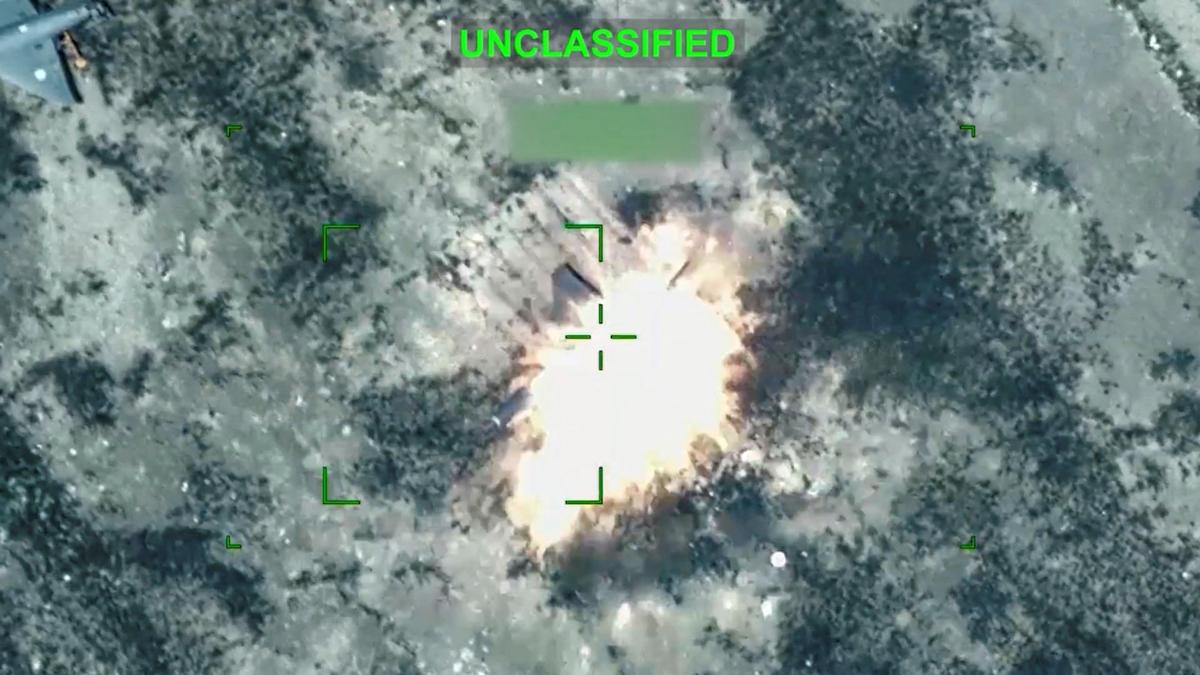
The modern military machine does not run on oil alone; it runs on a steady, high-voltage hum of electricity that most commanders take for granted until the lights go out. In the arid expanse of West Asia, that hum is currently under a direct and credible threat of silence. Iran’s Revolutionary Guard has issued a blunt ultimatum that fundamentally shifts the geography of the current conflict: if the United States follows through on President Donald Trump’s threat to "obliterate" the Iranian power grid, Tehran will retaliate by dismantling the civilian electrical infrastructure of neighboring countries that host and power American military bases.
This is not a mere rhetorical flourish in a three-week-old war. It is a calculated move to transform the regional energy grid into a collective suicide vest. By targeting the power plants in Gulf Arab states, Iran is not just aiming at the U.S. Central Command’s (CENTCOM) air-conditioned barracks; it is aiming at the desalination plants that provide 100% of the drinking water in nations like Qatar and Bahrain. The message is clear: if Tehran is plunged into darkness, the entire region will go thirsty.
The Fragility of the Desert Grid
For decades, the U.S. military presence in the Middle East has relied on a "plug-and-play" model. Bases like Al-Udeid in Qatar or Ali Al Salem in Kuwait are tethered to the domestic grids of their host nations. While these installations possess significant backup diesel generation for mission-critical systems, they are not designed to operate indefinitely in a total civilian blackout.
The Iranian threat targets the "soft underbelly" of these regional partners. The Gulf Cooperation Council (GCC) countries have spent billions building a highly efficient, interconnected power grid. However, that efficiency creates a cascading vulnerability. A precision strike on a few key switching stations or the massive gas-fired plants in eastern Saudi Arabia or the UAE would do more than just cut the lights. It would disable the massive pumps required for water desalination. In the desert, an electrical failure is a humanitarian catastrophe within 48 hours.
Tehran knows that the U.S. cannot easily defend every transformer and turbine across five different sovereign nations. By expanding the target list to include "economic, industrial, and energy infrastructures in which Americans have shares," Iran is also signaling a shift toward corporate warfare. This includes joint-venture refineries and tech hubs that form the backbone of the global energy market.
The Asymmetric Math of a Power War
President Trump’s 48-hour ultimatum, delivered via social media on March 22, 2026, assumes that the U.S. can "win" a grid war through sheer kinetic volume. The logic is simple: hit the biggest plants first, starting with facilities like Parand or Damavand, and force a surrender.
But the math of the Iranian grid tells a different story. Iran’s power system is massive, decentralized, and built on a foundation of thermal generation spread across a vast, mountainous geography. The Damavand plant, for instance, covers 200 hectares—roughly 30 times the size of Tehran’s Azadi Square. To fully "obliterate" such a facility requires a sustained bombing campaign, not a single surgical strike. Even the total destruction of a major plant like Damavand would only remove about 3.7% of Iran’s total capacity.
In contrast, the Gulf states have highly centralized infrastructure. Their "gleaming desert cities" are miracles of engineering that depend on a handful of massive, high-output facilities. If Iran utilizes its arsenal of "kamikaze" drones and ballistic missiles—some of which have already been spotted over the West Bank and as far as Diego Garcia—they only need to be right a few times to cause a regional collapse.
The Cyber Dimension and the Collapse of Boundaries
While the headlines focus on missiles, the real war is already being fought in the code. Since the initial strikes on February 28, 2026, which claimed the life of Iran's Supreme Leader, the boundary between cyber and physical attacks has effectively vanished.
Intelligence reports indicate that over 60 active threat groups are currently engaged in "hybrid" operations. Groups like "Handala Hack" and the "Electronic Operations Room" are not just defacing websites; they are probing the Industrial Control Systems (ICS) of regional water and power utilities. We have already seen the first physical consequences of this: drone strikes on data centers in the UAE and Bahrain have caused immediate cloud service disruptions for both civilian and military users.
The U.S. military is currently operating in a "dual-threat" environment. Commanders must defend against a physical missile hitting a substation while simultaneously guarding against a "wiper" malware attack that could brick the software controlling that same substation. This is the new reality of West Asian warfare: the grid is the frontline, and every citizen with a light switch is a potential casualty.
The Strategic Miscalculation
The current escalation reveals a fundamental misunderstanding of Iranian deterrence. By threatening the Iranian power grid, the U.S. is attacking the one thing that keeps the Iranian population tethered to their government’s stability. If that goes, Tehran has nothing left to lose.
The Iranian military’s "smart control" of the Strait of Hormuz is the final lever. They have warned that the waterway—which carries 20% of the world's oil and liquefied natural gas—will remain closed until every damaged Iranian power plant is rebuilt. This creates a circular trap: the U.S. strikes the grid to force the Strait open, but the strike itself ensures the Strait stays closed.
The global markets have already reacted. Brent crude is hovering near $113 a barrel, and the Indian rupee has hit record lows. This isn't just a regional spat; it’s an energy shock that rivals the 1973 crisis. The difference now is that the "weapon" isn't just the oil itself, but the electricity required to move it.
The United States and its regional allies are now faced with a choice that has no clean outcome. They can test Iran’s resolve and risk a regional blackout that would leave millions without water and stop the flow of global energy, or they can find a way to de-escalate a conflict that has moved beyond the battlefield and into the literal wiring of modern civilization.
Would you like me to analyze the specific vulnerabilities of the GCC "Interconnection Authority" grid that Iran might exploit in a retaliatory strike?