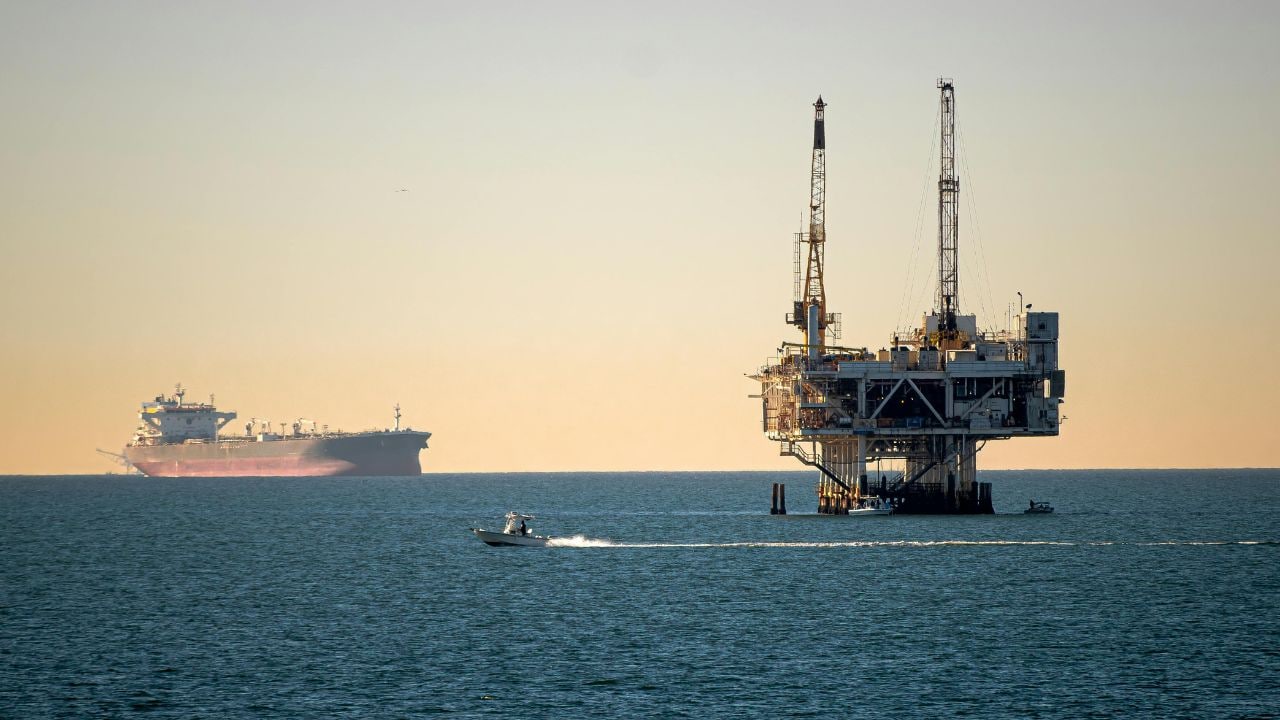
The recent surge in oil cargo prices is not a localized reaction to fear but a mathematical inevitability triggered by the convergence of physical supply inelasticity and the rising cost of risk. When market participants identify a potential supply shortage, the resulting price action reflects a structural shift from a "just-in-time" inventory model to a "preemptive accumulation" model. This transition revalues every physical barrel based on the immediate availability of transport and the shrinking buffer of global spare capacity.
To understand the current price floor, we must look past the headlines of "market jitters" and examine the three primary drivers of cargo valuation: technical scarcity, logistical friction, and the geopolitical risk premium.
The Triad of Cargo Valuation Drivers
Current market pricing functions as a weighted average of these three independent variables.
Technical Scarcity (The Supply Buffer)
Global oil markets operate on a razor-thin margin of spare capacity. When production nears its maximum output, the price of a cargo is no longer determined by the cost of extraction but by the marginal utility of the last available barrel. The current environment indicates that the delta between global demand and reliable supply has compressed to under 2% of total volume. This compression makes the market hyper-sensitive to any unplanned outage, as there is no slack in the system to absorb the shock.Logistical Friction (The Transit Tax)
A barrel of oil has zero value until it reaches a refinery. Therefore, the price of a cargo is inextricably linked to the availability and cost of Very Large Crude Carriers (VLCCs) and Suezmax vessels. Supply fears often trigger a scramble for tonnage, driving up Worldscale rates. When shippers anticipate a shortage, they lock in vessels longer, effectively removing "floating supply" from the market. This creates a feedback loop where the fear of shortage leads to an actual shortage of transport capacity, further inflating the landed cost of crude.The Geopolitical Risk Premium (The Cost of Uncertainty)
This is the most misunderstood component. It is not an arbitrary "fear index." It is a quantifiable insurance cost. As tensions rise in key transit chokepoints—such as the Strait of Hormuz or the Bab el-Mandeb—the cost of Hull and Machinery insurance, as well as Protection and Indemnity (P&I) coverage, spikes. These costs are directly passed through to the cargo price. If a vessel requires a 0.5% war risk premium on a cargo valued at $80 million, that adds $400,000 to the transaction cost before a single drop of oil is unloaded.
The Cost Function of Physical Crude Delivery
The price an end-user pays for a physical cargo is defined by the formula:
$$P_{cargo} = P_{benchmark} \pm \text{Differential} + \text{Freight} + \text{Insurance} + \text{Financing}$$
The "Differential" or "Basis" is where the most aggressive price action occurs during a supply scare. While Brent or WTI futures might move by 3%, the physical premium for immediate delivery (prompt barrels) can move by 10% or more. This phenomenon, known as Backwardation, occurs when the current price is significantly higher than the price for future delivery.
Structural Factors of Backwardation
- Depletion of Commercial Inventories: When stocks at major hubs like Cushing or Rotterdam fall below five-year averages, refineries lose their operational cushion. They are forced to bid aggressively for physical cargoes to maintain continuous operations.
- Refinery Run Rates: High refinery utilization rates increase the velocity of crude consumption. If a refinery is running at 95% capacity, its "days of cover" (the number of days it can operate on existing stock) drops rapidly, necessitating immediate physical purchases regardless of price.
- Quality Spreads: Supply shortages rarely affect all grades equally. If the shortage is concentrated in light-sweet crude, the spread between light and heavy grades widens. A shortage of "swing" barrels—those that can be easily processed by most refineries—creates localized price explosions that the aggregate benchmark may not fully capture.
Quantifying the Ripple Effect Through the Energy Value Chain
The surge in cargo prices triggers a sequence of economic recalculations that extend far beyond the trading floor.
The Margin Squeeze on Downstream Operators
Refiners are the first to feel the impact. Their profitability is dictated by the "Crack Spread"—the difference between the price of crude and the price of refined products like gasoline and diesel. When cargo prices rise faster than product prices, refinery margins compress. This often leads to "economic run cuts," where refineries intentionally slow down production because it is no longer profitable to process expensive crude. Ironically, this reduces the supply of gasoline, eventually driving those prices up and restoring the margin, but at a significantly higher price floor for the consumer.
The Role of Financial Speculation in Physical Markets
While the initial move is often driven by physical players (refiners and producers), financial participants (hedge funds and CTAs) amplify the trend. As these entities buy futures contracts to hedge against or speculate on rising prices, they drive up the benchmark price. Physical contracts, which are almost always pegged to these benchmarks, rise in tandem. This creates a "financial-to-physical" transmission mechanism where paper trading dictates the cost of real-world energy.
The Fragility of Just-in-Time Energy Systems
The current crisis exposes the inherent weakness in modern energy supply chains: the lack of redundancy. For decades, the industry optimized for efficiency, reducing storage costs and streamlining logistics. While this lowered prices during periods of stability, it removed the "shock absorbers" necessary for periods of volatility.
Storage as a Strategic Asset
Physical storage is the only true hedge against supply shortages. However, the cost of maintaining storage is high.
- Operational Expenditures (OPEX): Maintenance of tank farms and environmental compliance.
- Capital Lockdown: Holding a million barrels of oil at $80/barrel locks up $80 million in capital that could be used elsewhere.
- Evaporative Loss: Over long periods, physical volumes actually decrease due to evaporation and sediment buildup.
When the market enters a shortage phase, the value of having "oil in the tank" becomes astronomical, not just for the price of the oil itself, but for the operational certainty it provides.
Critical Bottlenecks in the Global Recovery
Even if production increases tomorrow, several bottlenecks prevent immediate price stabilization.
- Skilled Labor Shortages: The upstream sector (exploration and production) is struggling with a lack of specialized personnel. Years of underinvestment and the "Great Resignation" in the energy sector have left a void in technical expertise.
- Equipment Lead Times: Replacing a damaged offshore rig component or expanding pipeline capacity now takes 18-24 months due to supply chain disruptions in the steel and electronics industries.
- Regulatory Uncertainty: Divergent global policies on carbon emissions have made long-term capital allocation difficult. Producers are hesitant to invest billions in new capacity if they fear that capacity will be regulated out of existence within a decade.
The Strategic Pivot for Industrial Consumers
Companies and nations that rely heavily on oil must move away from reactive purchasing and toward a structured "Energy Resilience Framework."
1. Diversification of Supply Origins
The reliance on a single geographic region for crude supply is a systemic risk. Forward-thinking procurement teams are diversifying their "crude slate" to include grades from the Americas, West Africa, and the North Sea. While this may increase transportation costs in the short term, it provides an essential "kill switch" if one region's supply is compromised.
2. Integration of Advanced Hedging Instruments
Standard futures contracts are no longer sufficient. Sophisticated operators are using "Asian Options" (based on average prices over a period) and "Crack Spread Swaps" to protect their margins from the extreme volatility seen in physical cargo markets.
3. Investment in On-Site Storage and Blending
The ability to buy "distressed" cargoes or cheaper, lower-quality grades and blend them on-site to meet refinery specifications is a massive competitive advantage. This requires significant capital expenditure but pays for itself during the first major supply disruption.
The current price environment is not a temporary anomaly; it is a signal that the era of cheap, frictionless energy is over. The market is re-pricing oil to reflect its true complexity and the inherent risks of global distribution. Organizations that fail to quantify these risks using a structured, clinical approach will find themselves perpetually vulnerable to the next inevitable surge. The only path to stability is through the aggressive optimization of the physical and financial supply chain, recognizing that "fear" in the market is simply the realization of a lack of preparation.
To mitigate the impact of current volatility, firms should immediately audit their "time-to-refinery" metrics and identify the specific logistical chokepoints that contribute most to their landed cost. Shifting toward long-term charter agreements for vessels and securing physical supply through direct-to-producer offtake agreements will offer more protection than any amount of paper hedging in a supply-starved market.