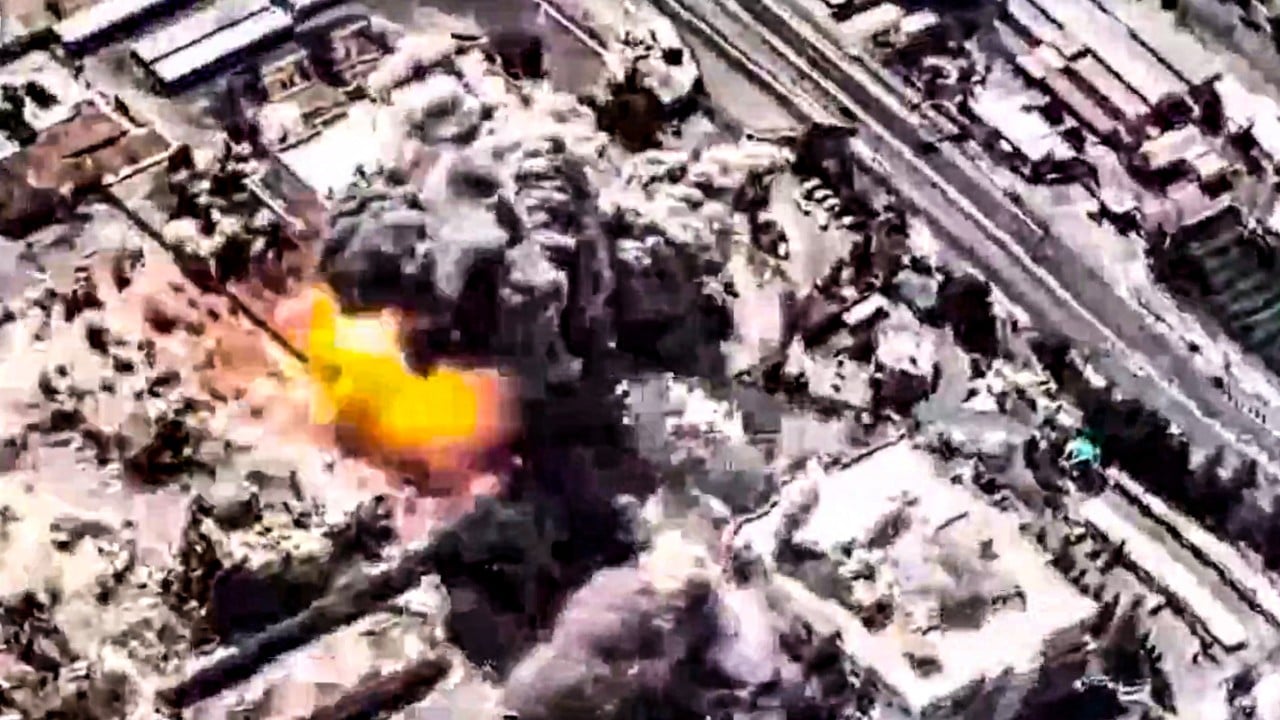
The midnight siren at RAF Akrotiri did more than just alert personnel to a security breach. It shattered a seventy-year illusion. For decades, this British Sovereign Base Area on the southern coast of Cyprus functioned as a quiet, untouchable outpost, a relic of empire repurposed for modern power projection. When an Iranian-designed Shahed-type drone impacted the runway in the early hours of Monday morning, it marked the first successful kinetic strike on the base since the mid-1980s. The physical damage was limited, but the psychological and strategic costs are profound. The incident exposes a critical vulnerability in British overseas military installations that can no longer be ignored or managed with outdated security protocols.
Military planners have spent years preparing for conventional threats, but the recent incursion reveals a stark disconnect between current defense infrastructure and the realities of modern asymmetric warfare. The drone, an inexpensive, low-flying munition, managed to penetrate layers of regional air defenses that include some of the most sophisticated surveillance technology in the Mediterranean. This was not a failure of equipment alone, but a failure of foresight. The decision to allow the United States to operate defensive strikes from British soil has turned these bases into direct, visible targets. The transition from a silent observer to an active participant in regional defense has stripped away the anonymity that historically kept Akrotiri safe.
The Illusion of Sovereign Security
RAF Akrotiri is not merely an airbase; it is a sprawling, distinct geopolitical entity. Established following the independence of Cyprus in 1960, the Sovereign Base Areas were designed to remain under exclusive British jurisdiction. They have hosted reconnaissance flights, training exercises, and air support operations for decades. Yet, the assumption that these bases possess some inherent, untouchable status is a dangerous anachronism.
In the 1980s, when Libyan militants targeted the base, the security environment was defined by localized, conventional threats. Today, the geography of the conflict has compressed. A drone launched from hundreds of miles away, or even a smaller vessel deployed by a local proxy, can now reach the heart of the facility within minutes. The base’s proximity to conflict zones in the Middle East has always been its greatest asset for power projection, but it is now its greatest liability.
The security alert issued to personnel—advising them to shelter in place and move away from windows—was a sobering moment for those living within the base’s perimeter. For the families of military staff, the barrier between the professional life of the soldier and their domestic safety has evaporated. This is the new reality: there is no longer a clear distinction between the frontline and the base.
The Technological Gap
The success of the drone strike highlights a specific, glaring weakness: the inability to detect and intercept low-velocity, low-altitude targets in a dense, multi-layered environment. Traditional radar systems, optimized for the detection of fast-moving jets, often fail to register the signature of a small, piston-driven or electric-powered drone. These vehicles are designed to blend into background noise.
The Ministry of Defence has stated that force protection is at its highest level, yet the evidence suggests a reliance on defensive systems that were not built for this specific type of threat. Counter-drone arrays, jamming, and spoofing technologies are being rushed into operation across the region, but these are reactive measures. The incident at Akrotiri proves that attackers are testing the limits of these defenses, identifying gaps in coverage, and exploiting the lag time between detection and response.
There is also the question of cost. Defending against a fleet of mass-produced, inexpensive drones using million-dollar interceptor missiles or sophisticated jet-based air defense is an unsustainable economic model. The attrition rate favors the attacker. If the base remains a target, the strain on military resources will grow, necessitating a shift toward electronic warfare, directed energy weapons, and a more integrated, local defensive web that does not rely on air-to-air engagements.
The Geopolitical Cost of Alignment
The decision by Prime Minister Keir Starmer to authorize the United States to use British bases for strikes against Iranian missile depots has fundamentally altered the security equation for the UK. While the government maintains that these actions are defensive and compliant with international law, the strategic reality is that Iran and its proxies view these bases as legitimate targets. By choosing to facilitate these operations, Britain has traded its status as a peripheral partner for that of a front-line combatant.
This is not a development that occurred in a vacuum. It is the result of a long-standing pattern of seeking to maintain global influence on a dwindling budget. The UK’s commitment to regional security in the Middle East is significant, but it is increasingly difficult to justify the risk to personnel when the defensive infrastructure is clearly struggling to keep pace with the threat.
Furthermore, the diplomatic fallout within Cyprus itself cannot be overstated. President Nikos Christodoulides has been quick to assert that Cyprus is not a participant in these military operations, attempting to insulate the island from the widening conflict. The presence of a foreign military base hit by enemy fire complicates this balancing act. Public opinion on the island is already fractured, and the prospect of becoming collateral damage in an Iran-US conflict will only increase domestic pressure on the Cypriot government to demand greater oversight or restrictions on the base’s activity.
A Strained Alliance
The relationship between the UK and its regional partners is also under stress. While the British government emphasizes coordination with the US, the reality on the ground is that local security is often left to the British military alone. The interception of subsequent drones by regional actors or the involvement of other nations, as seen with recent Greek naval movements, suggests that the security of the Eastern Mediterranean is becoming a shared responsibility by necessity rather than by design.
The British military is effectively operating with a stretched hand. The personnel at Akrotiri are highly trained, but they cannot compensate for the lack of a sufficient, multi-layered air defense umbrella that covers every approach vector to the base. The reliance on legacy systems while trying to integrate modern tech is causing friction within the operational command. It is a classic case of military overstretch, where the ambition of political policy exceeds the capacity of the defensive hardware on the ground.
As the conflict intensifies, the question remains: is the strategic value of the base worth the escalating risk? The Ministry of Defence will continue to argue that the facility is essential for national security and the protection of British interests. However, the events of this week suggest that those interests are becoming increasingly expensive to defend. The base is no longer a staging ground for distant missions; it is a participant in a localized, kinetic conflict.
The incident has provided a data point for intelligence agencies to analyze, but it has also provided a blueprint for future attacks. Adversaries now know how to penetrate the airspace around Akrotiri. They understand the protocols for dispersal, the reaction times of the local security forces, and the political sensitivities surrounding the base. The security status quo has been broken.
The government now faces an unavoidable choice. They must either commit to a complete overhaul of the defensive posture in Cyprus—investing in a level of anti-drone and anti-missile infrastructure that matches the current threat—or they must accept that these bases are no longer suitable for high-risk operations. The era of the "quiet" base is over.
There is an urgent need to examine the technical failure of the detection systems that allowed the drone to penetrate the perimeter. Would you like me to compile a detailed briefing on the specific counter-drone technologies currently being deployed by NATO and their efficacy against the Shahed-136 platform?