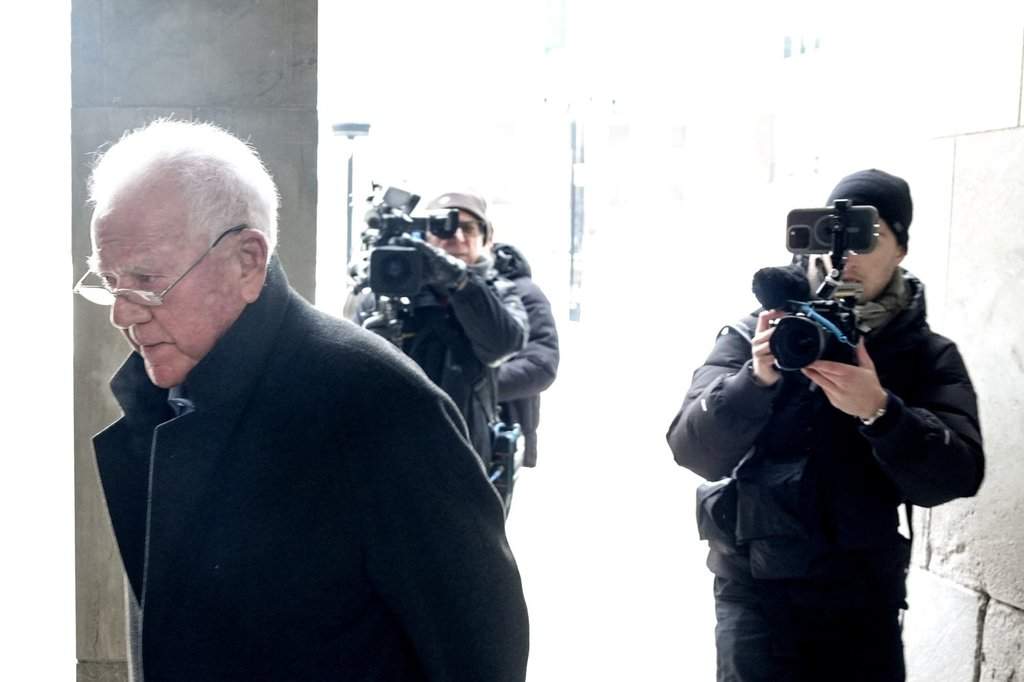
The conviction of Colin Gray for second-degree murder and involuntary manslaughter marks a violent shift in the American legal system. For decades, the law treated the parents of school shooters as tragic figures or, at worst, negligent guardians. That era is over. By holding a father criminally responsible for the specific murderous intent of his son, prosecutors have pierced the veil of individual agency that has defined Western criminal law for centuries. This isn't just about one family in Georgia. It is about a fundamental rewrite of how we define criminal responsibility in a country where the home is increasingly treated as the primary crime scene.
The jury’s decision to convict Gray for the actions of his son at Apalachee High School follows the precedent set by the Crumbley case in Michigan, but it goes deeper. It moves past simple negligence. It suggests that if you provide the means for a crime while ignoring clear psychological distress, you are not just an accessory. You are the architect. This legal evolution attempts to solve a systemic failure—the inability to stop school shootings—by turning the American household into a high-stakes zone of legal liability.
The Death of the Negligence Standard
Historically, parents faced "failure to supervise" charges or civil lawsuits. These were slaps on the wrist compared to the life sentences now being handed down. The shift from "you should have known" to "you are a murderer" is a massive leap.
Prosecutors argued that Colin Gray’s decision to buy his son an AR-15-style rifle, months after being questioned by the FBI regarding online threats, constituted a "depraved heart" or a total disregard for human life. This is the mechanism of the second-degree murder charge. It bypasses the need to prove that Gray wanted the students dead. It only requires proof that he acted with such recklessness that he effectively signed the death warrants himself.
The defense often relies on the idea of the "wayward child." The argument is that a parent cannot control the internal thoughts of a teenager. However, the evidence in the Gray case shredded that defense. When a parent is warned by federal authorities and responds by purchasing the exact tool used in the eventual massacre, the "I didn't know" defense transforms into a confession of complicity.
The Weaponization of the Home
We have to look at the hardware. The choice of weapon in these cases is never incidental. It is the centerpiece of the prosecution’s narrative. By focusing on the specific lethality of the firearm provided, the state is making a broader point about the responsibilities of gun ownership that the Second Amendment does not address.
In most states, "secure storage" laws are weak or nonexistent. Prosecutors are now using high-level felony charges to fill the vacuum left by stalled legislatures. If a state won't pass a law requiring a gun lock, a prosecutor will simply use a murder statute to achieve the same deterrent effect. This is "legislation by litigation." It is a messy, reactive way to handle public safety, but in the absence of federal policy, it has become the only tool left in the box.
Consider the timeline.
- May 2023: FBI interviews the Grays about Discord threats.
- December 2023: Colin Gray buys his son the rifle as a Christmas gift.
- September 2024: The shooting occurs.
This timeline creates a narrative of "active enablement." It suggests that the parent wasn't just passive; they were an accelerant.
The Psychological Fallout for Families
What does this do to the American family unit? We are entering a period where parents must essentially act as informants against their own children to avoid life in prison.
Defense attorneys argue this creates an impossible standard. They suggest that the "reasonable person" standard is being replaced by a "perfect hindsight" standard. If a child is depressed, is the parent a criminal for having a kitchen knife in the house? If a child is angry, is the parent liable for the car keys? The Gray conviction suggests that the line is drawn at the point of "extraordinary risk," but the definition of "extraordinary" is moving.
There is a dark irony in these prosecutions. The state often fails to provide the mental health resources or the red-flag laws that would allow a parent to intervene effectively. Then, when the worst-case scenario unfolds, the state pivots to punish the parent for the very systemic failures the government could not solve. It is a convenient way to find a scapegoat when the public demands blood but the shooter is a minor or deceased.
Constitutional Friction and the Future of Liability
The Gray conviction will inevitably face appeals that challenge the core of vicarious liability. Can one person truly possess the mens rea—the guilty mind—for another person’s act of murder?
The American legal tradition is built on individualism. You are responsible for your sins, and your son is responsible for his. By blurring this line, we are adopting a more communal, almost tribal, form of justice. This may satisfy the public's need for accountability, but it creates a volatile precedent. If this logic is applied to other crimes—gang violence, drug distribution, or even vehicular manslaughter—the net of criminal liability could expand to include anyone who provided the resources used in a crime.
This isn't a hypothetical slippery slope. It is the new reality of the courtroom.
The Warning Shot to Gun Owners
This case serves as a brutal education for millions of American gun owners. The "it can't happen to me" mentality is a liability.
If you own a firearm and live with a minor, you are now legally tethered to that minor’s mental state. Your freedom depends on their stability. This conviction effectively mandates a level of vigilance that borders on the professional. You are no longer just a parent; you are a de facto safety officer with a mandatory life sentence hanging over your head if you miscalculate.
The strategy for future prosecutions is now clear.
- Establish Prior Knowledge: Find any text, search history, or school report that suggests the child was troubled.
- Highlight Access: Prove the parent facilitated access to the weapon, even through omission.
- Charge the Highest Felony: Skip the negligence charges and go straight for murder.
This blueprint worked in Michigan. It worked in Georgia. It will be used again in every state that sees a high-profile tragedy.
The legal community is divided on whether this actually prevents shootings. Hardline prosecutors argue that the fear of a murder charge will force parents to lock up their weapons. Civil libertarians argue that it will only lead to parents hiding their children's problems from authorities to avoid drawing attention to the household.
The immediate takeaway for any household with a firearm is clear: the law no longer cares about your intentions. It only cares about the outcome. If your child pulls the trigger, the state will treat your hand as if it were on top of theirs.
Check the locks on your gun safe today. The state is no longer interested in your excuses, and the precedent for your imprisonment has already been set.
Beyond the Courtroom
This shift in the legal landscape mirrors a broader cultural exhaustion. The public is tired of "thoughts and prayers." They want consequences. When the perpetrator is a child, the legal system struggles to find a punishment that fits the scale of the grief. Targeting the parents provides a surrogate for that rage. It is a form of justice that is both cathartic and deeply troubling.
We are watching the birth of a new doctrine where the "failure to act" is treated with the same severity as the "intent to kill." This is a fundamental change in how we view the obligations of the individual to the collective. Whether it stays confined to the realm of school shootings or expands into other areas of parental responsibility will be the defining legal battle of the next decade.
The Gray case has proven that the "not my fault" defense is dead. In its place is a new, cold reality: if you provide the match, you are responsible for the entire fire. Every parent in America just received their final warning.