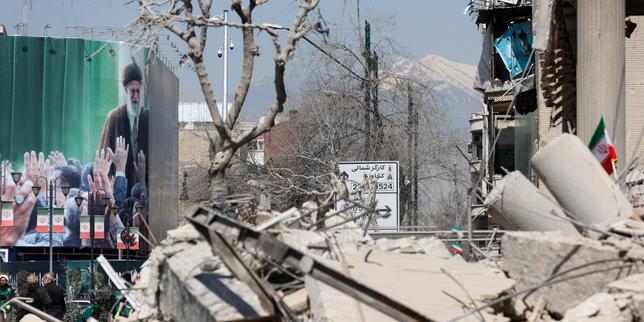
The air in the corridors of the Assembly of Experts does not move. It is heavy with the scent of rosewater and the suffocating weight of a secret everyone knows but no one dares whisper too loudly. Somewhere in the sprawling complex of the Beit-e Rahbari, the leadership residence, an eighty-six-year-old man breathes, and with every shallow intake of air, the geopolitical tectonic plates of the Middle East shift a fraction of a millimeter.
Ali Khamenei is not just a leader. He is the sun around which the entire Iranian solar system revolves. When that sun flickers, the planets—the Revolutionary Guard, the clerics, the street protesters, and the proxy militias from Beirut to Sana’a—begin to wobble in their orbits.
The scramble to find a successor is no longer a dignified process of clerical selection. It has become a frantic, high-stakes race against time and gravity. Outside the borders, specifically in the command centers of Tel Aviv, the mood is not one of mourning or diplomatic waiting. It is one of predatory focus. To the Israeli intelligence apparatus, the man who steps into that empty chair isn't just a political figure. He is a target marked for "unequivocal elimination" before he can even settle into the cushions.
The Architect of the Shadows
To understand why the world is holding its breath, you have to look at the man in the middle of the storm. For decades, the Supreme Leader has acted as the ultimate arbiter, the one who balances the fanatical ideological wings of the regime against the pragmatic survivalists. He is the glue.
Imagine a master weaver standing at a massive loom. The threads are messy—economic sanctions that have bled the middle class dry, a younger generation that views the morality police with visceral hatred, and a military-industrial complex (the IRGC) that now owns more of the country’s GDP than the state itself. Khamenei has kept those threads from snapping.
But looms eventually break.
The current atmosphere in Tehran is one of managed panic. Reports suggest the regime is doing its "absolute best" to fast-track a replacement. This isn't about finding the most pious man; it's about finding the most durable one. They need someone who can command the loyalty of the Revolutionary Guard while convincing a starving population that the "Great Satan" is still the primary cause of their empty refrigerators.
The Heir and the Ghost
Names float through the smoke-filled rooms like ghosts. For a long time, the path seemed clear: Ebrahim Raisi, the "Butcher of Tehran," was being groomed for the role. He was the perfect loyalist. Then, a helicopter went down in the fog of the East Azerbaijan province. In an instant, the regime’s carefully laid plans were scattered across a mountainside.
Now, the eyes turn toward Mojtaba Khamenei, the Supreme Leader’s son. This is a dangerous gambit. The 1979 Revolution was fought to end hereditary monarchy—to topple the Shah. For the Islamic Republic to install a son to succeed a father would be a move of profound historical irony. It would signal that the "Republic" part of the name is officially dead, leaving only an autocracy draped in a turban.
The risk for the regime is internal collapse. If the IRGC decides they don’t like the chosen successor, or if the clerics in Qom feel their religious authority is being sidelined by a military junta, the transition won’t be a passing of the torch. It will be a fire.
The View from the Mediterranean
While Tehran looks inward, Israel is looking through a high-resolution lens. The rhetoric coming out of the Israeli defense establishment has shifted from "containment" to "decapitation."
There is a cold, mathematical logic to their warning. Israel sees the transition period as a moment of maximum vulnerability. In the world of intelligence, a regime change is a "seam"—a gap in the armor where the old networks are being dismantled and the new ones haven't yet taken root.
By declaring that any successor will be a "target for elimination," Israel is essentially telling the Iranian elite that the chair they are fighting over is rigged with explosives. It is a psychological warfare tactic designed to make the job of Supreme Leader the least desirable promotion in history.
Consider the "Targeting Cycle." It is a concept used by special forces and intelligence agencies to describe the process of identifying, tracking, and neutralizing a threat.
- Find: Locate the candidate in the labyrinth of Tehran’s bureaucracy.
- Fix: Monitor their movements, their communications, and their inner circle.
- Finish: The kinetic strike—a drone, a long-range missile, or a mossad-linked operation.
By signaling their intent so early, Israel is forcing the Iranian regime to spend more resources on security than on governance. It forces the successor into a bunker before they even take the oath. A leader who cannot be seen, who cannot travel, and who cannot meet his people is a leader who cannot rule effectively.
The Invisible Stakes for the Iranian Street
Away from the war rooms and the mahogany tables of the Assembly, there is the human element. The Iranian people are the "unseen characters" in this drama.
Think of a young woman in Isfahan. She doesn't care about the theological lineage of the next leader. She cares about the fact that her currency has lost more than 90% of its value over the last decade. She cares that she cannot speak her mind without fear of the "Van with the Green Stripe."
To her, the succession is a game of thrones played by old men who have stolen her future. The "best efforts" of the regime to find a successor are, to her, simply the efforts of a dying system to find a new face for the same old oppression.
The danger of a "hardline" transition—one where a radical is installed to show strength against Israel—is that it usually involves a domestic crackdown to "stabilize" the country. We have seen this pattern before. Whenever the regime feels threatened from the outside, it tightens the noose on the inside.
The Looming Collision
We are witnessing a collision between two irreconcilable forces. On one side, a regime that believes its survival depends on a seamless, ideological succession that keeps the "Resistance Axis" intact. On the other, a regional superpower that believes its survival depends on ensuring that the head of that axis is never allowed to stop looking over his shoulder.
The stakes are not just political. They are existential. If the succession goes wrong, Iran could fracture into a civil conflict between the military and the clergy, creating a power vacuum that would draw in every neighbor from Turkey to Pakistan. If the succession goes "too well" and a militant hardliner takes the reigns, the shadow war with Israel could finally spill out into a direct, scorched-earth conflict.
The "Empty Chair" is a vacuum, and nature—especially the nature of power—abhors a vacuum.
The regime is moving fast because they know that every day the chair remains empty, the aura of the Supreme Leadership fades. They are racing against the biology of an old man and the technology of an enemy that can see into their bedrooms.
The real tragedy is that in this high-stakes game of shadows and drones, the voices of 85 million Iranians are being drowned out. They are the ones who will live with the consequences of the selection, yet they are the only ones not invited to the table.
As the sun sets over the Alborz Mountains, the lights stay on in the halls of power. In Tel Aviv, the satellites are positioned. In Tehran, the ballots are being vetted. The world watches the chair, waiting to see who will sit in it, and wondering if they will survive the first day of their new life.
The succession is not a transition of power. It is a gamble with the fate of a nation, played on a board where the pieces are made of flesh and the stakes are measured in blood.
Somewhere in a quiet room in Tehran, a pen is hovering over a list of names. The ink is dry, but the hand is shaking. The person who becomes the next Supreme Leader won't just be taking on a title. They will be stepping into a crosshair that has been calibrated for years, waiting for a head to fill the frame.
The silence in the corridors is not peace. It is the indrawn breath before a scream.
Would you like me to research the specific legal mechanisms the Assembly of Experts uses to finalize a successor during a state of emergency?


