The silence in the Miller household doesn't just sit there. It breathes. It has a weight that presses against the floral wallpaper of a teenage girl’s bedroom, a room that remains perfectly preserved, like a museum dedicated to a life that was supposed to last eighty years longer than it did. When Sarah Miller died in the autumn of 2025, she wasn't just a statistic in a government report. She was a girl who loved charcoal sketching and had a habit of leaving half-finished tea mugs all over the house.
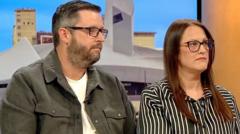
Now, her parents, Mark and Elena, sit across from me at a kitchen table that feels far too large for two people. They aren't policy experts. They aren't lobbyists. They are simply two people who realized, far too late, that the safety net they assumed was underneath their daughter was actually a series of gaping holes held together by bureaucratic string. Building on this theme, you can also read: Why the Green Party Victory in Manchester is a Disaster for Keir Starmer.
"You spend your whole life teaching them to look both ways before crossing the street," Mark says. His voice is sandpaper. He keeps rotating his wedding band, a nervous habit that seems to be the only thing keeping him anchored to the chair. "You lock the cabinets. You check their homework. But you don't realize the real threats are the ones the government hasn't even bothered to name yet."
The Invisible Cliff
The tragedy of 2025 wasn't a single event. It was a systemic failure of gravity. For years, the digital and mental health landscape for teenagers has been shifting, moving faster than the legislative pen can move across paper. We are living in an era where the risks facing our children have been outsourced to algorithms and underfunded community programs that were designed for a world that ended twenty years ago. Observers at The New York Times have shared their thoughts on this trend.
Consider the reality of a modern crisis. When a teenager reaches out for help today, they aren't met with a robust, immediate infrastructure. They are met with a "waitlist." In many states, the delay to see a mental health specialist for an adolescent can stretch into months. For Sarah, that month was a lifetime.
The Millers did everything "right." They sought help. They called the numbers on the back of the insurance cards. They looked for the community support promised in stump speeches and town hall meetings. What they found instead was a labyrinth of dead ends. Elena describes it as trying to put out a house fire with a thimble of water while the fire department sits two blocks away, waiting for a signature to authorize the dispatch.
A Budget for the Future or a Ghost of the Past
We often talk about government support in terms of dry, astronomical numbers. A billion dollars here. A subsidy there. But to a family in the middle of a breakdown, those numbers are meaningless if they don't translate into a human being who can walk through the front door.
The core of the issue lies in the disparity between the world we inhabit and the one our laws acknowledge. Since the early 2020s, the rise of synthetic social pressures and the isolation of the "screen-first" generation have created a specific kind of psychological frailty. The government’s response has been, largely, to offer more of the same—outdated school counseling programs that are overwhelmed and under-equipped.
"They told us there was a program," Elena says, her eyes fixed on a stray crumb on the table. "A state-funded initiative for high-risk teens. We applied in June. We got the acceptance letter three weeks after the funeral."
This isn't just an anecdote. It is a recurring theme in the testimony given by parents to legislative committees throughout the early months of 2026. The lag time between a child's cry for help and the government's response isn't just an inconvenience. It is a fatal flaw in the social contract. We pay our taxes and we follow the rules with the implicit understanding that the collective power of the state will be there when the individual's strength fails.
That contract has been breached.
The Geography of Neglect
If you live in a zip code with a high median income, you might find a way around the crumbling public infrastructure. You can pay out of pocket. You can skip the line. But for the vast majority of families, the government is the only option.
Imagine a bridge.
The bridge is meant to carry children from the turbulent waters of adolescence to the stable ground of adulthood. Right now, that bridge is missing the middle planks. Most kids have the balance to hop over the gaps. Some have parents who can lay down temporary boards. But some—the ones like Sarah, who are carrying heavier loads than they let on—fall through.
The government support being called for isn't just "more money." It is a fundamental redesign of how we catch people. It involves:
- Immediate, 24-hour crisis intervention teams that operate with the same urgency as paramedics.
- Federal mandates that force insurance providers to treat mental health with the same structural parity as a broken leg.
- A massive reinvestment in school-based professionals who aren't just there to administer standardized tests, but to recognize the subtle scent of despair before it turns into a fire.
The Human Cost of "Wait and See"
Legislators often play a game of "wait and see." They wait for more data. They see if the next fiscal year offers more breathing room. They wait for the public outcry to die down so they can pivot back to safer, more profitable topics.
But grief doesn't wait. It doesn't follow a fiscal calendar.
Mark and Elena Miller didn't want to be activists. They didn't want to stand in front of cameras or sit across from journalists. They wanted to be at a high school graduation this spring. They wanted to complain about the loud music coming from the upstairs bedroom. They wanted the mundane, boring, beautiful life of a family that is whole.
"Everyone wants to talk about 'resilience,'" Mark says, and for the first time, there is a flash of anger in his eyes. "They want our kids to be resilient. They want us to be resilient. I'm tired of being resilient. I want a system that works so we don't have to be 'strong' every second of the day just to keep our heads above water."
The Millers' story is a warning. It is a jagged piece of glass in the palm of a society that has become too comfortable with "acceptable losses." When we talk about government support, we aren't talking about charity. We are talking about the basic duty of a civilization to protect its most vulnerable members from a storm they didn't create.
The Weight of the Pen
As I leave their home, Elena hands me a small charcoal sketch. It’s a drawing Sarah made of a bird mid-flight. It’s unfinished. The left wing is detailed, every feather etched with precision, but the right wing fades into a blur of gray.
It is a haunting metaphor for a generation.
We provide the foundation. We provide the education. We provide the "left wing." But when it comes to the support needed to actually stay aloft in a world that grows increasingly complex and cold, we leave them with a blur of gray.
The calls for reform are growing louder, but the hallways of power are long and muffled. The parents of 2025 aren't asking for miracles. They are asking for a world where a child's life isn't determined by the speed of a bureaucratic stamp. They are asking for a seat at the table for the children who are no longer here to sit in them.
The coffee on the table has gone cold. The sun is setting, casting long, thin shadows across the kitchen floor. In a few minutes, Mark and Elena will start making dinner. They will set two plates. They will look at the third chair. And they will wait for a government that has promised them everything and, so far, delivered a acceptance letter to a program for a girl who is already gone.
The most dangerous thing a society can do is convince its citizens that they are alone in their darkest hour.
We are currently doing exactly that.
Every day we delay, every time a bill is tabled or a budget is trimmed, we are effectively telling the next Sarah Miller that her life is a luxury we cannot currently afford.
The silence continues to breathe. It waits for an answer.