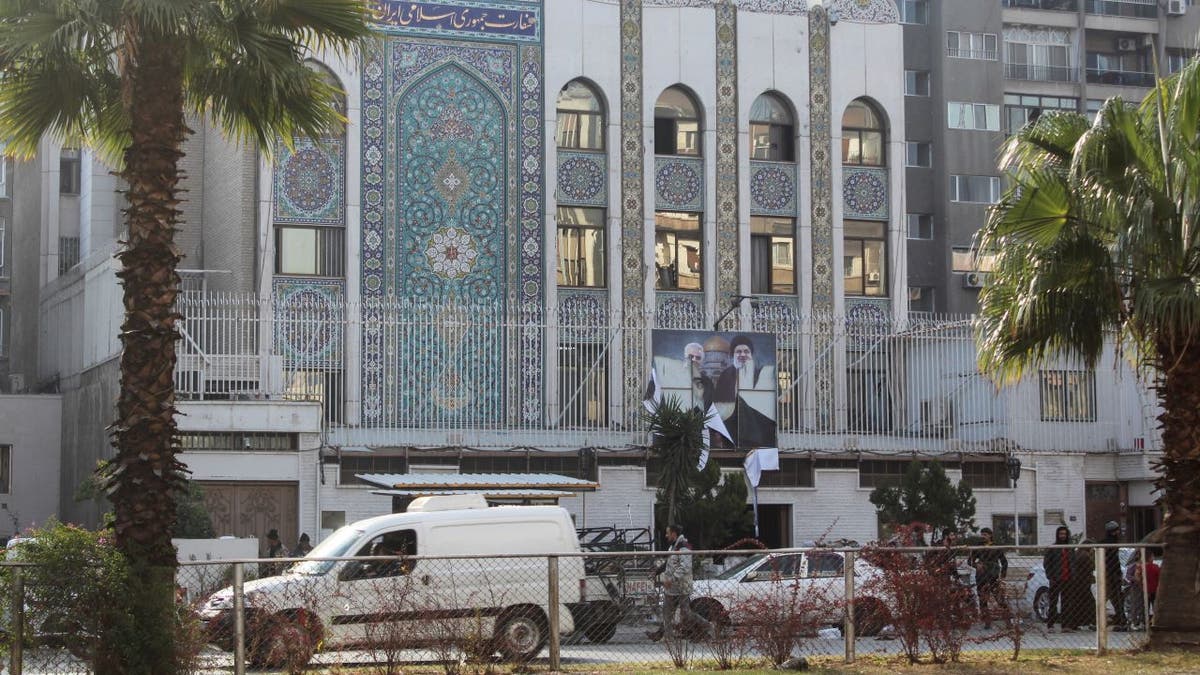
The UAE just condemned "acts of vandalism" at its embassy in Damascus. The standard media circuit reacted with the usual script: shock, calls for international law, and hand-wringing over the Vienna Convention. They are missing the forest for the trees. To treat an embassy attack in a war-torn or heavily policed state like Syria as a random outburst of civilian frustration is not just naive—it is a fundamental misunderstanding of how Middle Eastern power dynamics actually function.
Diplomacy in the Levant is not a dinner party. It is a series of choreographed signals. When a crowd reaches the gates of a fortified diplomatic compound in a city as tightly controlled as Damascus, they didn't just "show up." They were invited. Or, at the very least, the door was left unlocked on purpose.
The Myth of the Spontaneous Mob
The "lazy consensus" suggests that these events are organic reactions to geopolitical shifts. It’s a convenient narrative for both the host country and the victim. For the host, it’s a "venting of public anger" they couldn't possibly control. For the victim, it’s a chance to play the martyr on the global stage.
I have spent years analyzing regional security protocols. In a high-security environment like Damascus, you cannot organize a protest, transport hundreds of people to a sensitive diplomatic zone, and breach a perimeter without the tacit approval or active coordination of the state security apparatus. If the Syrian government didn't want that embassy touched, a fly wouldn't have landed on the gate.
The vandalism isn't the story. The permission for the vandalism is. By focusing on broken windows and spray paint, the media ignores the real currency being traded: leverage. This is a controlled burn, designed to signal dissatisfaction without triggering a full-scale military or economic break.
The UAE-Syria Normalization Trap
To understand why this is happening, you have to look at the UAE’s trajectory with the Assad regime. Abu Dhabi led the charge to bring Syria back into the Arab fold, culminating in Syria’s readmission to the Arab League. This wasn't done out of kindness; it was a cold, calculated move to counter Iranian influence and explore reconstruction contracts.
But normalization is a two-way street that Syria has failed to pave. The "vandalism" is likely a crude response to the UAE’s recent recalibrations. Perhaps the investment isn't flowing fast enough. Perhaps the UAE is aligning too closely with Western sanctions on specific Syrian entities.
When a state allows its citizens to deface an embassy, it is sending a memo. It says: "Your presence here is a privilege we can revoke, and your safety is a variable we control."
Stop Quoting the Vienna Convention
Every time this happens, legal "experts" trot out the 1961 Vienna Convention on Diplomatic Relations. Specifically, Article 22, which dictates that the host state has a "special duty to take all appropriate steps to protect the premises of the mission."
Citing the Vienna Convention in Damascus is like citing the rulebook of a gentleman's club in a back-alley knife fight. It is technically correct and practically useless. Everyone involved knows the rules are being broken. The breach is the point. International law is a tool for stable states; in the shadow-play of Middle Eastern geopolitics, breaking the law is a legitimate form of communication.
If you are looking at this through the lens of "vandalism," you are asking the wrong question. You shouldn't be asking "How did this happen?" You should be asking "What was the price for stopping it, and why wasn't it paid?"
The Reconstruction Grift
There is a deeper, more cynical layer here: the reconstruction of Syria. The UAE is one of the few regional players with the liquid capital to actually rebuild Damascus. However, the Caesar Act and subsequent US sanctions make that almost impossible without risking the UAE's own standing in global financial markets.
Imagine a scenario where the Syrian state feels the UAE is "hedging" too much—enjoying the diplomatic prestige of being a mediator while keeping the checkbook closed. An embassy breach is the perfect low-cost, high-impact way to "remind" a partner that their physical presence in the country depends on more than just handshakes.
It’s a shake-down. It’s not about "vandalism"; it’s about the "protection" that was withheld.
The Failure of "Soft Power" Diplomacy
The UAE prides itself on soft power—the idea that trade, tourism, and diplomatic finesse can override hard security concerns. This incident proves that soft power has a ceiling. In a region where "hard power" (secret police, militias, and state-sanctioned mobs) remains the primary language, the UAE’s sophisticated diplomatic approach is being met with the equivalent of a brick through a window.
We see this pattern globally. Western and Gulf analysts constantly overestimate the "rational actor" model. They assume that because it is in Syria's best interest to keep the UAE happy, they will protect the embassy. This ignores the internal logic of a regime that survives on fear and the projection of strength. To the Syrian security core, letting a mob scrawl graffiti on a foreign embassy looks like strength. It shows they aren't "beholden" to their wealthy neighbors.
Breaking the Cycle of Outrage
The UAE's "condemnation" is equally performative. They know exactly why the protection failed. They aren't shocked. They are simply checking a box in a diplomatic ritual. They will issue the statement, the Syrian Ministry of Foreign Affairs will issue a lukewarm apology or a justification based on "popular sentiment," and the underlying tension will remain unaddressed.
If the UAE actually wanted to address the root cause, they wouldn't talk about "vandalism." They would talk about the failure of the Syrian security state to uphold its end of the normalization bargain. But they won't, because that would admit that the normalization strategy itself is hitting a wall.
The Reality of the Damascus Security Perimeter
To give you an idea of the logistics: the diplomatic quarter in Damascus is one of the most monitored patches of land on the planet. To get a crowd there, you pass through multiple checkpoints. You are under the gaze of Muhabarat (intelligence) officers every ten yards.
The idea that a group of "protesters" could spontaneously assemble, carry tools or paint, and reach the UAE mission without an officer in a leather jacket nodding them through is a fantasy. This wasn't a lapse in security. It was a deployment of security in a different form.
The vandalism is a symptom of a relationship that was built on a shaky foundation of "let's pretend the last decade didn't happen." The UAE wanted a gateway to a post-war Syria; Syria wanted a blank check. When the check didn't arrive, the gate got scratched.
The Real Cost of Doing Business
The risk of "vandalism" is baked into the cost of doing business with autocracies. If you want the "first-mover advantage" in a pariah state, you have to accept that your embassy is essentially a hostage.
Stop looking at the spray paint. Look at the guards who stood aside. Look at the trucks that brought the protesters. Look at the silence from the Syrian interior ministry in the hours leading up to the breach.
The UAE isn't a victim of a mob. It's a victim of its own assumption that money and "normalization" can buy security in a state that thrives on chaos. The next time you see a headline about "vandalism" in a dictatorship, stop reading the "condemnations." Start looking for the bill that went unpaid.
The broken glass in Damascus isn't a security failure. It's a receipt.