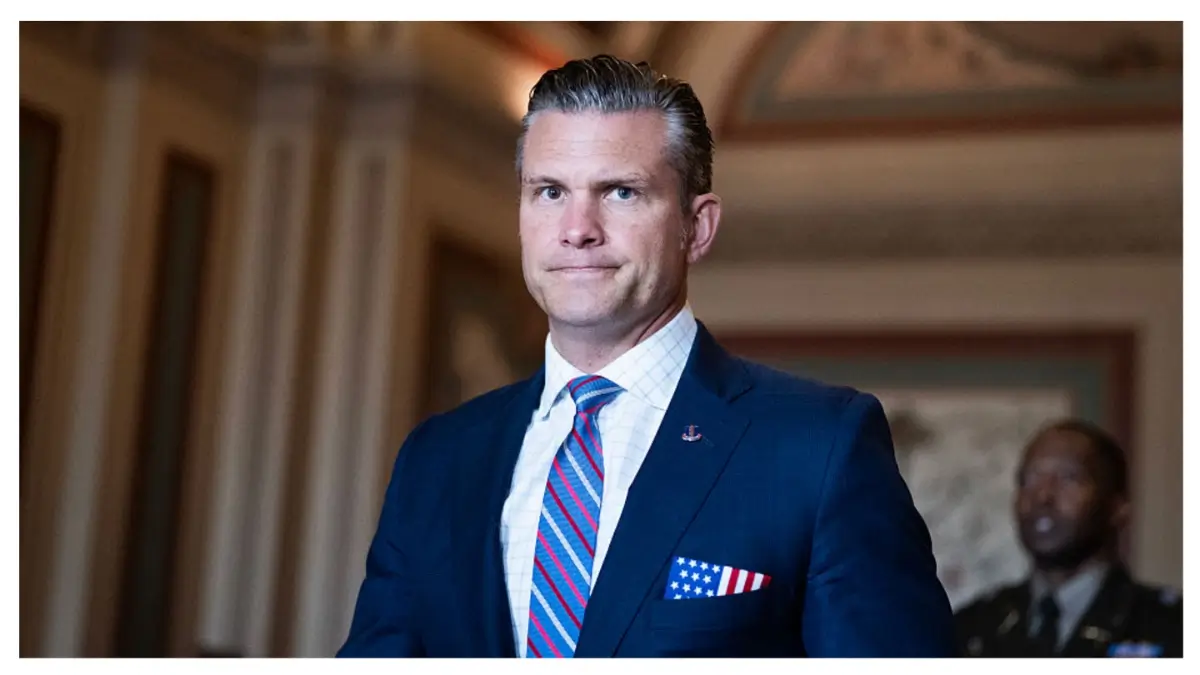
The press release reads like a Hollywood script: elite US forces and Ecuadorian soldiers "joining hands" to dismantle the narco-terrorist threat. It is the same tired narrative of tactical cooperation and shared security goals. If you believe this operation will actually reduce the flow of cocaine or lower the body count in Guayaquil, you are falling for a fifty-year-old delusion.
The standard consensus claims that injecting military hardware and intelligence into a destabilized state creates a "shield" for democracy. In reality, it creates a high-pressure valve. When you apply military pressure to a fluid, decentralized criminal network, you don't crush it. You cause it to spray into new, more violent territories. This isn't a war on crime; it’s a masterclass in market disruption that favors the most brutal players.
The Myth of the "Sovereign Rescue"
The media frames the current US-Ecuador partnership as a necessary intervention to prevent Ecuador from becoming a failed state. This ignores the basic mechanics of how these organizations function. By escalating to a military-grade conflict, the state is effectively subsidizing the evolution of the cartels.
When the US military provides advanced surveillance and kinetic support, the "low-level" gangs are wiped out. On paper, this looks like a win. In the boardrooms of the Sinaloa Cartel and the Balkan Mafia (who actually run the Ecuadorian ports), it’s a gift. The state is doing their HR work for them by eliminating the inefficient, noisy competition.
I’ve watched this play out from Mexico to Colombia. When the military enters the fray, the "business" doesn't stop; the overhead just goes up. Only the organizations with the deepest pockets and the most ruthless internal security survive. We aren't cleaning the streets; we are professionalizing the enemy.
Why More Guns Equal More Innovation
There is a fundamental misunderstanding of the "Productivity Gap" in the illicit drug trade. The "lazy consensus" says that seizing five tons of cocaine in the Port of Guayaquil is a blow to the cartels. It isn't. It’s a tax.
In a standard business, a 10% loss of inventory to "shrinkage" is a crisis. In the cocaine trade, where the markup from farm-gate to the streets of New York or Antwerp is roughly 3,000%, a 20% seizure rate is just a cost of doing business.
By increasing the military presence, the US and Ecuador are forcing these groups to innovate faster.
- Semi-Submersibles: Increased naval patrols birthed the narco-sub.
- Cyber-Logistics: Hardened port security led to the encryption of global shipping manifests.
- Diversification: Pressure on cocaine leads to "poly-drug" portfolios, including fentanyl and illegal mining.
We are essentially providing the cartels with a high-stakes R&D department. Every time we deploy a new sensor or a specialized unit, we train the survivors how to beat it.
The Logistics of the Guayaquil Choke Point
The article you likely read focuses on "arresting gang leaders." This is the "Kingpin Strategy," and it has failed every single time it has been tried. When you remove a head, you create a power vacuum. Vacuums in the criminal world are filled with lead.
Guayaquil is the most important logistics hub in the Southern Hemisphere right now. It is a "perfect" port because of its massive volume of legitimate container traffic.
- The Volume Problem: You cannot search every container of bananas without collapsing the Ecuadorian economy.
- The Corruption Index: Military intervention rarely fixes systemic corruption; it just raises the price of the bribe. Now, instead of paying off a local cop, the cartel has to pay off a colonel.
If the US wants to "fix" Ecuador, it shouldn't be sending Black Hawks. It should be auditing the global banking systems that allow the profit from those banana crates to be laundered in Miami and London. But that would be bad for business. It is much easier to stage a photo-op with soldiers in camo.
The Cartel as a Venture Capitalist
Think of the "Los Choneros" or "Los Lobos" not as gangs, but as localized franchises of global holding companies. The US military is attempting to fight a 21st-century decentralized network with 20th-century centralized force.
Imagine a scenario where a tech giant loses its regional office. Does the company fold? No. It reallocates the budget to a more aggressive branch or outsources the labor. The cartels operate with more agility than any government agency. While the US and Ecuador are busy signing treaties and coordinating "joint task forces," the cartels have already pivoted their logistics to Manta or Esmeraldas.
The Human Cost of "Stability"
There is a cynical comfort in seeing "boots on the ground." It provides an illusion of control. But for the citizen in a Guayaquil barrio, the arrival of the military often signals the start of the "Great Purge."
When the military targets a specific gang, that gang’s rivals use the opportunity to seize territory. The state becomes an unwitting air force for the rival cartel. This "selective enforcement" is the primary reason why violence in Ecuador has spiked 800% in five years despite increased security spending. We aren't stopping the war; we are picking the winner.
The Real Questions We Aren't Asking
People ask: "How can we help Ecuador regain control?"
The honest, brutal answer: You can't, as long as the global demand for the product remains unchanged and the financial incentives for the military-industrial complex favor "conflict" over "resolution."
We are treating the symptom of a global economic reality with a local band-aid. Ecuador is the "exit point" for a multi-billion dollar commodity. No amount of US tactical training can override the law of supply and demand.
Stop Funding the "Theater of War"
If the goal is truly to stop organized crime, the current operation is a failure before it begins. To actually disrupt the trade, you would need to:
- Legalize and Regulate: The only way to kill a cartel is to take away their profit margin. If they have to compete with a legal, taxed entity, they vanish.
- Follow the Money, Not the Leaves: Shift every dollar spent on "interdiction" into "forensic accounting." Arresting a teenager with a rifle in a slum does nothing. Freezing a $50 million offshore account in a tax haven does everything.
- Decentralize the Economy: Ecuador’s reliance on a few key exports (bananas, shrimp) makes its logistics chains easy to hijack.
But we won't do that. It’s too complex. It doesn't look good on the news. Instead, we will keep sending "advisors" and "specialized equipment." We will keep cheering for the seizures while the price of the product on the street remains suspiciously stable.
The US-Ecuador military operation isn't a solution. It is a recurring subscription to a war that neither side wants to win, because the "war" itself is the most profitable outcome for everyone involved—except, of course, the people of Ecuador.
The next time you see a headline about a "major blow" to the cartels, ask yourself who really benefits from the vacancy. The game isn't being won; it's being rigged.
Stop looking at the soldiers. Look at the ledger.