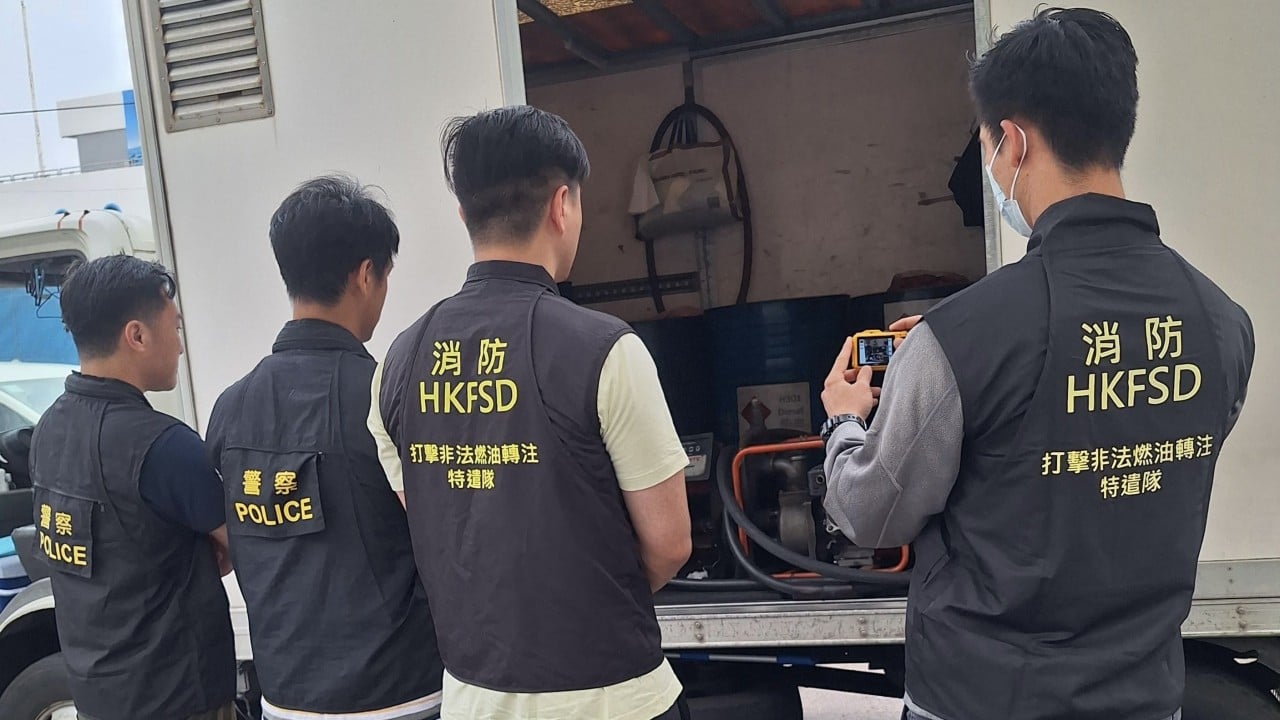
The seizure of 1,600 litres of diesel and the dismantling of an illicit fueling station in Hong Kong is not merely a localized law enforcement success; it is a clinical data point in the persistent reality of industrial arbitrage. While media reporting focuses on the arrest of a single individual, the underlying mechanics reveal a sophisticated sub-economy driven by tax disparities, regulatory bypass, and the exploitation of logistical bottlenecks. This operation underscores a fundamental principle: wherever the spread between regulated market price and procurement cost exceeds the risk of seizure, illegal infrastructure will manifest.
Understanding this event requires a breakdown of the three variables that sustain illicit fuel markets: the procurement delta, the distribution efficiency, and the risk-reward ratio of the physical operation.
The Tripartite Engine of Illicit Fuel Markets
The existence of an illegal fueling site depends on a specific economic environment. The 1,600 litres seized represent a high-turnover model where inventory is kept intentionally low to minimize financial loss during a raid, while maintaining enough volume to service a specific fleet of commercial vehicles.
1. The Procurement Delta
Illicit diesel in Hong Kong typically originates from two sources: "red diesel" (industrial or marine fuel) diverted from its intended use, or fuel smuggled across borders to exploit price differences. Because marine fuel is exempted from certain duties or subject to different tax regimes, re-introducing it into the land-based transport sector creates an immediate profit margin. This is a classic arbitrage play where the commodity is identical, but the legal classification differs, allowing the operator to undercut legitimate gas stations by significant percentages.
2. Operational Overhead and Distribution
Illegal sites bypass the three highest costs of legitimate fuel retailing:
- Compliance and Safety Infrastructure: Legitimate stations must invest in fire-suppression systems, double-walled underground storage tanks, and vapor recovery units. The seized site utilized primitive storage—likely plastic IBC (Intermediate Bulk Container) totes or modified drums—slashing capital expenditure to near zero.
- Land Rent and Zoning: By operating in remote lots or industrial "gray zones," operators avoid the premium rents associated with zoned petrol stations.
- Taxation: The evasion of fuel duty is the primary driver of the business model.
3. The Risk-Reward Ratio
For the operator, the 1,600 litres seized represents a manageable loss. At current market rates, the wholesale value of this fuel is a fraction of the potential monthly revenue generated by a high-frequency "filling station." The arrest of a single 58-year-old individual suggests a "frontman" or low-level operator strategy, shielding the higher-level capital providers from direct exposure.
The Fire Risk Formula: Quantifying Hazard in Unregulated Sites
The primary concern for the Hong Kong Fire Services Department and Police is not just the lost tax revenue, but the catastrophic failure potential of these sites. The danger of 1,600 litres of diesel is often underestimated because diesel has a higher flash point than gasoline. However, in an unregulated environment, the risk is compounded by three specific factors.
The Absence of Static Dissipation
Professional fuel pumps are grounded to prevent static discharge. Illicit setups often use makeshift electric pumps or gravity-fed systems without proper grounding. A single spark during the transfer process in a confined, poorly ventilated area turns a storage site into a thermal bomb.
Soil and Groundwater Contamination
Without the containment bunds required by law, any leak or spill during the filling process enters the local ecosystem immediately. The cost of environmental remediation for a 1,600-litre spill far exceeds the value of the fuel itself, a cost that is effectively socialized—shifted from the operator to the public.
The Proximity Paradox
To be profitable, these sites must be accessible to their "clients"—truck drivers and van operators. This forces them into proximity with other industrial activities or residential edges, increasing the "consequence" variable in any risk assessment equation.
The Logistical Logic of the Raid
Law enforcement's decision to strike a site containing 1,600 litres suggests a tactical shift toward "disruptive friction" rather than waiting for massive stockpiles. In high-density urban environments like Hong Kong, waiting to seize larger quantities increases the public safety risk. By dismantling the site at this volume, the police achieve three strategic objectives:
- Inventory Destruction: The immediate loss of 1,600 litres plus the pumping equipment creates a cash-flow gap for the criminal enterprise.
- Intelligence Gathering: Seizing the equipment allows for forensic analysis of the supply chain—specifically, where the pumps were sourced and how the fuel was transported to the site.
- Deterrence of the Customer Base: The primary victims of these raids are often the "customers" whose vehicles may be impounded or who lose their prepaid fuel access, causing a ripple effect of distrust in the illicit network.
Structural Failures in the Fuel Supply Chain
The persistence of these sites points to a failure in the legitimate supply chain's ability to service low-margin logistics providers. Many independent truck drivers operate on such razor-thin margins that the 15-20% savings offered by illicit fuel are the difference between solvency and bankruptcy.
The second limitation is the geographic distribution of legitimate fueling stations. If industrial areas are underserved by high-capacity, heavy-vehicle friendly stations, "pop-up" illicit sites fill the void. They provide a "just-in-time" service that the rigid, regulated market fails to match in terms of convenience and price.
Strategic Forecast: The Shift to Micro-Distribution
As police pressure increases on fixed "illegal fuel stations," the market will likely evolve toward a micro-distribution model. This involves smaller, mobile "tanker-vans" that perform transactions in transit or at temporary locations, making them significantly harder to track than a fixed site with 1,600 litres of static inventory.
To counter this, enforcement must move beyond physical raids and toward "digital fuel marking" and aggressive auditing of red diesel quotas. If the source of the fuel cannot be identified, the raids remain a game of whack-a-mole. The focus must shift to the point of origin—the large-scale distributors or marine fuel bunkers—where the initial diversion occurs.
The strategic play for Hong Kong authorities is not merely more raids, but a tightening of the "Fuel Life Cycle" tracking. This requires integrating chemical markers in subsidized fuels that can be instantly detected during roadside inspections, coupled with an increase in the "Risk" side of the equation through higher mandatory sentencing for site operators. Until the cost of the "bust" (including equipment, fuel loss, and legal fees) outweighs the 20% arbitrage margin, these sites will continue to reappear within weeks of a seizure.