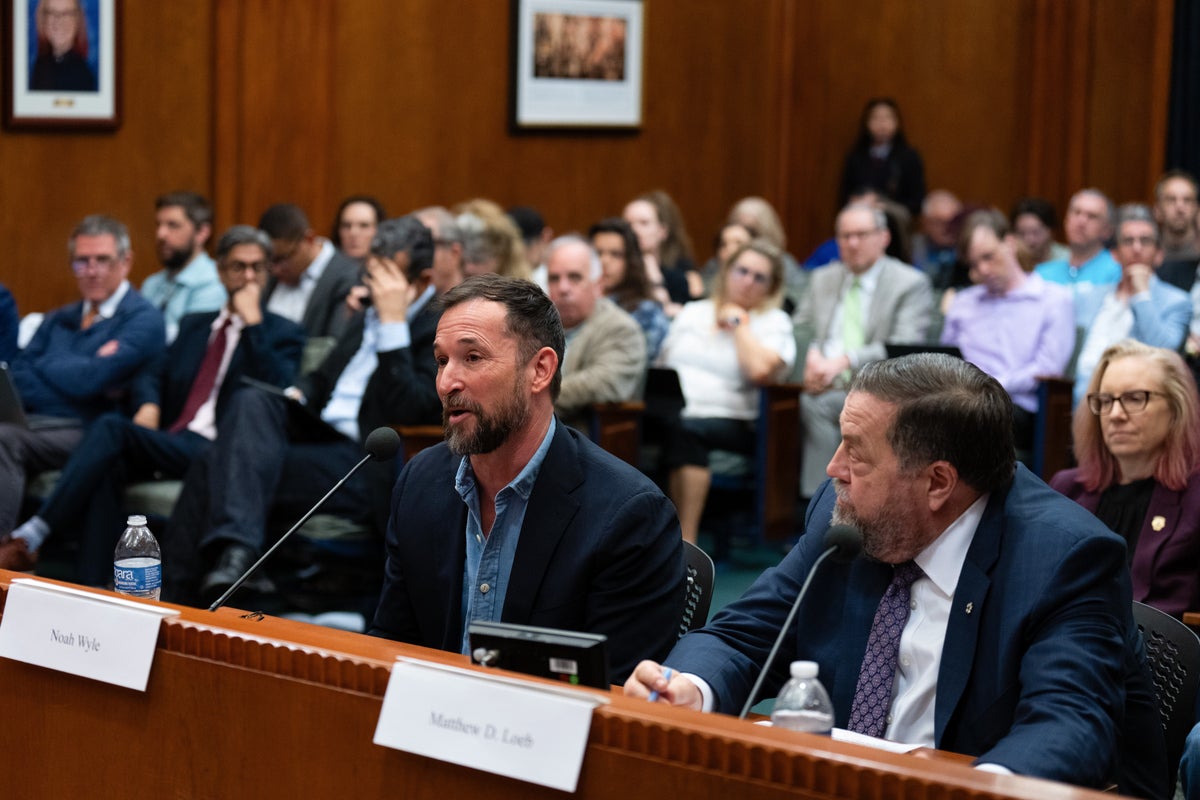
The testimony provided by Noah Wyle regarding the production of The Pitt functions as a case study in the reversal of the "runaway production" trend that has hollowed out the Southern California media cluster. While the industry frequently cites labor costs as the primary driver for international migration, the success of a domestic-focused medical drama suggests that the actual bottleneck is not the cost of talent, but the optimization of fixed-capital utilization and tax-incentive structures. To understand why The Pitt serves as a proof of concept for a broader revival, one must analyze the convergence of legislative lobbying, state-level fiscal policy, and the operational efficiencies of a multi-camera, stage-bound production.
The Mechanism of Geographic Competition
The television industry operates within a global subsidy-arbitrage market. Production hubs like Vancouver, London, and Budapest do not compete solely on the quality of their crews or the aesthetics of their locations; they compete on the effective net cost of production after the application of transferable or refundable tax credits.
California’s Program 4.0 tax credit initiative provides the fundamental scaffolding for this recovery. Unlike previous iterations that favored large-scale features, current incentives prioritize "recurring television series." This creates a predictable fiscal runway for studios. The Pitt utilizes these credits to offset the inherent overhead of shooting in a high-cost jurisdiction. The logic is simple: a 20% to 25% tax credit on qualified expenditures—which include local labor and vendor payments—effectively narrows the gap between Los Angeles and lower-cost international competitors to a margin that is often erased by the logistical frictions of international travel and equipment transport.
Vertical Integration and the Stage-Bound Advantage
Production efficiency in The Pitt is driven by a high ratio of interior-to-exterior scenes. In the hierarchy of production costs, location shooting represents a variable-cost volatility that most modern streaming budgets cannot absorb.
- Fixed Environment Control: By utilizing a massive, permanent hospital set within a soundstage, the production eliminates "company moves." Every hour spent packing trucks and moving to a new location is an hour of lost labor productivity.
- The Multi-Camera Multiplier: While The Pitt utilizes a single-camera aesthetic, the deployment of multiple synchronized digital sensors allows for the capture of coverage in fewer takes. This reduces the number of shoot days required per episode, directly lowering the burn rate of the production’s daily operating budget.
- Technological Consolidation: The use of LED volume walls or sophisticated rear-projection (though traditional in a medical drama context) allows for "exterior" perspectives without leaving the stage. This creates a stable lighting environment, removing the risk of weather-related delays—a primary cause of budget overruns in non-domestic hubs like the UK.
The Labor-Capital Paradox in Hollywood
Noah Wyle’s advocacy emphasizes that "production follows the incentive," but the deeper reality involves the preservation of the "Tier 1" craft workforce. Hollywood’s competitive advantage has historically been its density of specialized labor—highly skilled grips, gaffers, and technicians who can execute complex sequences in half the time of less experienced crews in emerging hubs.
When production leaves California, this specialized labor pool undergoes attrition. Skilled workers either retire or transition to other industries, leading to a "hollowing out" effect. The Pitt serves as a stabilization mechanism for this labor pool. By committing to a domestic shoot, the production maintains the local ecosystem of rental houses, catering companies, and post-production facilities. This creates a circular economy: the state provides the tax credit, the production spends the capital locally, and the state recoups a portion of that spend through income taxes and local sales taxes on production supplies.
Structural Barriers to Universal Adoption
The model represented by The Pitt is not a universal solvent for the industry's contraction. Its success is contingent upon specific genre constraints.
- Genre Specificity: Medical, legal, and procedural dramas are uniquely suited for domestic revival because they are set-heavy. High-fantasy or sci-fi epics requiring vast natural landscapes or massive physical builds will still gravitate toward jurisdictions with lower land-use costs and higher "below-the-line" labor discounts.
- The Ceiling of Tax Credit Caps: California’s credit pool is finite. Once the annual allocation is exhausted, the financial gravity shifts back toward Georgia or New Jersey. Without an uncapped or significantly expanded credit pool, "revival" remains a lottery rather than a systemic shift.
- Interest Rate Sensitivity: Most television production is financed through debt. High interest rates have increased the cost of capital, making the immediate liquidity of a "refundable" tax credit (like those in New York or Canada) more attractive than a "transferable" credit that may take eighteen months to monetize.
Strategic Capital Reallocation
For the domestic industry to achieve a true "revival" as suggested in the hearing, studios must move beyond project-by-project decision-making and toward long-term infrastructure investment. This involves the conversion of older industrial spaces into soundstages capable of supporting high-density television production.
The strategy for the next 36 months requires a two-pronged approach: first, the legislative expansion of "above-the-line" caps within domestic tax credits to include a portion of star salaries, which currently drive productions to cheaper locales to balance the books; and second, the standardization of "virtual production" workflows to further reduce the necessity of location scouting.
The revival of US film and TV production is not a matter of nostalgia or "bringing the work home" for sentimental reasons. It is a cold calculation of whether the state can provide a fiscal environment where the efficiency of a local, elite workforce outweighs the raw labor discounts of a foreign territory. The Pitt proves that for high-volume, stage-bound content, the math finally adds up.
Studios looking to replicate this model must prioritize the acquisition of long-term stage leases within the "Thirty-Mile Zone" to hedge against rising real estate costs. Simultaneously, labor unions must negotiate flexibility in "swing gangs" and multi-hyphenate roles to match the lean crew structures found in international markets. Failure to optimize these operational levers will render the tax credits a temporary band-aid rather than a permanent structural shift. Focus must shift immediately to lobbying for the permanent extension of Program 4.0 to provide the multi-year certainty required for greenlighting ten-season arcs.