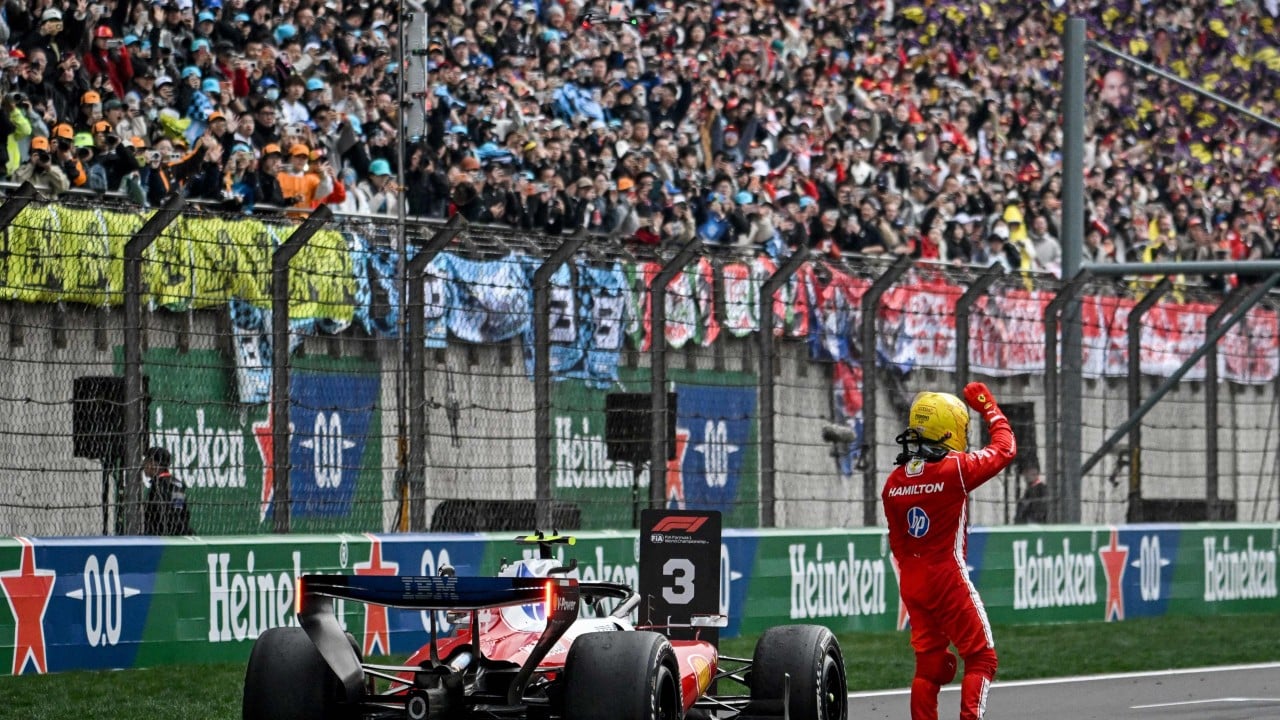
Hong Kong’s pursuit of a Formula 1 Grand Prix is not a sporting endeavor but a high-stakes exercise in infrastructure arbitrage. The city-state currently faces a structural identity crisis, caught between its legacy as a financial intermediary and a nascent need to become a high-value consumption hub. The proposal to host a street circuit—likely centered in the Kai Tak Development Area or the Central Harbourfront—represents an attempt to convert physical urban space into a temporary high-yield asset. To determine if this "fast lane" leads to genuine economic reinvention or a fiscal sinkhole, we must quantify the intersection of capital expenditure, tourism velocity, and the "Halo Effect" on foreign direct investment.
The Triad of Value Extraction
A Grand Prix generates economic value through three distinct mechanisms, each with varying degrees of leakage and retention. Read more on a related issue: this related article.
- Direct Fiscal Inflow: Ticket sales, hospitality packages (Paddock Club), and local taxation on race-related commerce.
- The Consumption Multiplier: Spending by international visitors on non-race activities, including luxury retail, hospitality, and transport.
- The Brand Equity Premium: The intangible shift in global perception that lowers the "barrier to entry" for multinational corporations considering regional headquarters.
In the context of Hong Kong, the second pillar—the Consumption Multiplier—is the most critical. Unlike Singapore, which has integrated its night race into a week-long "Grand Prix Season" featuring concerts and trade summits, Hong Kong’s current retail environment is under pressure from cross-border consumption shifts. An F1 event serves as a temporary price-inelastic demand shock, forcing local service providers to optimize for high-net-worth individuals who remain less sensitive to the city's rising operational costs.
The Cost Function of Urban Displacement
The primary obstacle to a Hong Kong Grand Prix is the Opportunity Cost of Public Space. Unlike purpose-built tracks like Shanghai or Abu Dhabi, a street circuit requires the temporary seizure of primary transit arteries. Further reporting by Financial Times highlights similar views on the subject.
The Friction Coefficient
The logistical burden of an F1 race is calculated by the formula of displacement:
$$D = (T \times V) + (I \times C)$$
where $T$ represents the time of road closures, $V$ is the economic value of lost productivity during those closures, $I$ is the infrastructure modification cost (Grade 1 FIA certification), and $C$ is the disruption to local commerce.
The Kai Tak Sports Park provides a partial solution, yet the surrounding road network lacks the "run-off" areas and safety barriers required for 300+ km/h racing. Upgrading these roads to FIA Grade 1 standards involves more than just repaving; it requires specific bitumen compositions to handle lateral G-forces and the installation of debris fencing that can withstand massive kinetic energy transfers. These are sunk costs that offer zero utility to civilian commuters once the race concludes.
The Capex-Opex Imbalance
The "hosting fee" paid to Formula One Management (FOM) typically ranges from $30 million to $50 million annually for new entrants. When added to the $100 million+ required for initial circuit setup, the event starts with a massive deficit. To reach a break-even point, Hong Kong would need to attract approximately 100,000 unique international visitors, each spending an average of $2,500 over a four-day period. Currently, Hong Kong’s hotel inventory is capable of supporting this volume, but the compression pricing during race week risks "crowding out" traditional business travelers who form the bedrock of the mid-week economy.
Strategic Comparison: The Singapore Benchmark
It is impossible to discuss a Hong Kong race without addressing the Singapore "Night Race" model. Singapore utilized F1 to solve a specific problem: the "Sunday Slump" in tourist activity. By running the race at night, they maximized European and American television viewership while keeping the city functional during daylight hours.
Hong Kong’s competitive advantage lies in its proximity to the Greater Bay Area (GBA). While Singapore targets the global jet-set, a Hong Kong race could tap into the rapidly growing automotive enthusiast demographic in Southern China. However, this creates a Currency and Policy Risk. If the race depends too heavily on GBA spectators, it becomes vulnerable to changes in cross-border capital controls and travel visas. To achieve "reinvention," the race must serve as a bridge between Western capital and Asian markets, not just a regional festival.
The Technical Barriers to FIA Grade 1 Certification
The FIA (Fédération Internationale de l'Automobile) maintains strict geometric and safety standards that conflict with Hong Kong’s dense urban topography.
- Track Width: A minimum of 12 meters is required for the majority of the circuit to allow for overtaking and safety car maneuvers. Many of Hong Kong's most iconic streets are bifurcated by medians or narrowed by permanent pedestrian infrastructure.
- Pit Lane Logistics: A 300-meter pit building is required. Finding a flat, unobstructed stretch of land near the water that can accommodate twenty 2-story garages and a media center is a significant real estate challenge.
- Pavement Resilience: Standard road asphalt liquefies under the heat and friction generated by F1 tires. A total resurfacing of the chosen route would be necessary, involving specialized polymers that may be less durable for heavy bus and truck traffic post-race.
The Soft Power Calculus: Beyond the Paddock
The true "reinvention" occurs in the boardrooms, not the grandstands. Formula 1 is the only global sport that functions as a traveling trade show for the aerospace, telecommunications, and energy sectors.
By hosting a race, Hong Kong signals a return to unrestricted internationalism. This is a counter-narrative to the perception of the city becoming just another mainland Chinese hub. The "Paddock Club" serves as a high-density networking environment where $100-million deals are socialized. If Hong Kong fails to pair the race with a series of high-level technology and finance summits (similar to the Milken Institute or Bloomberg New Economy Forum), the race remains an expensive circus rather than a strategic lever.
Structural Risks and Diminishing Returns
The "F1 Bubble" is a documented phenomenon. As the calendar expands to 24 or more races, the prestige of any single event is diluted. Las Vegas, Miami, and Qatar have recently saturated the market for high-profile "destination" races. Hong Kong enters a crowded field where "novelty" is no longer a viable USP (Unique Selling Proposition).
The second risk is the Environmental, Social, and Governance (ESG) Bottleneck. As multinational corporations face pressure to reduce their carbon footprints, sponsoring or attending a fossil-fuel-intensive event becomes a liability unless the event is demonstrably "Net Zero." Hong Kong would need to lead with a "Green GP" initiative—utilizing sustainable aviation fuel (SAF) for logistics and 100% renewable energy for circuit operations—to attract the top-tier sponsors necessary for fiscal viability.
Operational Execution: A Three-Phase Implementation
If the Hong Kong government moves forward, the execution must follow a rigid developmental logic to avoid the "White Elephant" syndrome seen in former race sites like Valencia or Hanoi.
Phase I: The Feasibility Audit (0-12 Months)
A granular simulation of traffic flow using AI-driven urban modeling is required to identify the "Minimum Disruption Path." This phase must also include a formal commitment from the hotel and retail associations to prevent price-gouging, which can destroy the event's reputation in its inaugural year.
Phase II: Infrastructure Siphoning (12-36 Months)
Instead of a massive one-time spend, infrastructure upgrades should be integrated into existing urban renewal projects. For example, the repaving of the Kai Tak corridor should be done to FIA standards during scheduled maintenance, amortizing the cost over several years of the public works budget.
Phase III: The Ecosystem Build-out (36 Months+)
The race must be the anchor for a "Tech and Speed" month. This involves inviting EV manufacturers, autonomous driving startups, and fintech firms to hold their flagship launches in the city concurrently. The goal is to maximize the Revenue per Square Meter of the entire territory during the window of peak global attention.
The Strategic Play: A Mixed-Use Circuit
The only logical path for Hong Kong is a "Hybrid Circuit" model. Rather than a pure street race that paralyzes the city center, the government should utilize a permanent "Anchor Section" in the Kai Tak Sports Park—containing the pits, paddock, and a permanent stadium section—connected to a temporary loop of public roads.
This configuration creates a permanent high-tech venue for track days, automotive testing, and smaller race categories (like Formula E or GT3) throughout the year, ensuring the $200 million+ investment isn't mothballed for 362 days annually. By anchoring the circuit in a developing district, the government can use the race to drive the "Third CBD" (Central Business District) initiative, directing capital and foot traffic toward an underutilized area of the city rather than congesting the already saturated Central district.
The decision to host F1 is a choice between a short-term marketing "sugar high" and a long-term commitment to urban high-performance. Without a permanent integration into the city's technological and financial roadmap, the project will likely fail the "Value for Money" audit required of 21st-century infrastructure. If, however, the race is treated as the physical manifestation of a broader data and green-tech pivot, it becomes the ultimate signal that Hong Kong's capital markets remain the fastest in the region.