The phone vibrates against the nightstand, a sharp, buzzing insect in the dark. It is 3:14 AM. In the cold, blue light of the screen, the notification glows with a familiar urgency. It is the kind of headline that stops the heart before the eyes can even process the text. A statement, issued from a desk thousands of miles away, reaching across oceans to land in the palms of people who have never set foot in the corridors of power.
Lay down your arms, or face death.
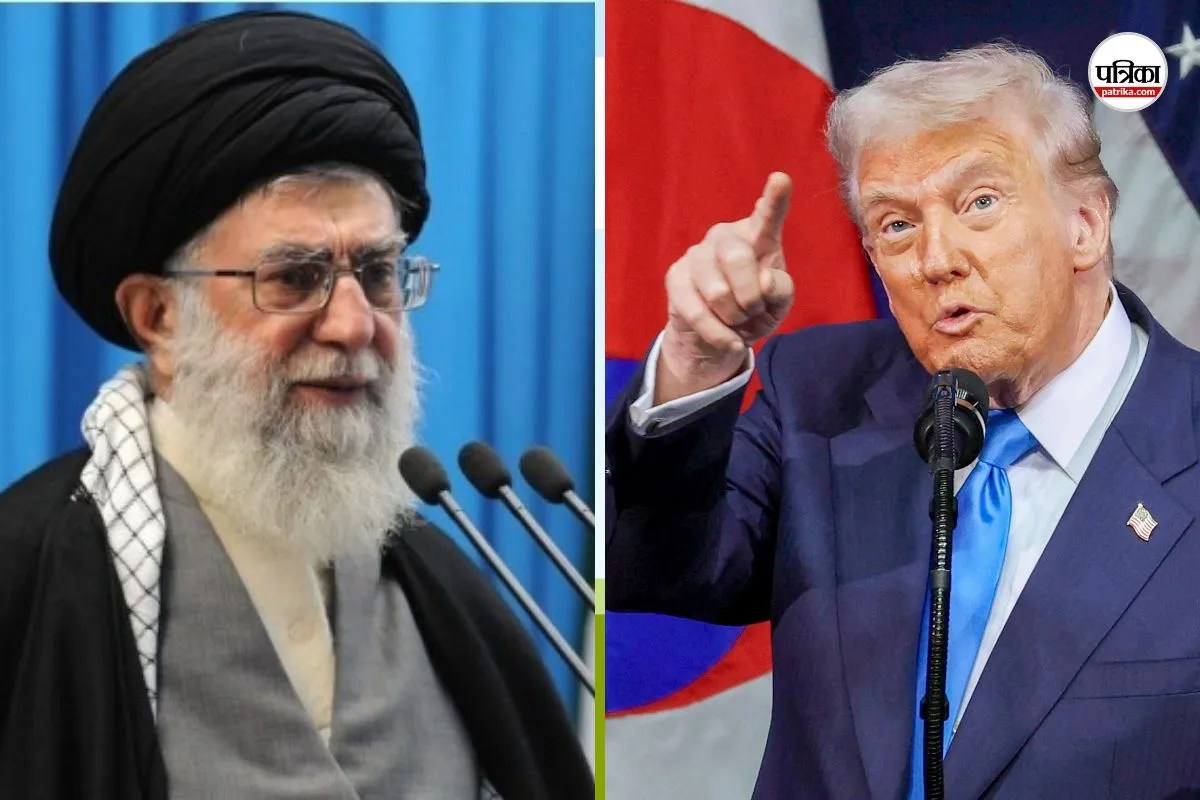
The words are stark. They carry the weight of a gavel hitting wood, the finality of a lock clicking shut. When the President of the United States speaks with such terrifying, unvarnished bluntness, the air in the room changes. It feels thinner, sharper. This is not the language of diplomacy, where nuance is the currency. This is the language of an absolute ultimatum.
Consider the reality of the situation. In Washington, the decision was likely made in a room muffled by thick curtains and the hum of high-end air filtration systems. In Tehran, the response might come from a room illuminated by the glow of monitors tracking radar signatures and the rhythmic, panicked pulse of a city bracing for the unseen. The distance between these two rooms is not measured in miles. It is measured in the gap between a command and a consequence.
I remember watching the news during similar moments in history. You learn to read the room by the way the anchor’s tie is knotted or the subtle tremor in their hands. You learn that when language shifts from negotiation to annihilation, the clock starts ticking for everyone.
Think of a hypothetical citizen named Arash. He is a shopkeeper in a neighborhood where the smell of saffron and diesel fuel hangs in the air. He wakes up to this same headline. He looks at his children sleeping in the next room and thinks about the water, the electricity, the fragility of the walls surrounding them. For Arash, the President’s threat isn’t a political maneuver. It is an existential calculation. He doesn’t care about the intricacies of nuclear enrichment or regional hegemony. He cares about whether the glass in his windows will shatter by dawn.
This is the hidden cost of the ultimatum. It strips away the pretense of statecraft and leaves behind the raw, human necessity of survival. When a leader issues a threat of this magnitude, they are not just talking to their counterparts; they are talking to the nerves of millions.
But why the sudden turn to such stark language? Historically, the rhetoric of "lay down your arms" is a tool used when the board has been cleared of other options. It is the final move in a game of brinkmanship that has been played for decades. We have seen these patterns before. The tightening of sanctions, the naval deployments, the back-channel messages that go unanswered, the public displays of strength that serve as a prelude to a storm. Each step is designed to convince the opponent that the cost of resistance is greater than the cost of submission.
Yet, humans are rarely so predictable.
When you back a state into a corner, you rarely get the reaction you anticipate on a spreadsheet. You don't always get surrender. You often get a hardening of resolve. You get the mobilization of the population, the rallying around the flag, the transformation of a political dispute into a moral crusade. The history of the 20th century is littered with the wreckage of leaders who underestimated the power of national pride under pressure.
The threat itself is a weapon. It is designed to be psychological, to create a sense of inevitable collapse before a single shot is fired. If the goal is to force a change in behavior, the ultimatum must be credible. It must be backed by a force that is visible, tangible, and ready. But in the age of drones, cyber-warfare, and asymmetric defenses, the old definition of "arms" is changing. You cannot simply lay down a rifle and walk away when the battle is being fought in the dark corners of the internet or through proxy networks that have no physical headquarters.
There is a terrifying uncertainty here. When we look at the mechanics of this situation, we are essentially watching a high-stakes standoff between two entities that have fundamentally different visions of the world. One sees a global order that must be defended through strength. The other sees a sovereign destiny that must be protected against foreign encroachment. Neither side has the luxury of being wrong.
The silence that follows such a statement is the most dangerous part. It is the sound of thousands of people holding their breath. It is the sound of decision-makers waiting for the first signal of movement, the first ping on a radar screen, the first flicker of light that indicates a threshold has been crossed.
We have reached a point where the language of the past no longer fits the reality of the present. We are not dealing with armies marching across a plains. We are dealing with volatile systems of power that are deeply interconnected. A single miscalculation, a faulty sensor, a nervous operator in a bunker—any of these can turn a threat into a tragedy that cannot be undone.
There is a visceral, gut-wrenching irony in the fact that our leaders use such bold, absolute language to describe processes that are profoundly fragile. They speak of "death" and "submission" as if these were abstract concepts to be managed, rather than realities that break families apart and burn through generations of progress.
The tragedy is not that we haven't seen this before. The tragedy is that we have, and we still haven't found a better way to resolve the friction between nations. We rely on the threat of destruction as a stabilizer, pretending that if we point the biggest guns at each other long enough, peace will somehow emerge from the fear. It is a logic of scarcity, a belief that there is only so much space for ambition in the world, and that one side must eventually be dismantled for the other to flourish.
Look at the maps. Study the trade routes. Listen to the way the rhetoric shifts when oil prices fluctuate or when a key alliance shows signs of fraying. The geopolitical structure is not a static object. It is a living, breathing thing that responds to the heat of the moment. When the President issues an ultimatum, he is trying to freeze that movement. He is trying to force the world to hold its position.
But the world never holds its position.
People move. Ideas shift. Technology evolves. The very notion that you can threaten an entire nation into submission through a televised address ignores the messy, chaotic reality of human motivation. It ignores the fact that people fight for things that have nothing to do with weapons: their homes, their history, their sense of self-worth.
There is a moment in the life of a conflict when the rhetoric becomes exhausted. It happens when the words have been repeated so many times that they lose their sting, and the only thing left is the physical reality of the situation. We are approaching that moment. The ultimatum has been delivered. The world is watching to see if it was a final warning or merely a precursor to an escalation that nobody truly understands.
The gravity of this is not something that can be explained in a briefing room. It is felt in the gut. It is felt by the person walking to work through a city that might not be the same by the time they get home. It is felt by the soldier who knows that their life is a bargaining chip in a game they did not choose to play.
We are standing on the edge of something. Whether it is a cliff or a bridge, we do not yet know. But the air is different now. The tension has a texture, a weight that presses against the chest. And as the hours tick past, as the world waits for the sound of a trigger being pulled—or for the quiet realization that the storm has passed—we are reminded of the most basic, most neglected truth of all: that for all our power, for all our technology, and for all our talk of victory, we are all just fragile figures, waiting to see what happens when the dust finally settles.
The phone is silent now. The screen is dark. The decision is made, and the silence is not a void. It is a waiting room. And the door is already opening.