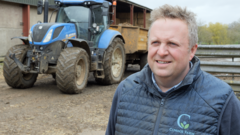
Tom’s hands are not the hands of a diplomat. They are mapped with the deep, permanent grease of a John Deere engine and the dry callouses of forty harvests in the American Midwest. He has never been to the Middle East. He couldn't point to Isfahan on a map without a bit of searching. Yet, as he stares at the fluctuating diesel prices on his phone and the stagnant futures for his winter wheat, he is feeling the tremor of a drone strike thousands of miles away.
The geography of pain is no longer local. Don't forget to check out our recent article on this related article.
When tensions boil over in the Persian Gulf or the Strait of Hormuz, we talk about "geopolitical instability." It sounds sterile. It sounds like something discussed in wood-paneled rooms in D.C. or Brussels. But geopolitical instability has a physical weight. It sits in the silos of Kansas. It rattles the grain elevators of Saskatchewan. It is the invisible tax levied on the people who feed the world, paid to a conflict they didn't start and cannot end.
The Invisible Pipe
To understand why a farmer in the West pays for a war in the East, you have to look at the world as a single, pressurized vessel. Imagine a massive, interconnected plumbing system. If a pipe bursts in the basement—let’s call that basement the Middle East—the pressure doesn't just drop there. The entire house feels the shudder. To read more about the context here, NBC News offers an in-depth breakdown.
Iran sits at the throat of the world’s energy supply. The Strait of Hormuz is a narrow chink in the world’s armor, where twenty percent of the globe's petroleum flows every single day. When the rhetoric between Iran and Western powers sharpens, or when a "shadow war" of tankers and drones spills into the headlines, the insurance markets in London go into a frenzy.
Shipping companies don't like risk. They price it in.
Suddenly, the cost of moving anything—fertilizer coming in, grain going out—spikes. This is the first "war tax" the Western farmer pays. It’s not a bill sent by a government; it’s a quiet extraction from the bottom line, a few cents more per gallon, a few dollars more per ton of urea.
The Fertilizer Trap
Consider the case of "Marcus," a hypothetical but very real composite of the modern high-tech grower. Marcus isn't just planting seeds; he is managing a complex chemical balance. Modern agriculture is, at its heart, the process of turning fossil fuels into food.
Natural gas is the primary ingredient for nitrogen-based fertilizers. Iran holds some of the world’s largest gas reserves. When conflict looms, or when sanctions tighten to the point of strangulation, the global supply of gas becomes a weapon. If European markets lose access to Eastern energy, they pivot. They bid up the price of gas everywhere else.
Marcus sits at his kitchen table in Ohio, looking at a quote for his spring fertilizer. It’s double what it was two years ago. He isn't paying for the fertilizer itself; he is paying for the scarcity created by a standoff in the Gulf. He is paying for the fact that a factory in Germany had to shut down because its energy costs became untenable.
The Western farmer is effectively subsidizing the global energy crisis with every acre they plant.
The Currency of Chaos
Then there is the matter of the dollar. In times of war, the world flees to safety. The U.S. dollar, for all its flaws, remains the world’s bunker. When things get ugly in Iran, investors dump "risky" assets and buy dollars.
This sounds like a good thing for Americans. It isn't for exporters.
A "strong" dollar makes American wheat, corn, and soy more expensive for the rest of the world to buy. While the farmer's costs are rising because of energy prices, their income is being squeezed because their customers in Egypt, Southeast Asia, and South America can no longer afford their crop.
It is a pincer movement. On one side, the cost of production (energy and fertilizer) climbs. On the other side, the value of the harvest drops because the global market is spooked.
The farmer is the shock absorber for the world’s bad behavior. They absorb the volatility so the rest of us can still find bread on the shelves at a relatively stable price—until they can't absorb any more.
The Human Cost of Abstract Policy
We often hear that sanctions are a "bloodless" way to exert pressure. They are designed to cripple an economy without firing a shot. But for the person standing in a field in the West, sanctions feel like a slow-motion wreck.
When we talk about Iran’s "malign influence" or the West’s "strategic interests," we are using words that mask a gritty reality. The reality is that the global food system is now so fragile that it cannot withstand the friction of these power plays.
Farmers are, by nature, gamblers. They gamble on the rain. They gamble on the sun. They gamble on the pests. But they are now being forced to gamble on the erratic decisions of leaders in Tehran and Washington. It is a game where they have no seat at the table, yet they are the ones putting up the stakes.
There is a profound irony in the fact that the very people tasked with the most essential human endeavor—growing food—are the most vulnerable to the most useless human endeavor—waging war.
The Broken Feedback Loop
Why don't we see this reflected in our daily lives? Why isn't there an outcry?
Because the lag time is deceptive. A spike in oil prices today doesn't hit the grocery store tomorrow. It hits Marcus when he buys his fuel for the tractor. It hits Tom when he locks in his fertilizer contract for next year. By the time the consumer feels the pinch, the "news cycle" regarding the Iran conflict has often moved on. We have forgotten why the bread is more expensive, but the farmer’s ledger remembers.
They are living in a permanent state of economic whiplash.
If you walk onto a farm today, you won't hear much talk about high-level diplomacy. You’ll hear about the price of spare parts. You’ll hear about the interest rates on the operating loan. But if you look closer, you’ll see the shadow of the Middle East everywhere. It’s in the hesitation before hitting "buy" on a fuel shipment. It’s in the grim calculation of whether to leave a field fallow because the input costs have outpaced the projected return.
The Silent Erosion
This isn't just about a bad year or two. It’s about the erosion of the middle-class farm. Large corporate outfits can weather the volatility; they have the hedging tools and the capital reserves to ride out a geopolitical storm. But the family farm, the one that has been handed down through three generations, doesn't have that luxury.
For them, a prolonged conflict in Iran—even one that never results in a "hot" war—is a death by a thousand cuts. Each spike in the price of crude is a chip off the foundation. Each Sanction-related market disruption is a brick removed from the wall.
The West’s farmers are paying for this war not in blood, but in the slow, agonizing liquidation of their heritage. They are trading their equity for the world's inability to find a peaceful equilibrium.
They are the collateral damage of a conflict that happens in corridors of power they will never enter.
Tom finally puts his phone down. The screen reflects a gray sky. He knows the rain is coming, which is a blessing he can understand. He also knows that tomorrow, the price of diesel will likely go up again because of a headline he saw about a drone over the Red Sea. He climbs into the cab of his tractor, the engine turning over with a familiar, hungry roar. He goes to work, carrying the weight of a world that expects him to keep producing, even as it makes it harder for him to survive.
He is the anchor. But even an anchor can be dragged if the storm is violent enough.
Would you like me to analyze the specific economic data regarding fertilizer price correlations with Middle Eastern energy fluctuations to give you a clearer picture of the financial stakes?