The sound of a dry tap is a specific kind of hollow. It isn’t silent. It’s a rhythmic, metallic rattle—the pipes coughing up nothing but air and the ghost of a resource that used to be a birthright. In the central provinces of Iran, that sound is becoming the new national anthem.
For decades, the world has watched the Middle East through the narrow lens of uranium enrichment, ballistic trajectories, and regional proxies. We looked at the sky for missiles, but the real existential threat was creeping across the ground, invisible and silent. It is the salt crusting over the Urmia Basin. It is the sinkholes swallowing villages in Hamadan. It is the reality that while a nation can survive a sanction, it cannot survive a thirst that spans generations.
The Vanishing Blue
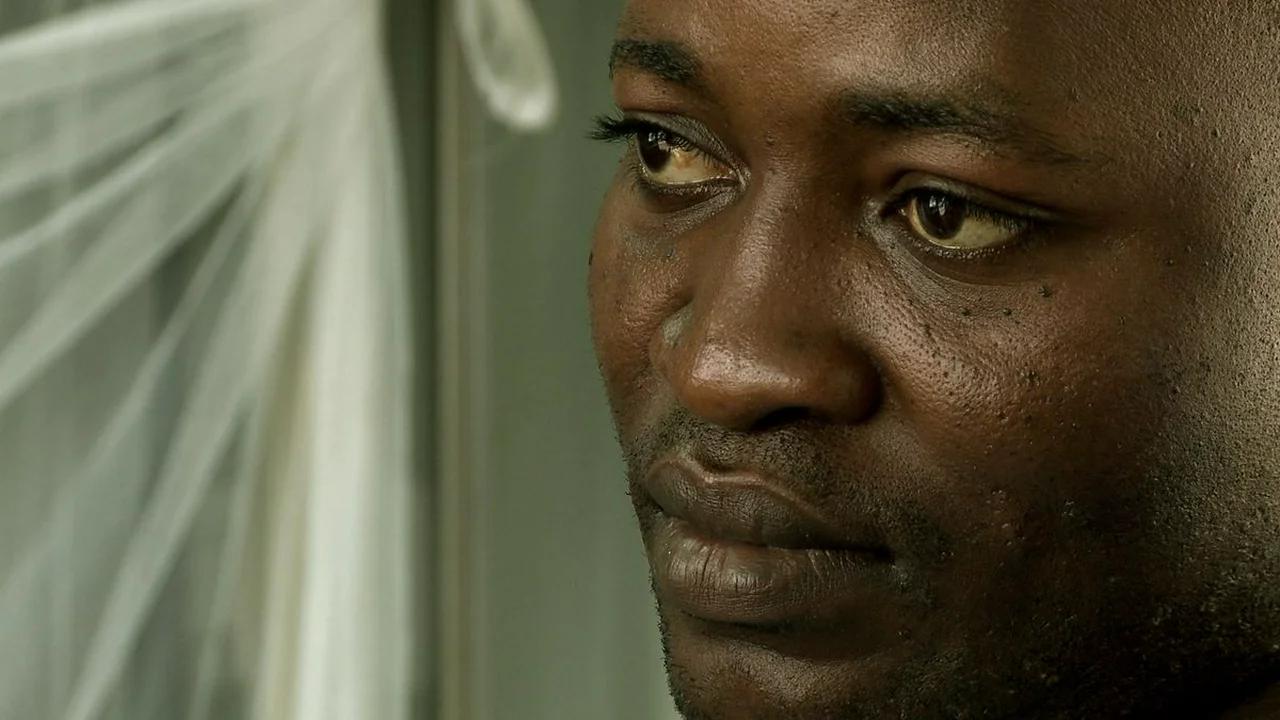
Reza is a man who doesn't exist on a spreadsheet, but his life explains the crisis better than any geopolitical white paper. He is seventy years old, with hands like cracked leather, living in what used to be the fertile plains of Isfahan. He remembers when the Zayandehrud River was a turquoise ribbon that gave the city its soul. Today, he walks across the riverbed. It is a highway of dust.
Reza isn't interested in the "dangerous new phase" of regional conflict reported by financial outlets. He is interested in why his son had to move to a Tehran slum because the family farm turned into a salt flat. When the water stops, the family unit dissolves. When the family unit dissolves, the social contract shreds.
The numbers are staggering, yet they feel distant until you see them through Reza’s eyes. Iran is currently using roughly 90% of its renewable water resources. To put that in perspective, any country using more than 40% is considered to be under "high stress." Iran isn't just under stress; it is in a state of hydro-bankruptcy. The "bank" is empty, and the creditors—the desert and the heat—are at the door.
A Legacy of Concrete and Hubris
How did a civilization that practically invented hydraulic engineering—the ancient qanats that carried water for miles through underground tunnels with zero evaporation—end up here?
The answer is a cocktail of bad luck and worse management. For years, the pursuit of "food self-sufficiency" drove the government to encourage the farming of thirsty crops like wheat and rice in areas that were never meant to support them. They built dams with the enthusiasm of a child with Lego bricks. Iran became one of the most dammed countries on Earth.
Each new wall of concrete was hailed as a triumph of modern engineering. In reality, they were straws stuck into a glass that wasn't being refilled. These dams blocked the natural flow to wetlands, leading to the death of lakes and the rise of "dust storms"—vast, choking clouds of silt and salt that migrate from the dried beds into the lungs of city dwellers.
The technology of the 20th century was used to solve a 13th-century problem, but it ignored 21st-century physics. As the climate warmed, evaporation rates skyrocketed. The water stored behind those massive, proud dams didn't go to the farmers; it vanished into the atmosphere, leaving behind a concentrated brine that poisoned the soil.
The Invisible Migration
We often talk about "climate refugees" as a future problem, something involving sinking islands in the Pacific. But the migration is happening now, internally, within the borders of the Iranian plateau.
Imagine a slow-motion exodus. Thousands of "Rezas" are packing their lives into rusted Peugeots and heading toward the fringes of major cities. This isn't a move sparked by choice or ambition. It is a flight from a landscape that no longer supports human life.
When these populations collide in the overcrowded suburbs of Tehran or Mashhad, the tension isn't about ideology. It’s about infrastructure. It’s about the fact that the grid can't handle the load, the sewage can't handle the volume, and the soul can't handle the loss of the land. This is the "internal shock" that precedes any external war. A thirsty population is a restless population. We have seen the protests in Khuzestan, where people took to the streets not for "regime change" in the abstract, but for a glass of water that wouldn't make them sick.
The Border as a Pressure Cooker
Water does not recognize the lines we draw on maps. This is where the crisis shifts from a domestic tragedy to a regional powder keg.
The Helmand River, flowing from Afghanistan into the Sistan and Baluchestan province of Iran, is a perfect example of the "invisible stakes." For years, tensions have flared between Tehran and the Taliban over water rights. When the dams in Afghanistan close their gates, the wetlands in eastern Iran turn into a wasteland.
It is easy to see how a water shortage becomes a military escalation. If your people are dying of thirst, a river becomes more valuable than an oil field. You don't fight for "influence" anymore; you fight for survival. The "Middle East water crisis" isn't a separate event from the geopolitical tensions we read about—it is the underlying heat source that makes everything else more volatile. It makes every diplomatic slight feel like a death sentence.
The Mirage of Desalination
There is a temptation to look toward technology as a deus ex machina. "Just desalinate the Persian Gulf," the optimists say.
Iran is indeed investing billions in massive pipelines to pump desalinated water from the south to the parched center of the country. It is a feat of sheer will. But this, too, comes with a cost. Desalination is incredibly energy-intensive. It requires the burning of more fossil fuels, which contributes to the very warming that caused the drought in the first place. It also creates "brine," a hyper-salty byproduct that is dumped back into the Gulf, damaging marine ecosystems and potentially ruining the water source for the next generation.
It is a short-term fix for a long-term hemorrhage. It's like taking a payday loan to pay off a mortgage. The numbers work for a month, but the math is terminal.
The Emotional Core
The real tragedy isn't just the lack of H2O. It’s the loss of a cultural identity. Persia was a civilization built on the mastery of water. The Persian garden—the charbagh—was a literal representation of paradise on Earth, defined by flowing streams and shade.
When the water vanishes, the garden dies. When the garden dies, the "paradise" that has sustained the Iranian identity for three millennia begins to feel like a cruel joke. There is a profound, quiet grief in watching a river you bathed in as a child become a place where people park their cars.
The water crisis is a thief of memories.
The Choice Ahead
We are witnessing the "dangerous new phase" not because of a sudden shift in policy, but because the margin for error has vanished. There is no more "buffer." A single year of low rainfall now triggers a national emergency.
Solving this requires more than just better pipes or more dams. It requires a fundamental reimagining of what it means to live on an arid plateau. It means moving away from water-heavy industry and agriculture. It means admitting that the dreams of the 1970s—of a green, industrialized desert—were a fever dream.
The struggle for water in the Middle East is the first chapter of a story the rest of the world will eventually have to read. Iran is just the protagonist of the opening pages.
The sun sets over Isfahan, casting long shadows across the dry arches of the Khaju Bridge. There are no splashes here. No sound of oars. Just the wind whistling through the stones and the distant, persistent cough of a dry tap in a house nearby.
The desert doesn't shout. It just waits.