The wind in North Darfur doesn't just carry heat. It carries the metallic tang of spent casings and the fine, pulverized remains of brick homes. In El Fasher, the air is thick with the history of a city being erased, one neighborhood at a time. This isn't a "conflict" in the way textbooks describe it—two armies meeting on a field of honor. This is a systematic dismantling of human existence.
Consider a woman named Mariam. She is a composite of the thousands of non-Arab civilians currently trapped behind the crumbling walls of the city, but her fear is entirely real. She remembers when the market was a riot of colors—dried hibiscus, bright textiles, the rhythmic shouting of merchants. Now, the market is a graveyard of charred stalls. She doesn't look for food anymore; she looks for a way to keep her children from breathing in the smoke of their neighbors' lives. You might also find this similar article interesting: The $2 Billion Pause and the High Stakes of Silence.
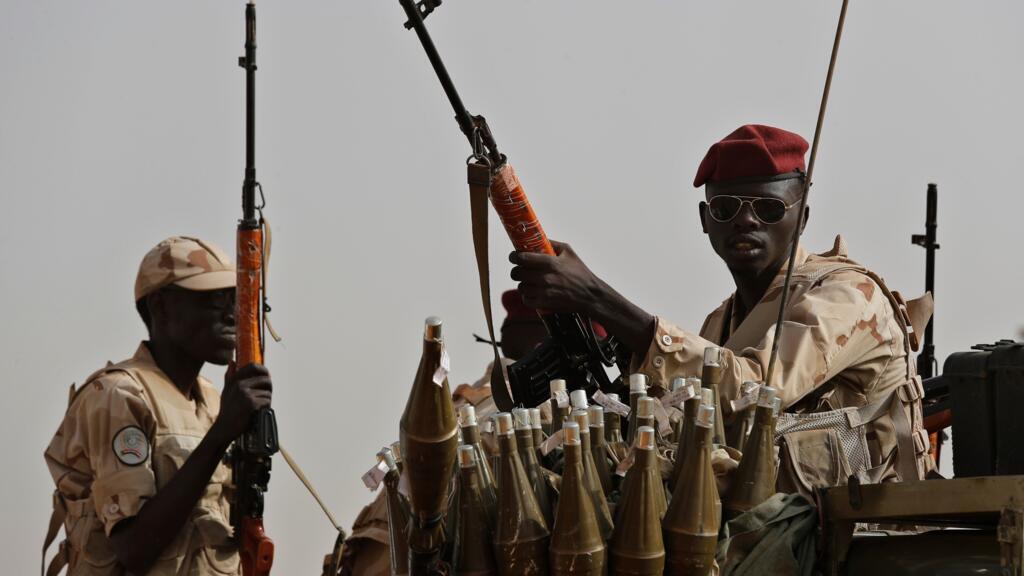
When the Rapid Support Forces (RSF) moved toward El Fasher, they didn't just bring rifles. They brought a specific, targeted intent. A recent UN report, stripped of its diplomatic jargon, points to a terrifying word that the world usually only utters when it is too late: genocide.
The Geography of a Massacre
El Fasher was the last holdout. It was the final urban refuge for those fleeing the scorched-earth tactics that have defined the RSF’s march across Darfur. For months, the city has been a pressure cooker. On one side, the Sudanese Armed Forces (SAF) hold their positions; on the other, the RSF and their allied militias circle like wolves. As highlighted in detailed articles by The New York Times, the implications are significant.
But the wolves aren't just fighting the SAF. They are hunting the Masalit, the Zaghawa, and the Fur people.
The violence follows a chillingly predictable pattern. First comes the shelling—indiscriminate, heavy, and constant. It strikes hospitals. It strikes schools. It strikes the internal displacement camps where people who have already lost everything are huddled together, waiting for the sky to stop falling. Then come the ground raids.
Witnesses describe RSF fighters entering homes not to search for soldiers, but to identify ethnicities. If you belong to the "wrong" group, your life is a coin flip. The UN report details mass killings that aren't collateral damage. They are the objective. They are executions performed with a cold, bureaucratic efficiency that suggests the orders came from the very top.
The Anatomy of Intent
To understand why this is happening, we have to look past the immediate gunfire. Genocide isn't just about the number of bodies. It is about the intent to destroy a group, in whole or in part. In El Fasher, that destruction takes many forms.
It is the destruction of the water supply.
It is the blockade of food trucks, turning hunger into a silent weapon of war.
It is the targeted sexual violence used to shatter the social fabric of communities, a trauma designed to echo through generations.
The RSF, descended from the Janjaweed militias that ravaged Darfur two decades ago, are using an old playbook with modern weapons. They aren't just trying to win a war; they are trying to redesign the map of Sudan by removing the people who have lived on that land for centuries. The report identifies "ethnically motivated" attacks that mirror the dark days of 2004. We promised "Never Again," yet here we are, watching the "Again" happen in real-time on high-definition satellite feeds.
The Sound of Silence
Why does the world feel so far away?
For the people in El Fasher, the silence of the international community is louder than the explosions. Communication blackouts are frequent. When the internet goes dark, the killing intensifies. Without eyes on the ground, the RSF operates in a vacuum of accountability. They know that by the time a formal investigation is launched, the witnesses will be buried or scattered into the desert.
The logic of the perpetrator is simple: if there is no one left to tell the story, the story never happened.
But the stories are leaking out. They come in frantic voice notes recorded during lulls in the fighting. They come from doctors working by candlelight in the few remaining clinics, trying to patch up gunshot wounds with scraps of cloth. They tell of "kill zones" where anyone moving is a target. They tell of families who have spent weeks living in holes dug into the floor of their homes, hoping the earth will protect them from the iron rain.
The Invisible Stakes
This isn't just a Sudanese problem. The destabilization of Darfur is a crack in the foundation of global security. When a paramilitary group can commit mass atrocities with impunity, it sends a signal to every other warlord on the planet. It says that the international laws written in the wake of the Holocaust are merely suggestions. It says that sovereignty is a shield for slaughter.
The stakes are the lives of 1.8 million people. That number is so large it becomes abstract. So, look back at Mariam.
She is sitting in the dark. She can hear the low rumble of trucks in the distance. She knows that if those trucks reach her street, her identity—the language she speaks, the ancestors she honors—becomes a death sentence. She isn't a "civilian casualty" in a report. She is a mother trying to remember the lyrics of a lullaby so she can drown out the sound of the mortars.
The UN report is a warning light flashing red on the dashboard of humanity. It tells us that the threshold has been crossed. The mass killings in El Fasher are not a byproduct of war; they are the point of it.
The desert sand is shifting. Soon, it will cover the ruins of the schools and the shallow graves in the courtyards. If we wait for the "perfect" evidence or the "right" political moment to intervene, we are simply waiting for the silence to become permanent. The dust of El Fasher is settled on all of us now. It stains the hands of everyone who saw the reports and chose to look at something else.
Mariam closes her eyes and waits for morning, though she no longer knows what the light will reveal.