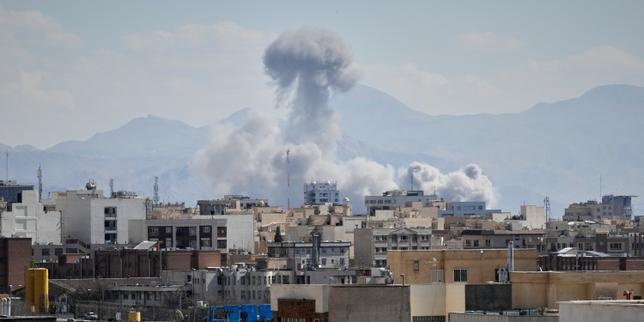
The kinetic reality of modern warfare finally met the world’s busiest international gateway. When an Iranian-manufactured drone struck the tarmac at Dubai International Airport (DXB), injuring four ground crew members and halting global flight paths for hours, it did more than just dent a terminal. It shattered the carefully curated image of the United Arab Emirates as a safe harbor in a volatile neighborhood.
For years, the UAE has operated on a silent social contract: geopolitical neutrality in exchange for uninterrupted commerce. That contract is currently on fire. The strike, involving a low-cost loitering munition, bypassed multi-billion-dollar defense umbrellas to hit a target that serves as the central nervous system of global logistics. This wasn't a random technical failure or a minor border skirmish. It was a surgical demonstration of asymmetric power. For a different perspective, see: this related article.
The Cheap Tech Defeating Expensive Shields
Military analysts have long warned about the "cost-exchange ratio" problem. The UAE utilizes some of the most sophisticated missile defense hardware on the planet, ranging from the American-made THAAD to the Patriot PAC-3. These systems are designed to intercept high-altitude ballistic missiles traveling at hypersonic speeds. They are essentially using a sledgehammer to stop a mosquito.
The drone used in the Dubai strike likely cost less than $20,000 to manufacture. It was slow, made of carbon fiber and plastic, and flew at an altitude that confused traditional radar arrays. To intercept such a device, a defender often has to fire a missile costing $2 million or more. Even if the defense works, the attacker wins the economic war of attrition. Similar reporting regarding this has been published by The New York Times.
In this instance, the defense didn't work. By hugging the coastline and utilizing the "noise" of a dense urban environment, the craft remained invisible until it was over the airport perimeter. This reveals a massive gap in civil infrastructure protection. While military bases are hardened, civilian airports are wide-open targets with massive fuel depots and glass-heavy architecture that turns into shrapnel upon impact.
Why Dubai is the Ultimate Pressure Point
Targeting Dubai is a calculated move to hit the UAE where it hurts most: its reputation for stability. Unlike Abu Dhabi, which sits on vast oil reserves, Dubai’s economy is built on perception. It is a hub for tourism, finance, and logistics.
When a missile hits a desert outpost, the markets barely flinch. When a drone causes four injuries at DXB, every insurance premium for every cargo ship and aircraft in the region gets recalculated overnight. The "Dubai Premium" is the extra cost businesses pay to operate in a high-luxury, high-security environment. If you remove the security, the luxury becomes a liability.
The geopolitical timing is equally deliberate. This strike follows months of simmering tension regarding maritime corridors and regional proxy conflicts. By striking the airport, the perpetrators are signaling that no amount of Western military hardware can guarantee the safety of the UAE’s crown jewel. They are forcing the Emirati leadership into a corner where they must choose between escalating a conflict they cannot win or making deep diplomatic concessions to a hostile neighbor.
The Architecture of an Asymmetric Hit
Let’s look at the mechanics of the attack. Reports from the ground suggest the drone utilized a decentralized GPS-independent navigation system. This is a significant shift in technical capability.
Electronic Warfare Limitations
Traditional jamming equipment works by flooding an area with radio frequency noise to sever the link between the drone and its pilot. However, if the drone is pre-programmed with "optical flow" or terrain-matching software, it doesn't need a pilot. It becomes a silent, autonomous projectile. Once it enters the final approach, no amount of signal jamming will stop its momentum.
The Human Element
The four injuries sustained were not accidental "collateral damage." The drone struck a specific maintenance area near the fuel hydrants. This suggests a high level of pre-flight intelligence. The attackers weren't just aiming for a building; they were aiming for a specific disruption. By hitting the ground crew, they forced an immediate and total evacuation of the tarmac, effectively paralyzing the airport’s operations for the entire day.
A Wake Up Call for Global Logistics
The ripples of this strike are moving through the global supply chain. DXB is not just a place where people change planes; it is a massive transshipment point for high-value electronics, pharmaceuticals, and gold.
A 12-hour closure of Dubai's airspace causes a backlog that takes a week to clear. Cargo flights are being diverted to Muscat or Doha, straining those facilities and driving up fuel costs. If these strikes become a recurring threat, the very logic of using the Persian Gulf as a global transit point comes into question.
We are seeing the birth of a new era of "gray zone" warfare. In this space, states use proxies and deniable technology to inflict massive economic damage without ever officially declaring war. The UAE is now a front-line state in a conflict that is being fought with lines of code and cheap fiberglass wings.
The Intelligence Failure
There is a hard truth that the Emirati security services are currently grappling with: they didn't see it coming. Despite billions spent on surveillance and intelligence-sharing agreements, the drone was launched and navigated through one of the most monitored airspaces in the world.
This points to a failure of imagination. Security forces were looking for "big" threats—tankers being seized or ballistic missiles being launched from silos. They weren't prepared for a small, slow-moving object that looks like a hobbyist's toy on a radar screen but carries the explosive power of a hand grenade.
The response will likely involve a massive investment in directed-energy weapons (lasers) and microwave emitters that can "fry" a drone's electronics at a lower cost than a missile. But those technologies are still in their infancy and are difficult to deploy in a crowded civilian environment without risking damage to the very airplanes they are meant to protect.
The Economic Fallout
Investors are already looking at the UAE with a more critical eye. For decades, the country has been marketed as a "Singapore in the Desert." But Singapore doesn't have explosive-laden drones landing on its runways.
If the UAE cannot guarantee the safety of its primary economic engine, we may see a flight of capital toward more stable jurisdictions. The real estate market in Dubai, which is heavily reliant on foreign buyers, is particularly vulnerable to this shift in sentiment. A single drone doesn't crash a market, but a pattern of drones certainly does.
The "brutal truth" is that the UAE’s defense strategy is currently obsolete. It was built for the wars of the 20th century, and it is being dismantled by the technology of the 21st. The injured workers at DXB are the first victims of a new reality where the distance between a localized conflict and global economic chaos is zero.
Grounding every flight is the only way to ensure safety after a breach like this. But grounding every flight is exactly what the attackers wanted. The UAE is now trapped in a cycle of reactive security, where the mere threat of a $500 drone can hold a multi-billion-dollar economy hostage.
Stop looking at this as a minor security breach. This was a proof of concept. The attackers now know that the most sophisticated defense systems in the world have a blind spot the size of a commercial airport. The question isn't if they will strike again, but when they will decide that the "warning" phase is over.
Emirati officials must now decide if they will continue the path of military escalation or if they will acknowledge that their shiny, high-tech cities are far more fragile than they ever cared to admit. The tarmac is being repaired, but the sense of invincibility is gone forever.