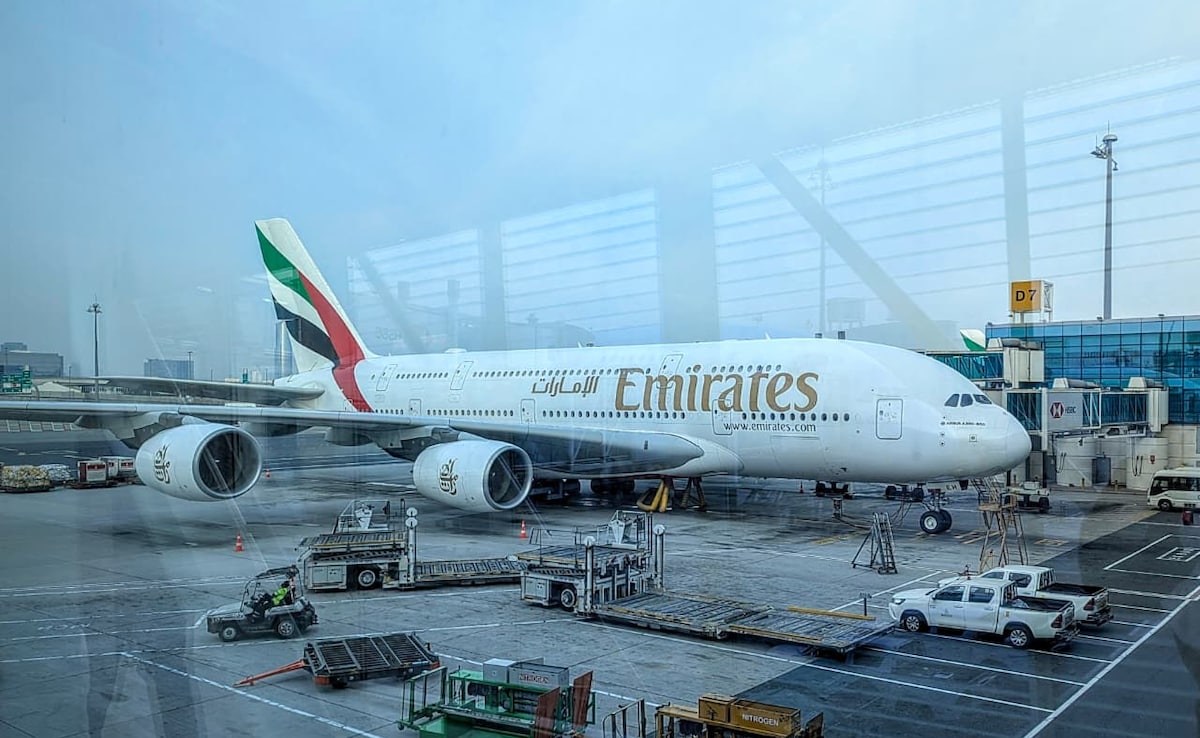
The global aviation industry is currently hyperventilating over a ghost. The moment Dubai International (DXB) faces a significant operational hiccup or a hypothetical shutdown, the "experts" start screaming about a global cardiac arrest. They claim that because DXB handles over 87 million passengers a year, its failure would be the end of connectivity as we know it.
They are wrong. If you enjoyed this article, you might want to look at: this related article.
The obsession with Dubai as the "indispensable" hub is a symptom of lazy network design and a blind devotion to a hub-and-spoke model that peaked in the 1990s. If DXB went dark tomorrow, the world wouldn't stop spinning. It would just finally be forced to fix its addiction to inefficient, centralized routing.
The Fragility Of The "Super-Hub" Myth
Most industry analysts treat Dubai like a load-bearing wall. In reality, it’s a bottleneck. We have built a global infrastructure that relies on funneling millions of people through a single point in the desert to get from London to Sydney or New York to Mumbai. For another look on this event, check out the latest update from National Geographic Travel.
When you centralize that much risk, you aren't creating a "success story"; you are creating a single point of failure. The "cardiac shock" narrative assumes the global economy is a delicate flower that can't handle a reroute.
I have spent two decades watching airlines burn billions trying to mimic the Emirates model. I’ve seen carriers in Europe and Southeast Asia dismantle their own direct-route capabilities just to feed the beast of a central hub. It’s a race to the bottom that prioritizes airport retail revenue over passenger time.
Why The "Aviation Hub" Concept Is Obsolete
The standard argument is that DXB provides "unparalleled connectivity." This is a polite way of saying it forces people to take two flights when one should suffice.
- The Range Reality: In 2026, the technology of flight has outpaced the need for a mid-way stop. With ultra-long-range (ULR) aircraft like the Airbus A350-1000 and the Boeing 777X, the geographical advantage of the Gulf is evaporating.
- The Carbon Cost: Taking off and landing are the most carbon-intensive parts of a journey. Funneling a passenger from Paris to Singapore through Dubai adds unnecessary cycles. A DXB shutdown would actually force a "green" correction by pushing airlines back toward point-to-point efficiency.
- The Buffer Illusion: Analysts claim there is no "spare capacity" in the system. That’s a lie. The capacity exists in secondary airports that have been starved of traffic by the predatory pricing and slot-hoarding of mega-hubs.
The Brutal Truth About "Economic Impact"
When DXB stops, the headlines focus on lost GDP. What they don't tell you is that this "lost" value is largely artificial. It is the value of duty-free perfume, overpriced layover lattes, and airport transit hotels.
If the airport shuts down, that money doesn't vanish; it redistributes. Passengers fly direct. They spend their money in their destination cities instead of a transit lounge. The "shock" to global aviation is actually a correction that returns power to local economies rather than a single corporate entity.
The Math Of A Reroute
Let’s look at the mechanics. If we assume a total shutdown of DXB, the immediate reaction is chaos. But within 72 hours, the "Network Effect" kicks in.
- Doha and Abu Dhabi: These neighbors aren't just competitors; they are immediate pressure valves. They have the apron space. They have the fuel.
- Istanbul’s Ambition: iGA Istanbul Airport was built specifically to eat Dubai's lunch. A DXB failure would be the greatest gift to Turkish aviation history, proving that the "indispensable" hub is just a temporary king of the hill.
Stop Asking "How Do We Fix The Hub?"
The "People Also Ask" section of the internet is filled with queries like "How can Dubai Airport prevent weather delays?" or "What is the backup for DXB?"
These are the wrong questions.
The right question is: Why are we still flying through Dubai?
If you are a corporate travel manager or a logistics lead, a DXB shutdown isn't a crisis—it’s an audit. It reveals how poorly you have diversified your supply chain and your team's movements. Relying on a single corridor in a geologically and politically complex region is a failure of leadership, not a failure of aviation.
The Hidden Upside Of Total Disruption
Imagine a scenario where DXB is offline for a month.
Airlines would be forced to reactivate dormant direct routes. The Boeing 787’s "hub-buster" philosophy would finally be vindicated. We would see a surge in innovation for mid-sized airports. We would see that the "Global City" status of Dubai is a manufactured image sustained by a very specific type of transit traffic that doesn't actually want to be there—they are just stuck there for three hours.
The "Cardiac Shock" isn't a death knell; it's a defibrillator. It’s the jolt needed to wake the industry up from its obsession with scale over resilience.
The Logistics Of The Pivot
For those who think the technical shift is impossible, consider the Aviation Pivot Ratio. This is the speed at which a network can redistribute 10,000 passengers per hour across alternative nodes.
During the 2010 Eyjafjallajökull eruption, the industry didn't die. It evolved. It learned that digital coordination and rail-air integration were vastly underutilized. A DXB shutdown would do the same for the long-haul market. It would force the adoption of "virtual interlining," where software connects disparate flights across different airlines to bypass the broken hub.
The Professional’s Playbook For The Post-Hub Era
If you are waiting for a "return to normal" every time a major hub fails, you are a dinosaur. The future is fragmented, decentralized, and direct.
- Stop booking via hubs for critical path travel. If there is a direct flight that costs 20% more, take it. The "savings" of a DXB layover are priced in with the risk of a total system collapse.
- Invest in ULR capacity. Airlines that are doubled-down on the A380-style "big plane, big hub" model are holding a bag of rocks. The winners are the ones with the fleet flexibility to bypass the desert entirely.
- Ignore the "Aviation Experts" on TV. Most of them are subsidized by the very hubs they are defending. They have a vested interest in making you believe the system is more fragile than it actually is.
The global aviation system is not a human body with one heart. It is a mycelial network. It is designed to route around damage. The closure of Dubai Airport wouldn't be a tragedy; it would be the start of the most productive restructuring the industry has seen in fifty years.
Stop mourning the bottleneck and start building the bypass.
The industry doesn't need Dubai nearly as much as Dubai needs the industry to stay scared.