The rumors are swirling through the halls of Brussels and Washington with the nauseating rhythm of a ticking clock. The whispered "compromise" is simple: Ukraine gives up the Donbas and Crimea, and in exchange, the West provides ironclad security guarantees—perhaps even a fast track to NATO.
This isn't a strategy. It’s a funeral arrangement.
The mainstream media is treating this as a pragmatic "land-for-peace" swap, a hard-nosed realization that the front lines have stagnated. They are wrong. They are falling for the same institutional inertia that led to the failed Minsk Accords and the toothless 1994 Budapest Memorandum. I have watched geopolitical analysts play this exact game of musical chairs for decades, always moving the seats while the room is on fire.
If Kyiv accepts a security guarantee in exchange for formalizing the loss of its eastern territories, it isn't buying peace. It is buying a brief intermission before the final act of its own dismantling.
The Myth of the Ironclad Guarantee
Let’s dismantle the biggest lie first: that a "guarantee" from the West is a physical shield.
In international relations, a security guarantee is only as strong as the political will of the guarantor on a Tuesday morning three years from now when a different administration is in power. We saw this in 2014. We saw it in 1938. To believe that a piece of paper signed in a gilded room in Vilnius or Washington can replace the strategic depth of the Donbas is to ignore every lesson of the 20th century.
The Donbas isn't just "land." It is a massive industrial, mineral, and defensive bulwark. By ceding it, Ukraine doesn't just lose territory; it loses its internal capacity to sustain a long-term defense industry. You cannot protect a truncated state with a "guarantee" if that state has been rendered economically and geographically non-viable.
If you are a CEO and you sell off your manufacturing plants to a competitor in exchange for a "promise" that they won't sue you, you’ve already lost the company. You’ve just delayed the bankruptcy filing.
The Geography of Vulnerability
The "lazy consensus" suggests that a smaller, more "European" Ukraine would be easier to defend. This is a fundamental misunderstanding of military logistics.
The Donbas serves as a natural barrier. The moment that territory is formally ceded, the new border becomes an indefensible line drawn across an open steppe. Russia doesn't just get the coal mines; they get the high ground. They get the rail hubs. They get the ability to stage an offensive from a starting line that is hundreds of miles closer to Kyiv than it was in February 2022.
Imagine a scenario where the "new" border is finalized. Ukraine joins a NATO-lite structure. Two years later, a "local uprising" or a "peacekeeping necessity" triggers a Russian move across the new line. Does anyone honestly believe the 101st Airborne is going to drop into Dnipro to save a town that wasn't on the map of the "protected" zone six months prior?
The West has a history of "interpreting" its way out of inconvenient conflicts. A security guarantee for a fractured Ukraine is an invitation for Russia to test the West's resolve at a much lower cost.
The Economic Suicide of Partition
The Donbas contains some of the largest titanium and iron ore deposits in Europe, not to mention the massive lithium reserves that are critical for the global energy transition.
By linking security to the abandonment of these assets, the West is effectively asking Ukraine to become a permanent ward of the state. Without the industrial engine of the East, Ukraine becomes an agrarian rump state, forever dependent on foreign aid to keep its lights on.
- Financial Sovereignty: A state that cannot pay its own bills cannot maintain its own army.
- Infrastructure Collapse: The energy grid of the East is deeply integrated with the West. Cutting it off is an act of self-amputation.
- Investment Flight: Who invests in a country whose borders are "guaranteed" by people who just forced them to give up 20% of their land?
I’ve seen private equity firms walk away from "guaranteed" deals for far less risk than a frozen conflict on a shifting border. Capital is a coward. It doesn't go where "guarantees" are needed; it goes where borders are settled by strength.
The Moral Hazard of "Land for Peace"
When you reward an aggressor with territory, you aren't ending a war; you are validating a business model.
The "land-for-peace" framework tells every revisionist power in the world—from the South China Sea to the Balkans—that if you can hold a piece of land long enough, the international community will eventually get tired and let you keep it.
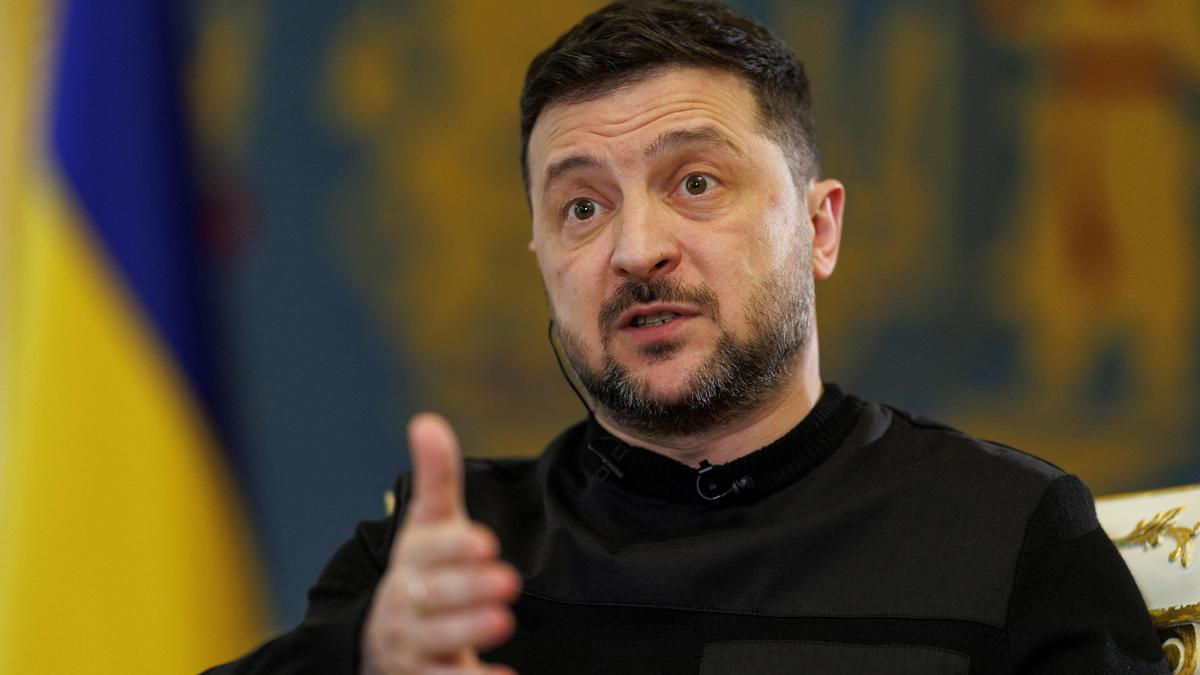
The counter-intuitive truth is that the most "pro-peace" move is the most "pro-war" one: continuing to refuse the partition. The moment Zelenskiy or any leader signs away the Donbas, they break the social contract with the millions of Ukrainians who have died or been displaced. You create a radicalized, betrayed veteran class inside a weakened state. That is the recipe for a civil war or a coup, which is exactly what the Kremlin wants.
The Real Security Guarantee
The only security guarantee that matters is the one Ukraine builds for itself.
- Domestic Production: Stop waiting for the West to send enough missiles. Build the factories in underground bunkers.
- Total Mobilization of the Economy: Not just soldiers, but every sector of society.
- Nuclear Ambiguity: If the West won't provide a real shield, Ukraine will eventually have to look at the 1994 decision to denuclearize as the greatest strategic error in human history.
The West's offer isn't a lifeline; it’s an exit strategy for Washington and Berlin, not for Kyiv. They want the "Ukraine problem" off the front page before the next election cycle. They are willing to sacrifice Ukrainian sovereignty for a "stable" energy market and a quiet life.
If Ukraine gives up the Donbas for a "guarantee," they will wake up in five years with no Donbas and no guarantee.
The Donbas isn't a bargaining chip. It is the spine of the country. You don't trade your spine for a promise that someone will hold you up. You stand on your own or you don't stand at all.
Stop asking for a seat at the table and start making the table too expensive to break.