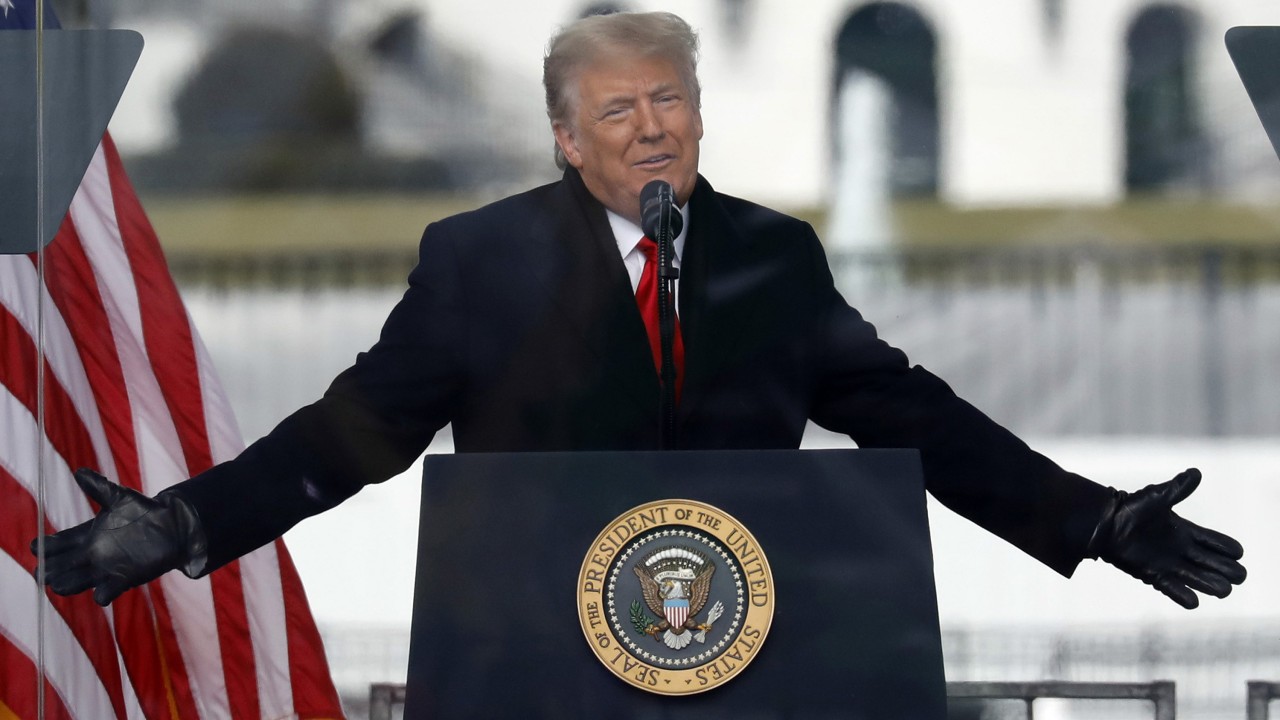
The rumors about Ali Khamenei's health aren't new, but Donald Trump just cranked the volume to eleven. During a recent campaign stop, the former president didn't just speculate on Iranian policy; he questioned whether the Supreme Leader is even alive. "We don't know if he's dead or not," Trump told a crowd, sparking a wave of digital whispers and diplomatic eye-rolling across the globe. It's a classic Trump move—blunt, disruptive, and calculated to keep his opponents off balance.
This isn't just about gossip. In the high-stakes chess match of Middle Eastern geopolitics, the physical state of the 86-year-old Ayatollah is the single most important variable. If Khamenei is incapacitated or gone, the power vacuum in Tehran could trigger a shift that affects everything from oil prices in Texas to the front lines in Gaza and Lebanon.
Why the health of Ali Khamenei is a global obsession
Tehran is a black box. Unlike Western democracies where a leader's medical records are practically public property, the Islamic Republic treats the Supreme Leader’s health as a matter of national security. We’ve seen this movie before. In 2022, reports surfaced that Khamenei had undergone emergency surgery for bowel obstruction. He eventually appeared in public, looking frail but functional, yet the questions never truly went away.
Trump's comments tap into a very real anxiety within the Iranian establishment. The Supreme Leader holds absolute power. He's the commander-in-chief, the final word on foreign policy, and the religious North Star for the regime's loyalists. When a man that powerful reaches his mid-80s, every cough or missed public appearance becomes a potential signal of a regime collapse.
The timing of these rumors is particularly sensitive. Iran is currently navigating a direct confrontation with Israel, managing its "Axis of Resistance" proxies, and trying to keep its crumbling economy from flatlining under sanctions. A transition of power right now wouldn't just be a domestic issue; it would be a regional earthquake.
The succession struggle happening behind closed doors
If Khamenei were to pass away, the Assembly of Experts—a body of 88 clerics—is tasked with choosing his replacement. But don't let the formal process fool you. The real decision-making happens in the shadows, involving the Islamic Revolutionary Guard Corps (IRGC) and the most influential clerical families.
The frontrunners and the wildcards
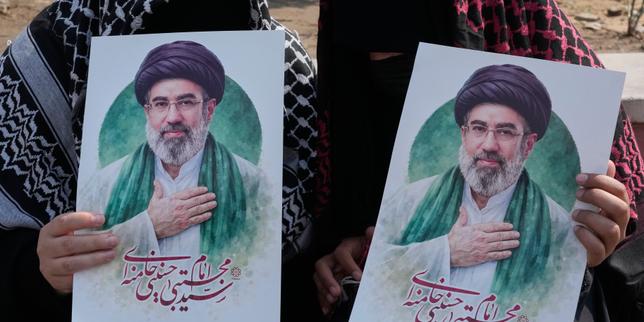
For a long time, Ebrahim Raisi was the heir apparent. His death in a helicopter crash in May 2024 threw the succession plan into total chaos. Now, the spotlight has shifted toward Mojtaba Khamenei, the Supreme Leader’s second son.
- Mojtaba Khamenei: He’s influential within the security apparatus but lacks the religious credentials traditionally required for the role. More importantly, the idea of "hereditary rule" is a tough sell in a country that overthrew a Monarchy in 1979.
- Alireza A'afi: A prominent cleric with strong ties to the religious establishment in Qom.
- The IRGC Factor: The Revolutionary Guard won't just sit back. They want a leader who will protect their massive economic interests and maintain a hardline stance against the West.
The IRGC has essentially become a state within a state. They don't need a Supreme Leader who is a brilliant theologian; they need someone who won't get in their way. This tension between the "old guard" clerics and the "new guard" military elites is where the real fire will start.
Trump's rhetoric as a psychological warfare tool
When Trump says "we don't know if he's dead," he isn't necessarily claiming to have secret intel. He's playing a psychological game. By casting doubt on the Iranian leadership's stability, he's signaling to the Iranian people that their government is fragile. He's also telling the world that, under his potential second term, the U.S. won't be playing by the traditional rules of diplomacy.
This approach is a sharp departure from the current administration's strategy. While the Biden-Harris platform focuses on containment and calibrated de-escalation, Trump’s rhetoric is designed to create maximum uncertainty. Uncertainty is a nightmare for dictatorships. It emboldens protesters and makes military commanders hesitate.
The "Maximum Pressure" campaign wasn't just about sanctions. It was about making the Iranian leadership feel like the walls were closing in. Trump’s latest comments suggest that if he returns to the White House, that pressure won't just be economic—it'll be personal and existential.
What a post-Khamenei Iran actually looks like
Let's be real: nobody knows exactly what happens the day after. But we can look at the data and the history of the region to make some educated guesses. Most experts agree that a sudden transition would likely lead to one of three scenarios.
Scenario 1 Controlled transition
The Assembly of Experts quickly announces a successor, likely a compromise candidate who satisfies both the clerics and the IRGC. This keeps the status quo but does nothing to address the deep-seated anger of the Iranian youth who are tired of the morality police and economic isolation.
Scenario 2 Military takeover
The IRGC moves in to "stabilize" the country, effectively sidelining the clergy and turning Iran into a more traditional military autocracy. This could actually lead to a more pragmatic foreign policy in the long run, as the IRGC cares more about survival and profit than religious purity, but it would be a brutal transition.
Scenario 3 Popular uprising
The death of the Supreme Leader acts as a catalyst for the "Woman, Life, Freedom" movement to return to the streets. With the leadership in flux, the security forces might hesitate to fire on their own people, leading to a total collapse of the current system.
The ripple effect on the Middle East
You can't talk about Iran without talking about its proxies. Hezbollah in Lebanon, the Houthis in Yemen, and various militias in Iraq all depend on Tehran for cash and commands. A distracted or divided Iran means these groups lose their primary benefactor.
- Israel: A leadership crisis in Iran might give Israel a window to degrade Hezbollah further without fear of a coordinated Iranian response.
- Saudi Arabia: Riyadh has been cautiously mending ties with Tehran. A more radical IRGC-led government could scrap those diplomatic gains instantly.
- Russia and China: Both have bet big on Iran as a counterweight to U.S. influence. They’ll be working overtime to ensure whatever comes next in Tehran remains aligned with their interests.
Reality check on the "death" rumors
Is Khamenei actually dead? Probably not. We would see more movement in the IRGC's communications and more visible security in the capital. However, the fact that we're even having this conversation—and that a major U.S. presidential candidate is making it a talking point—shows how precarious the situation has become.
The "Guide Suprême" isn't just a man anymore; he's a symbol of a system that is aging out. Whether he's currently in a hospital bed or sitting in a high-level meeting, his era is undeniably drawing to a close. Trump’s comments aren't just "Trump being Trump"—they're a reminder that the world is unprepared for the vacuum that's coming.
Keep your eyes on the official Iranian news agency (IRNA) for specific types of "prayer meetings" or sudden changes in programming. Those are the real tells. When the transition happens, it won't be a quiet affair. It'll be a loud, messy, and potentially violent realignment of the modern world.
If you're watching the markets or the news, stop looking at the oil charts for a second and start looking at the internal power dynamics of the Assembly of Experts. That's where the next decade of Middle Eastern history will be written. Watch the movements of Mojtaba Khamenei and the IRGC leadership. Their next public appearances—or lack thereof—will tell you more than any campaign speech ever could.