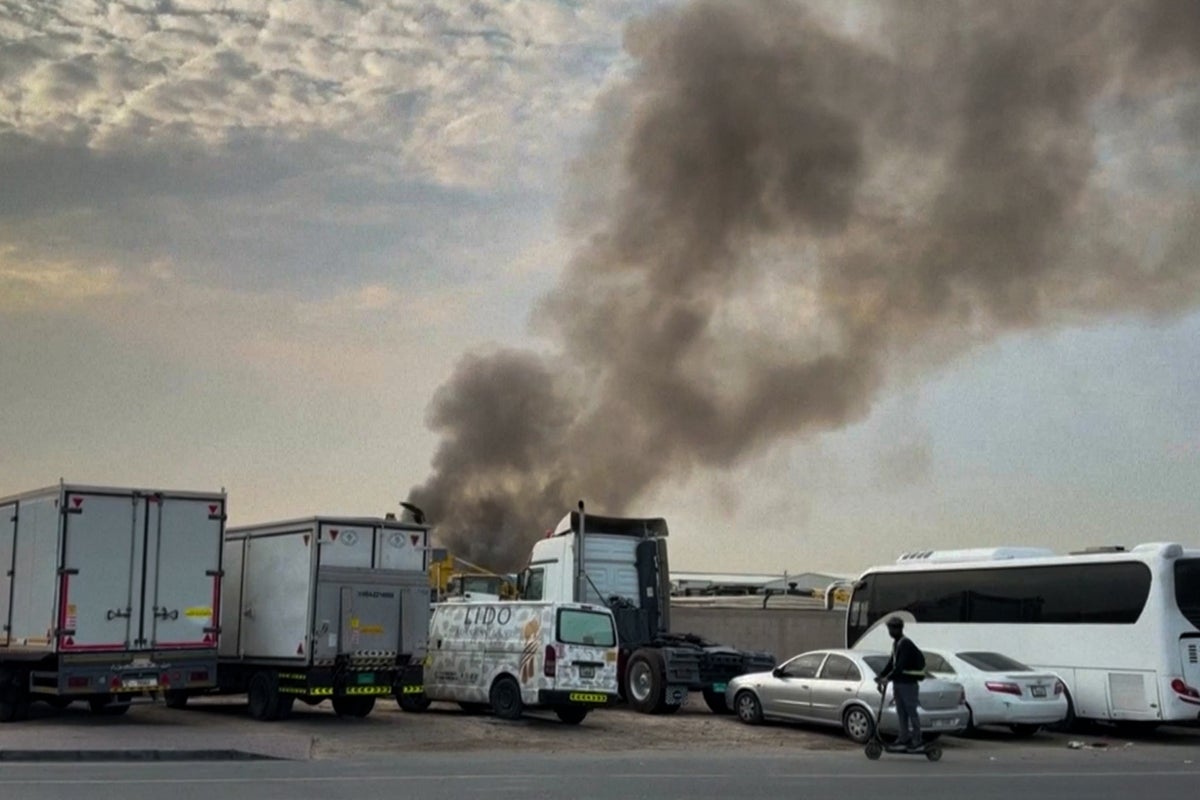
Expats in Dubai often live in a curated bubble of luxury, high-rise aesthetics, and perceived immunity. But that bubble has a catastrophic failure point that many only discover when the police are at the door. If you are a British citizen or a Western professional filming a drone strike, a missile interception, or any security incident in the United Arab Emirates, you are not just capturing history. You are likely committing a felony that carries mandatory prison time and immediate deportation.
The UAE legal system does not view "citizen journalism" through the lens of public interest. It views it as a direct assault on national security and a violation of the Cybercrime Law. The moment that video hits a social media feed or a private WhatsApp group, the person behind the lens enters a legal machinery that prioritizes the state's image over individual expression. If you liked this article, you should check out: this related article.
The Illusion of Social Media Freedom
Many British residents arrive in the UAE with a mindset shaped by Western digital norms. In London or Manchester, filming a security event is considered a civic duty or a viral opportunity. In Dubai, it is a liability. The local authorities operate under Federal Decree-Law No. 34 of 2021 on Combatting Rumors and Cybercrimes. This isn't a dusty, ignored statute. It is a sharp instrument used to maintain the country’s carefully managed reputation as a safe haven for global capital.
When a drone enters UAE airspace, the instinct for many is to reach for a smartphone. The logic is simple. "If I can see it, I can film it." This is a dangerous fallacy. UAE law prohibits the filming of military sites, government buildings, and "accidents or incidents" that could harm the national interest. An aerial attack qualifies as all three. For another perspective on this story, check out the latest update from BBC News.
The state’s grip on the narrative is absolute. By filming and sharing footage of a security breach, an individual is accused of "spreading rumors" or "disturbing public order." These aren't just buzzwords. They are specific legal charges that strip away the protections an expat might assume they have. The police have sophisticated digital forensics teams. They don't need you to post the video publicly to find it. If it moves through the local network, it is visible.
The Three Hidden Costs of a Viral Clip
The immediate threat is physical detention, but the long-term wreckage is often overlooked. British nationals who find themselves caught in this net face a triple-threat of consequences that can erase a decade of professional life in forty-eight hours.
First, there is the total loss of residency. The UAE does not offer a path to citizenship for the vast majority of its workforce. Your presence is a privilege tied to a visa. A criminal conviction, particularly one involving national security or "cybercrimes," triggers an automatic and permanent deportation order. There is no appeal process that restores your right to live in the country once that stamp is in your file.
Second, the financial seizure. Many expats have their life savings in local banks, tied to their residency status. When you are arrested for a security-related offense, accounts are frequently frozen. If you are deported, settling your affairs—selling a property, closing a business, or moving funds—becomes a nightmare managed from a thousand miles away, often through expensive power-of-attorney arrangements that eat into the principal.
Third, the blacklisting effect. The UAE is part of a regional security bloc. A deportation from Dubai for a security offense can lead to a ban from the entire Gulf Cooperation Council (GCC). For a consultant or an engineer whose career depends on access to Riyadh, Doha, and Abu Dhabi, a single thirty-second video of a drone interception effectively ends their career in the Middle East.
The Engineering of Silence
The technical reality of the UAE's digital landscape is that it is one of the most monitored environments on earth. This isn't a conspiracy theory. It is a matter of infrastructure. The two primary internet service providers are state-linked. Most encrypted messaging apps have their Voice over IP (VoIP) functions blocked. While text remains encrypted on platforms like WhatsApp, the metadata—who you are talking to, when, and the size of the files you are sending—is accessible.
The government uses high-altitude surveillance and advanced signal intelligence to monitor the physical space where an incident occurs. If a drone is intercepted over a specific neighborhood, the authorities can "geofence" that area. They can identify every active mobile device in the vicinity. If your device suddenly starts uploading a large video file to a foreign server or a social media cloud immediately after an explosion, you have just painted a target on your back.
The Myth of the Private Group
A common mistake made by Westerners is believing that a private WhatsApp group or a "Close Friends" list on Instagram provides a shield. It doesn't. In the UAE, "sharing" doesn't mean "broadcasting to the public." It means transmitting the data to a third party. If one person in that private group takes a screenshot or forwards your video to someone else—even if they do it out of concern—the chain of evidence is established.
The legal system here uses "intent" in a way that often baffles Western lawyers. You do not need to have the intent to help an enemy state to be found guilty. The mere act of creating the footage and allowing it to circulate is enough to prove you intended to "disturb the peace."
Why the British Consulate Can't Save You
There is a persistent belief among the British expat community that the Embassy or the Consulate will step in and "fix" a situation involving a security arrest. This is a misunderstanding of international law and diplomatic limits.
The UK government is very clear in its travel advice. They cannot interfere in the judicial processes of another country. They can provide a list of lawyers. They can visit you in prison to check on your welfare. They can notify your family. But they cannot get you out of jail, and they cannot stop a deportation order. When it comes to national security offenses, the UAE rarely grants leniency to "send a message" to the foreign community.
The British government values its strategic and economic relationship with the UAE. While they will provide basic consular support, they are not going to trigger a diplomatic crisis over a resident who violated a clear and publicized law regarding the filming of military incidents. You are on your own.
The Social Pressure Trap
During a crisis, the urge to be the first to report is an addictive social currency. In the heat of the moment, the dopamine hit of "breaking news" overrides the instinct for self-preservation. This is the "Social Pressure Trap."
We see it every time there is a storm, a fire, or a security event in Dubai. People stand on their balconies, phones held high. They see their neighbors doing the same thing and assume there is safety in numbers. There isn't. The authorities don't need to arrest five hundred people to maintain control. They only need to arrest five to ensure the other four hundred and ninety-five never pick up their phones again.
The Correct Protocol for a Security Event
If you hear an explosion or see a drone interception, the only safe course of action is to put your phone in your pocket and move away from the window.
- Do not record "for your own records." If your phone is searched for any reason and that footage is found, you are in possession of illegal material.
- Do not "live stream" to family back home. The data packets are tracked in real-time.
- Do not join the digital chatter. Even discussing the specific location or the success of an interception on social media can be classified as "leaking sensitive information."
Wait for the official statement from the Ministry of Interior or the official news agency, WAM. These are the only sources of information that are legally "safe" to share. It may feel like state-controlled media, because it is. But in this jurisdiction, the state’s narrative is the only one that won't end your career.
The Reality of the "Safe City"
Dubai markets itself as a playground of the future. It is a city of "the biggest," "the tallest," and "the most advanced." But that advancement includes the legal and technical ability to enforce total narrative control. The infrastructure that makes the city run so smoothly—the ubiquitous cameras, the seamless 5G, the integrated government apps—is the same infrastructure that makes it impossible to hide.
The British expat community needs to reconcile the Dubai they see on Instagram with the Dubai that exists in the Federal Penal Code. They are not the same place. One is a high-end holiday destination. The other is a sovereign state with a zero-tolerance policy for anything that threatens its image of invulnerability.
A single video file is not worth your house, your savings, and your right to live in the region. The next time the sky lights up with an interception, the most professional thing you can do is look away.
Check your local laws and verify your insurance coverage for legal defense in the UAE before the next crisis hits.