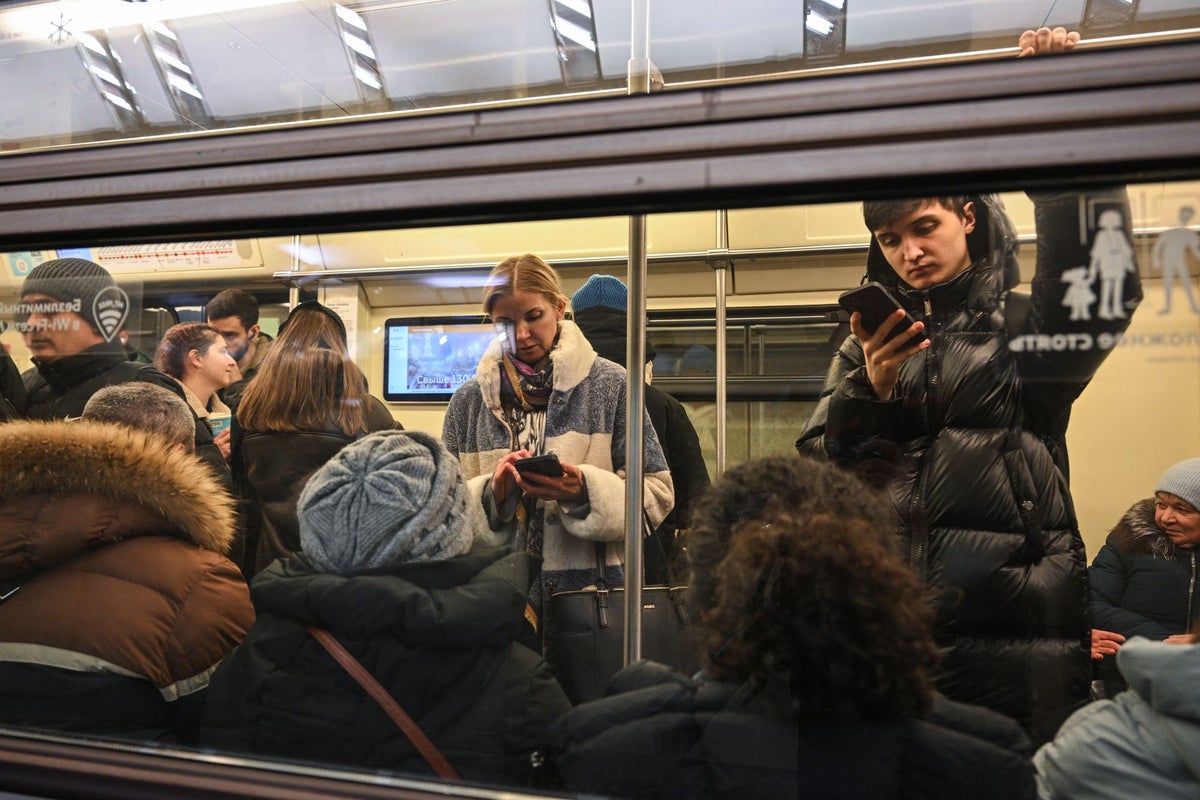
The screen flickered, a soft blue glow illuminating a small apartment in a Moscow suburb. For Mikhail, a thirty-year-old freelance graphic designer, this nightly ritual was his only tether to a world that felt increasingly like a distant memory. He wasn't looking for state secrets or revolutionary manifests. He wanted to watch a documentary about deep-sea exploration on a platform that had been throttled into uselessness. He wanted to read a tech blog based in San Francisco. He wanted to breathe.
He clicked the icon for his Virtual Private Network (VPN). A small spinning circle appeared. Usually, it turned green within seconds, signaling that his data was being tunneled through a server in Amsterdam or Tallinn, masking his identity and bypassing the digital fences erected by the state.
This time, the circle stayed grey. He tried a different protocol. Grey. He switched to a server in Reykjavik. Still grey.
Mikhail felt a cold prickle of isolation. It wasn't just a technical glitch; it was the sound of a door locking from the outside.
The Invisible Architecture of Control
For years, the internet in Russia existed in a state of precarious liberty. It was a sprawling, chaotic digital frontier where memes and dissent coexisted with state-sanctioned narratives. But the landscape has shifted. The Kremlin’s approach to the internet has evolved from reactive censorship to a proactive, architectural siege. They are no longer just banning specific websites; they are dismantling the tools that allow citizens to step over the fence.
At the heart of this crackdown is the "sovereign internet" law. This isn't merely a piece of legislation; it is a fundamental rewiring of how data moves across one-ninth of the Earth’s landmass. The state has mandated the installation of Specialized Equipment for Countering Threats (TSPU) at the facilities of all internet service providers. These boxes allow the federal regulator, Roskomnadzor, to see exactly what kind of traffic is moving through the wires.
When you use a VPN, you are essentially putting your data in an armored van. The censors can see the van, but they can’t see what’s inside. The new strategy is simple and brutal: if they can't see inside the van, they simply stop the van from moving.
The Death of the Protocol
To understand how millions of people like Mikhail are being silenced, we have to look at the "fingerprints" of our digital lives. Every time you connect to a VPN, you use a specific protocol—OpenVPN, WireGuard, IKEv2. These are the languages the armored van uses to talk to the outside world.
In the past, the Russian government would block the IP addresses of VPN servers. It was a game of digital Whac-A-Mole. The VPN providers would pop up with ten new addresses, and the censors would scramble to find them. It was inefficient.
Now, they have upgraded to Deep Packet Inspection (DPI). This technology doesn't care where the van is going; it looks at the shape of the van itself. It recognizes the unique mathematical signatures of OpenVPN and WireGuard. With a flick of a digital switch, Roskomnadzor can tell every ISP in the country to drop any packet of data that looks like a VPN connection.
The result is a silent, nationwide blackout of privacy. In the summer and autumn of 2023, and accelerating through 2024, reports flooded in from across Russia. Popular services that had worked for years suddenly went dark. Users who relied on these tools for work, for connecting with family abroad, or for simply accessing non-governmental news, found themselves staring at "Connection Timed Out" screens.
The Human Cost of Data Packets
It is easy to get lost in the technical jargon of obfuscation and encryption, but the stakes are intensely human. Consider a journalist working for an independent outlet, now forced to operate from a cramped kitchen in Yekaterinburg. Without a VPN, her research is visible to the authorities. Her sources are at risk. Her ability to verify a story against international reports is severed.
Or consider the student trying to access academic journals that are hosted on Western servers. Or the small business owner trying to run an ad campaign on a platform that has been labeled "extremist" by the state.
These are not "cyber-warriors." They are people trying to navigate the modern world.
The psychological impact of this digital enclosure is profound. When you know that every search query, every message, and every video you watch is being monitored and potentially logged by a system designed to detect "threats," you begin to self-censor. The walls don't have to be made of stone to keep you inside; they just have to be made of the fear that someone is watching.
The Adaptation Game
But the human spirit is remarkably stubborn. As the state tightens its grip, a shadow industry of digital resistance has emerged. This isn't about profit for many; it’s about survival.
Some users have turned to "shadow" protocols like VLESS or Trojan, designed specifically to look like standard, harmless web traffic. Others are setting up their own private servers on small, obscure hosting providers that haven't yet landed on the regulator's radar. There is a constant, frantic exchange of information on Telegram channels—instructions on how to bridge connections, which obscure providers still work, and how to use the Tor browser with specialized "pluggable transports" that hide the fact that Tor is even being used.
The problem is that these solutions require a level of technical literacy that the average person doesn't possess. Mikhail can spend three hours on a Tuesday night configuring a custom VPS (Virtual Private Server), but his mother cannot. His neighbor, a retired teacher, cannot.
The digital divide is no longer just about who has a computer; it is about who has the knowledge to punch a hole through the Great Russian Firewall. The government knows this. By making VPNs difficult and frustrating to use, they don't need to block them 100 percent. They just need to make them "too much trouble" for 90 percent of the population.
The Sovereignty of Silence
The term "sovereign internet" sounds patriotic, even noble. It implies a nation protecting its digital borders from foreign interference. But in practice, digital sovereignty in this context means the state’s total dominion over the information consumed by its citizens.
It is the creation of a digital echo chamber. When you cut off the exits, you control the conversation. If the only news available is the news provided by the state, then the state’s reality becomes the only reality.
This isn't just about Ukraine, or the latest political scandal. It is about the long-term shaping of a national consciousness. By targeting VPNs, the authorities are attempting to lobotomize the collective memory of the Russian internet, erasing the parts that don't fit the current trajectory.
The stakes are invisible because they are made of light and code, but they are as heavy as lead. Every blocked protocol is a severed conversation. Every throttled website is a shuttered window.
The Grey Circle
Mikhail gave up on the documentary. He shut his laptop and walked to the window. Outside, the streetlights of Moscow stretched toward the horizon, a sprawling grid of millions of people, each in their own lighted box.
He wondered how many others were staring at a grey spinning circle at that exact moment. He wondered if the silence was becoming a permanent resident in their homes.
The internet was supposed to be the end of geography, a place where borders didn't matter. But as the armored vans of the digital world are pulled off the road one by one, the borders are coming back—taller, sharper, and more impenetrable than ever before.
He looked back at his laptop. It was just a hunk of aluminum and glass now. A sophisticated paperweight in a room where the air was growing thin.
The siege wasn't coming. It was already here. And it didn't need a single soldier to hold the line. It just needed the circle to stay grey.