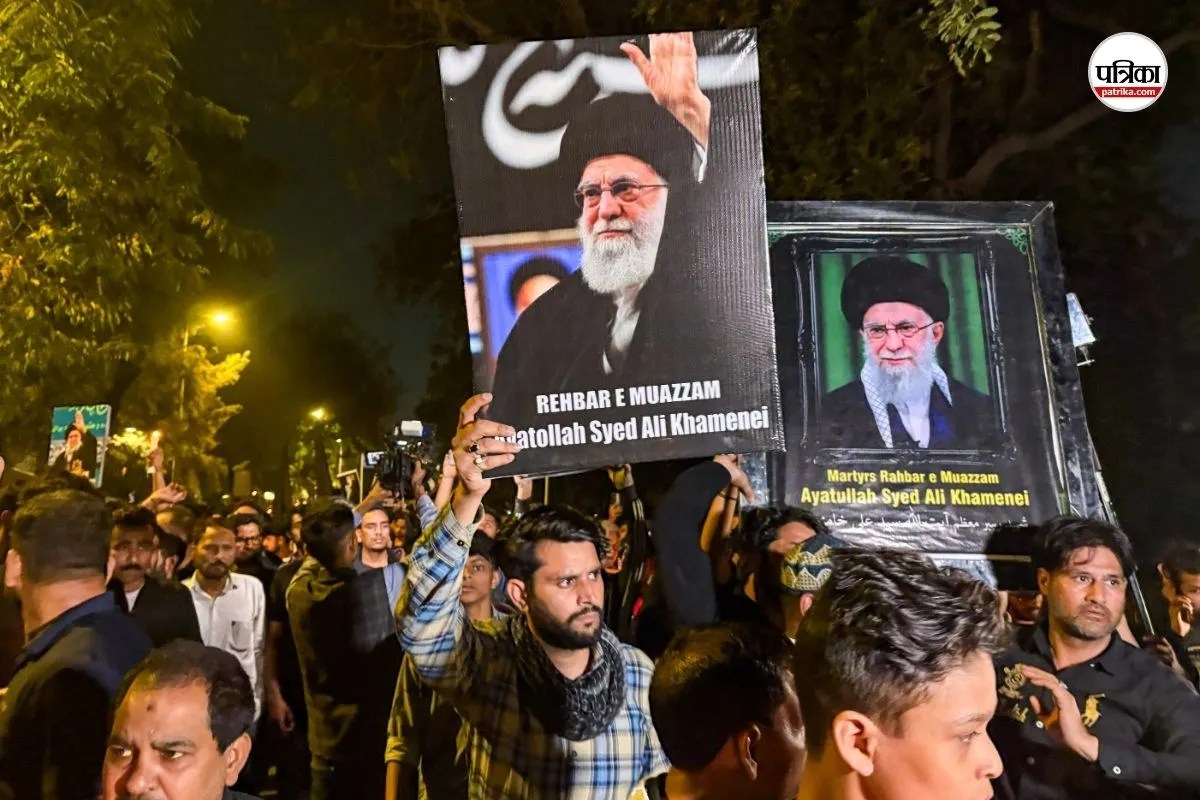
The myth of the subterranean, untraceable Supreme Leader has evaporated. For decades, the security apparatus surrounding Iran’s Ali Khamenei relied on a strategy of physical insulation and human-centric intelligence. But in the current theater of Middle Eastern conflict, "physical" is no longer a synonym for "safe." The exposure of Khamenei’s location—and the subsequent panic that led to his relocation to a high-security interior site—is not the result of a single traitor in his inner circle. It is the culmination of a decade-long Israeli and American project to map the Iranian leadership's "biological and digital footprint" through a blend of SIGINT (Signals Intelligence) and advanced geospatial AI.
When Hezbollah leader Hassan Nasrallah was eliminated in a bunker deep beneath Beirut, the shockwaves reached Tehran in seconds. It wasn’t just the loss of a key ally; it was the realization that the "impregnable" command centers were transparent. Intelligence agencies didn't just find Nasrallah; they tracked the very air he breathed through sensor fusion. This same methodology is now pointed directly at the Office of the Supreme Leader. Building on this theme, you can find more in: Why the Green Party Victory in Manchester is a Disaster for Keir Starmer.
The Failure of the Analog Shield
For years, Iranian security protocols focused on preventing human penetration. They vetted guards, limited the use of mobile phones in the "Beit Rahbari" (the Leadership House), and used encrypted landlines. They were fighting a 20th-century war. Modern Western intelligence, specifically Israel’s Unit 8200 and the U.S. National Security Agency (NSA), no longer requires a microphone under the table to know what is happening inside a room.
The primary vulnerability is the infrastructure of governance. Even a Supreme Leader needs electricity, specialized medical equipment, and high-bandwidth communication to command the Islamic Revolutionary Guard Corps (IRGC). Every piece of hardware—from the air conditioning units cooling the server rooms to the medical monitors tracking the health of an aging leader—emits a signature. These are not just electronic signals; they are thermal patterns and acoustic vibrations that can be picked up by low-earth orbit satellites and long-range drones. Observers at Associated Press have shared their thoughts on this situation.
In the case of Khamenei, his location was "exposed" by the very systems meant to protect him. When a high-value target moves, the surrounding environment changes. Traffic patterns shift. Encryption activity spikes. The sudden silence of certain nodes is often as revealing as a loud broadcast. Israeli intelligence uses "pattern of life" analysis to identify these anomalies. If a specific neighborhood in Tehran suddenly sees a drop in civilian cellular traffic while a specialized jamming frequency goes live, the target is identified.
The Pegasus Effect and the Compromised Inner Circle
While much is made of satellite imagery, the most lethal tool in the hunt for Khamenei is the silent compromise of the people around him. We are not talking about "spies" in the traditional sense. We are talking about their devices.
The NSO Group’s Pegasus and similar zero-click exploits have turned the smartphones of Iranian generals and advisors into 24/7 tracking beacons. Even if Khamenei himself does not carry a phone, his aides do. Their movements create a geometric center. If five top-tier IRGC officials converge on a nondescript location in the middle of the night, that location is flagged.
The exposure of Khamenei’s location also stems from the Hezbollah breach. The massive data haul Israel obtained through the "pager" and "walkie-talkie" operations in Lebanon provided a roadmap of communication protocols used by the "Axis of Resistance." This wasn't just about blowing up devices; it was about the metadata harvested before the explosions. This data likely included contact points, meeting schedules, and digital handshakes between Beirut and Tehran. When Nasrallah was tracked, the digital breadcrumbs led directly back to the couriers who travel between the Supreme Leader’s office and the regional proxies.
The Architecture of the New Bunker
Khamenei’s relocation is a desperate attempt to reset the "biological clock" of his security. By moving to a secure location "deep within the country," the IRGC is attempting to break the pattern of life that Western intelligence has spent years mapping. However, this move creates its own set of risks.
A new location requires new communications. It requires the physical movement of personnel. In the world of high-stakes surveillance, movement is the most dangerous moment. The transition from the urban sprawl of Tehran to a remote, fortified site makes the target easier to isolate. In a city of 9 million people, noise is a shield. In a remote mountain facility, any signal is a target.
The Role of Cyber-Physical Systems
The "how" of the exposure also involves the compromise of the Industrial Control Systems (ICS) that manage the power and water for high-security sites. Israeli "offensive cyber" units are known for their ability to map the internal wiring of a building through its power consumption. By monitoring the Tehran power grid, analysts can identify specific buildings that draw power in a way consistent with high-level military hardware or secure communication hubs.
This isn't just theory. The Stuxnet attack on Natanz proved that the "air gap"—the practice of keeping sensitive computers off the internet—is a myth. If a facility is connected to a power grid or a ventilation system, it is reachable.
Why Human Intelligence Still Matters
Despite the digital dominance, the "exposed" status of the Supreme Leader is bolstered by a shifting tide within Iran. The IRGC is no longer the monolithic entity it once was. Economic decay and internal power struggles have made mid-to-high-level officials susceptible to recruitment.
The Mossad has demonstrated an uncanny ability to operate inside Iran, most notably in the assassination of Mohsen Fakhrizadeh and the theft of the nuclear archive. These operations require "boots on the ground" to verify the digital data. The exposure of Khamenei's location is the result of a perfect feedback loop:
- Digital signals identify a high-probability location.
- Drones provide real-time visual confirmation of security movements.
- Human assets provide the "last mile" verification—the confirmation that the man in the convoy is indeed the Supreme Leader.
The Geopolitical Fallout of Transparency
The fact that the world knows Khamenei had to be moved is a psychological blow that cannot be overstated. It signals to the Iranian public and the IRGC rank-and-file that their ultimate authority is vulnerable. The "invisibility" of the Supreme Leader was his greatest asset; it projected an image of a divine, untouchable figure. Now, he is a man running from a digital shadow.
This exposure forces Iran into a reactive posture. Instead of planning strategic moves for its proxies, the leadership is consumed with the logistics of survival. Every meeting is now a gamble. Every phone call is a potential death warrant. The "eyes" of the US and Israel haven't just reached Khamenei; they have gotten inside his head.
The Iranian leadership now faces a binary choice: complete isolation, which severs their ability to command their forces in real-time, or continued communication, which invites a precision strike. There is no third option in the age of algorithmic warfare. The move to a "secure location" is a temporary fix for a permanent problem. In a world where the very atoms of a building can be scanned from space, there is nowhere deep enough to hide from a determined adversary with a superior digital map.
The next phase of this conflict won't be fought with armies on a border, but through the silent extraction of data from the very air surrounding the decision-makers. The noose is no longer made of rope; it is made of code and infrared light.
Stop looking for the spy in the hallway; the spy is the hallway.


