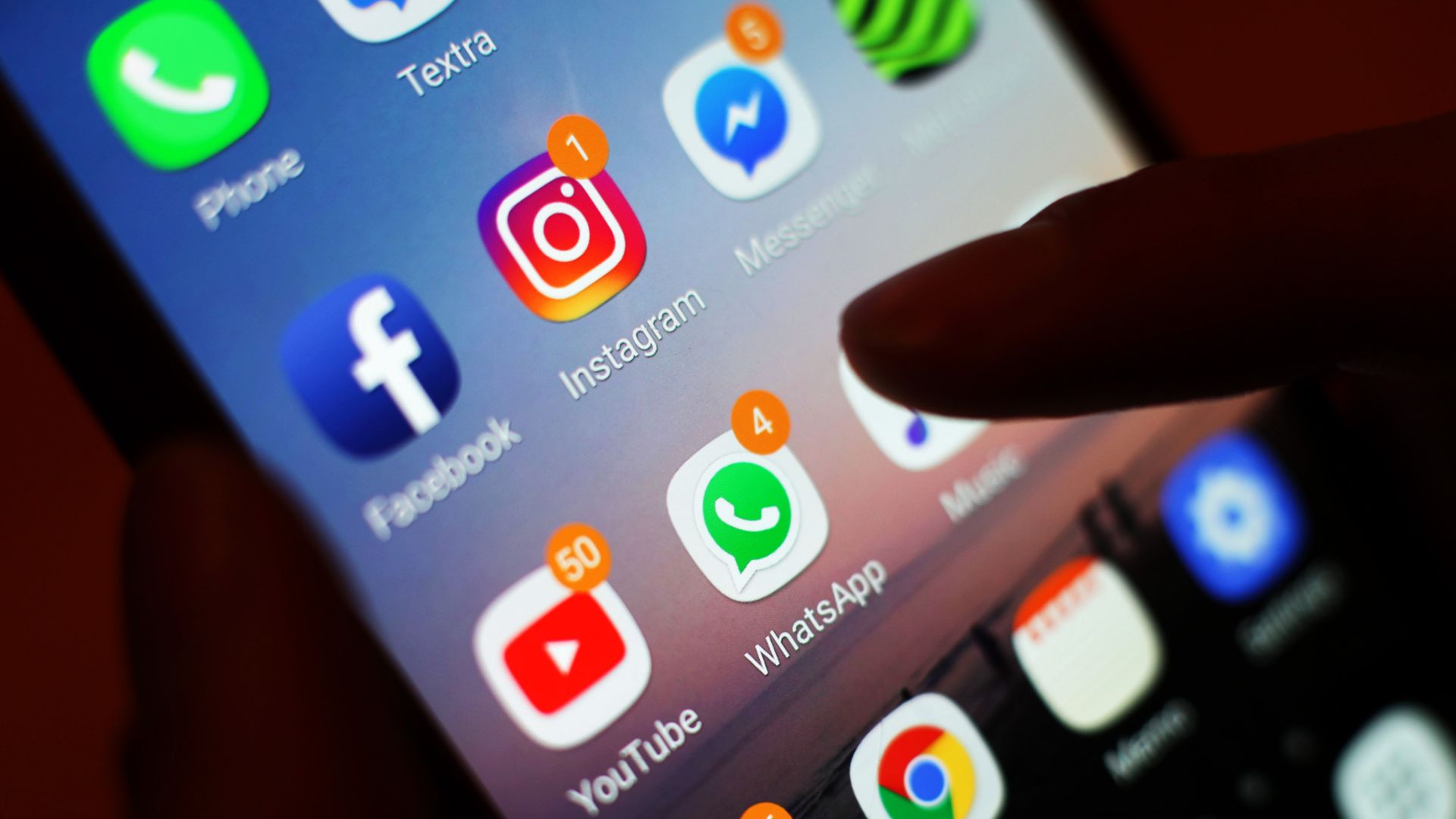
The blue light of a smartphone used to be a window. Now, for millions of people, it is becoming a mirror that only reflects what a government allows them to see.
Consider a young woman in Ankara. Let's call her Elif. She wakes up, reaches for her phone to check Instagram, and finds a void. There is no "refresh" spinning wheel—just a wall of nothingness. This isn't a technical glitch or a server outage in Silicon Valley. It is a deliberate, surgical strike on the digital commons. In August 2024, Turkey blocked Instagram for nine days. The reason cited was a failure to comply with "catalog crimes," but the impact was human. Small business owners who run their entire storefronts through DMs lost thousands of dollars. Photographers lost their portfolios. Friends lost their tether to the world outside their borders. If you found value in this post, you should read: this related article.
The "Splinternet" is no longer a dystopian theory discussed in university basements. It is a map being redrawn in real-time.
The Geography of Silence
We often think of the internet as a cloud, something ethereal and borderless. That is a mistake. The internet lives in cables buried under the seabed and in data centers sitting on sovereign soil. This means it is subject to the whims of the person holding the scissors. For another angle on this story, check out the latest coverage from Ars Technica.
China is the architect of this reality. The Great Firewall isn't just a filter; it is a separate ecosystem. While the rest of the world scrolls through X or watches YouTube, a billion people navigate WeChat and Douyin. It is a gilded cage—comfortable, functional, and entirely monitored. If you live in Beijing, the "Global Internet" is a foreign concept, as distant as a country you need a difficult visa to visit.
But the Chinese model is spreading. It is becoming a franchise.
In Russia, the screws tightened the moment the first tanks crossed into Ukraine. Access to Facebook and Instagram was severed, branded as "extremist" activities. For the average person in Moscow, the loss wasn't about missing celebrity updates. It was the loss of independent information. When the state controls the television and the state blocks the social feed, the truth becomes whatever the state says it is that morning.
The Western Pivot
The conversation changes when it moves West. In the United States and the European Union, the rhetoric isn't about "stability" or "extremism" in the way an autocrat might use those words. Instead, the buzzword is "Security."
The TikTok saga in the U.S. is the most visible crack in the Western foundation of an open web. For years, the app was a toy—a place for dance challenges and cooking hacks. Then, it became a geopolitical chess piece. The concern is simple: data sovereignty. If a company's parent firm is based in a country with different judicial standards, who really owns your digital footprint?
The U.S. government passed legislation that could lead to a nationwide ban unless the app is sold to a non-Chinese owner. This isn't just a policy debate. It is a fundamental shift in how democracy views the digital space. If the U.S. bans an app for national security, it grants permission to every other nation to do the same for their own "security" reasons.
The precedent is a heavy weight.
The Cost of the Kill Switch
In Brazil, the tension reached a breaking point with a high-stakes standoff between a Supreme Court justice and a billionaire. When X refused to name a legal representative in the country and ignored orders to block certain accounts, the judge flipped the switch.
Suddenly, the "town square" was empty.
Twenty million Brazilians were forced to decide: do they break the law by using a VPN to access the site, or do they migrate to a new, quieter platform like Bluesky or Threads? The fine for using a VPN was set at nearly $9,000 per day. For a school teacher or a student in São Paulo, that isn't a fine—it is financial ruin.
This illustrates the "Invisible Stake." Governments argue with platforms, but the users are the ones held hostage. We have integrated these platforms into our nervous systems. We use them for emergency alerts, for finding work, and for maintaining the "weak ties" that keep a society from fracturing. When a government bans a platform, they aren't just stopping a company from making money. They are amputating a limb of the public's social body.
The Illusion of the VPN
People often say, "Just use a VPN."
It sounds easy. It feels like a secret handshake that gets you into the club. But VPNs are a cat-and-mouse game that the mouse rarely wins forever. In Iran, during periods of unrest, the government doesn't just block the social media sites; they throttle the entire encrypted protocol that VPNs rely on. The internet becomes a crawl. It becomes unusable.
Furthermore, relying on a VPN creates a two-tiered society. The tech-savvy, the wealthy, and the urban elite stay connected. The poor, the elderly, and the rural populations are left in the dark. A ban doesn't affect everyone equally. It silences the most vulnerable first.
Why the Trend is Accelerating
The world is moving toward "Digital Sovereignty." Nations are realizing that if they don't control the platforms their citizens use, they don't control the narrative.
- India: Has banned hundreds of Chinese apps, including TikTok and WeChat, citing data privacy and border tensions.
- Jordan: Has frequently restricted TikTok during times of civil protest to "maintain order."
- Vietnam: Implements strict cybersecurity laws that require platforms to store data locally and remove content the government deems offensive.
The common thread is fear. Fear of disinformation. Fear of foreign influence. Fear of the people's ability to coordinate outside the gaze of the state.
The Quiet Room
Walking through a city where social media is banned feels different. There is a specific kind of quietness that isn't peaceful—it's heavy.
In some parts of the world, the ban is temporary, a "cooling off" period during an election or a protest. In others, it is the new permanent reality. We are moving away from a global village and toward a series of walled gardens, each with its own gatekeeper and its own set of rules.
We used to believe that the internet would inevitably lead to more freedom. We thought the technology itself was biased toward liberty. We were wrong. Technology is a tool, and like any tool, it can be used to build a wall just as easily as it can be used to build a bridge.
The border isn't a line on a map anymore. It is a login screen that says "Access Denied."
Somewhere, right now, a student is trying to look up a video for a school project, a father is trying to see a photo of his daughter in another country, and a journalist is trying to send a dispatch from a conflict zone. They are all staring at the same blank screen. The window has become a wall, and we are all slowly learning to live in the smaller, quieter rooms that remain.