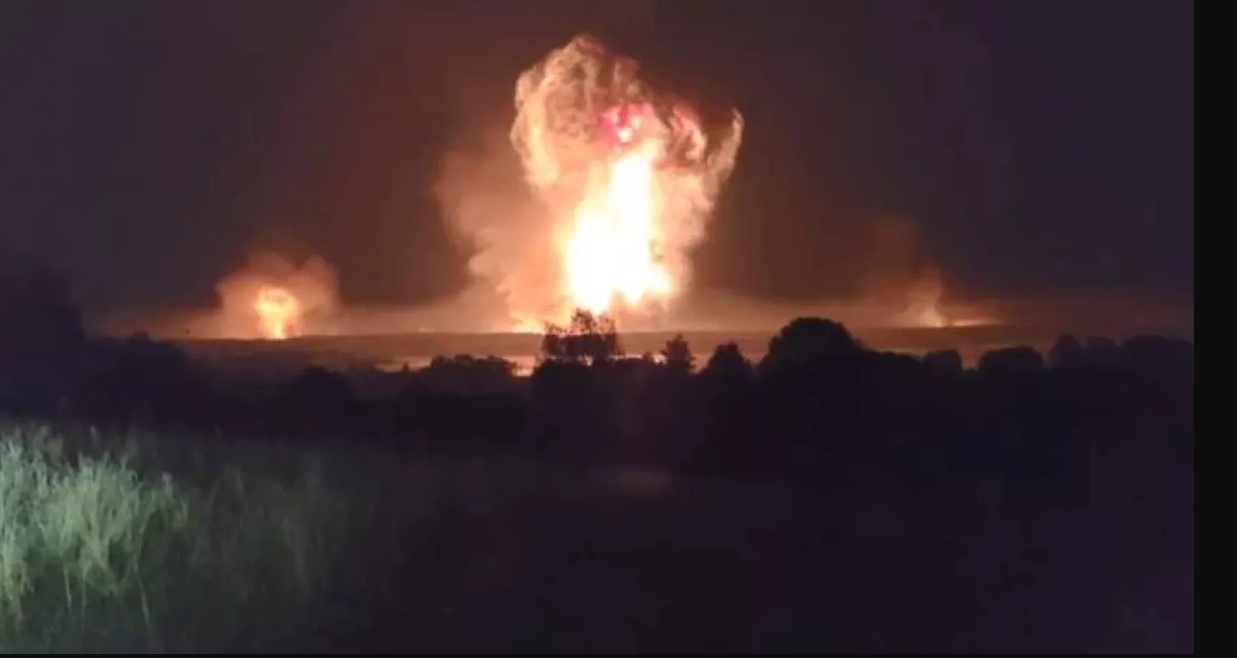
The cruise missiles and drone swarms hitting targets from Isfahan to the outskirts of Tehran are only half of the story. While the Pentagon coordinates "Operation Epic Fury" with the Israel Defense Forces, a parallel, decentralized offensive is unfolding across the screens of millions of Americans. It is a campaign of high-velocity, violent digital content—memes, TikTok-style edits, and video game-inspired clips—designed to transform a high-stakes military intervention into a digestible, even entertaining, domestic political product.
This is not a traditional propaganda effort. It does not rely on the somber, gravel-voiced narration of the 1991 Gulf War or the mission-oriented briefings of the 2003 invasion of Iraq. Instead, the Trump administration has effectively outsourced the manufacturing of consent to the internet’s most aggressive subcultures. By blending real thermal-imaging footage of airstrikes with cultural touchstones like Top Gun, Halo, and Dragon Ball Z, the White House is not just reporting a war; it is gamifying one.
The goal is to move the public consciousness away from the messy, lethal realities of a regional conflict and toward a streamlined narrative of American dominance. When the White House social media team reposts a video of a missile strike with the caption "Wake up, Daddy’s Home," they are communicating in a dialect that prioritizes dominance over diplomacy. This shift suggests that for the current administration, the digital "vibe" of the war is as critical to national security as the physical destruction of Iranian centrifuge halls.
The Gamification of Kill Chains
Modern warfare is increasingly clinical for those behind the controls, but the current digital strategy takes that detachment to a new level. We are seeing a deliberate merging of fictional violence and kinetic military action. In early March 2026, the White House released a video titled "JUSTICE THE AMERICAN WAY," which superimposed meme culture tropes over unclassified footage of U.S. Central Command strikes.
This aesthetic choice serves a specific psychological function. It frames the war as a consequence-free spectacle. By using the visual language of video games, the administration flattens the human cost on both sides. The six American soldiers killed by drone strikes and the dozens of Iranian civilians caught in the crossfire are airbrushed out of the narrative, replaced by high-definition explosions and triumphant music.
Independent analysts suggest this approach is a direct response to the "Trump Always Chickens Out" (TACO) narrative that plagued the administration throughout 2025. After months of threats regarding Greenland, China, and the initial Iranian protests, the administration felt a political need to prove its "ferocity." The memes serve as a digital receipt of action, meant to silence critics who labeled the President’s foreign policy as mere bluster.
The Architecture of Dehumanization
The rapid-fire nature of this content does more than just entertain; it creates a "cognitive fog" that makes nuance impossible. When a war is framed through the lens of a "shitpost," the target is no longer a sovereign nation with a complex population of 88 million people. It becomes a caricature.
Data from the first quarter of 2026 shows a massive spike in dehumanizing language across X, Truth Social, and Telegram. Terms like "infestation" and "cleansing" have moved from the fringes of the manosphere into the mainstream comments sections of official government posts. This is the "othering" process accelerated by algorithms. By the time the first bombs dropped on February 28, 2026, the digital ground had been prepared to treat the Iranian regime—and by extension, its people—as a monolithic enemy that only understands the language of force.
The administration’s shift in rhetoric is notable for its lack of a singular "why." Depending on the hour, the war is about:
- Pre-empting a nuclear threat that the Pentagon previously stated was not "imminent."
- Supporting "freedom" for Iranian protesters.
- Retaliating for the 1979 hostage crisis.
- Preventing Iranian missiles from reaching the U.S. homeland.
By throwing every possible justification at the wall and wrapping them all in the neon colors of internet culture, the White House ensures that every segment of its base finds a reason to support the escalation. It is a "choose your own adventure" style of warmongering.
The Axis of Amplification
The digital war is not a one-way street. We are witnessing a bizarre, horseshoe-theory alignment where disparate groups find common ground in the chaos. While the White House pumps out "Alpha" edits of military strikes, state-aligned media from Russia and China, along with Western conspiracy influencers, are running their own counter-memes.
Some influencers have characterized the entire conflict as a "Jewish psyop" or a "CIA psychological operation" designed to distract from domestic issues. This creates a secondary layer of noise. While the administration uses memes to build bloodlust, its detractors use them to sow deep-seated institutional distrust. The result is a total collapse of a shared reality.
For the average citizen, the truth of what is happening in the Gulf is buried under layers of irony and hyper-partisan framing. This is precisely the point. When the public is busy arguing over whether a video of a burning refinery is "fake news" or a "based" display of power, they aren't asking about the long-term strategic costs of a multi-front war in the Middle East.
Beyond the Screen
The danger of this digital strategy is that it eventually hits the limits of reality. You cannot "meme" away a global oil crisis or the logistical nightmare of a prolonged war of attrition. While the White House social media office celebrates "virality," the reality on the ground is far more somber. The Gulf states, traditionally U.S. allies, are terrified. They are watching the American administration treat their regional stability as a backdrop for a domestic PR campaign.
The 12-day war in June of the previous year should have been a warning. It showed that limited strikes rarely stay limited. Yet, the current administration seems convinced that as long as they control the digital narrative, they can control the physical outcome. It is a dangerous gamble that assumes the "fog of war" can be cleared by a high-resolution filter.
As the conflict enters its third week, the "Daddy's Home" bravado is starting to clash with the reality of flag-draped coffins returning to Dover Air Force Base. The memes haven't stopped, but the comments sections are growing more fractured. The adrenaline of the initial "spectacle" is wearing off, leaving behind the cold, hard questions of what victory actually looks like in a region that has swallowed up every "decisive" military action for the last three decades.
Would you like me to analyze the specific impact of these digital campaigns on the 2026 midterm election polling data?