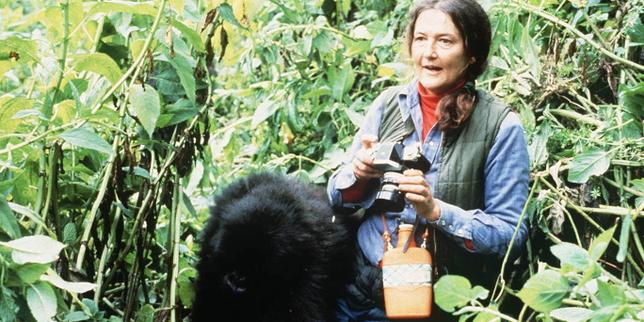
Dian Fossey died with a machete wound to the head on a cold December night in 1985. She was in her cabin, high up in the Rwandan mountains, surrounded by the mountain gorillas she spent eighteen years protecting. Most people know the Hollywood version—the brave woman who saved a species. But the real story is much darker, more political, and remains officially unsolved despite a convenient conviction by the Rwandan government.
If you’re looking for a simple tale of a poacher seeking revenge, you won’t find it here. The poaching theory was always the easiest explanation, but it rarely held up under scrutiny. Fossey wasn't just fighting local hunters; she was a massive headache for the Rwandan government, European tourism interests, and even some of her own students. She was difficult, she was angry, and she was standing in the way of a lot of money.
The Crime Scene That Shouldn't Have Been
When Fossey’s body was found on December 27, 1985, at the Karisoke Research Center, the scene was chaotic. Her cabin, known as "House 5," had been broken into through a hole hacked into the corrugated iron wall. Yet, nothing of value was taken. Her handguns, thousands of dollars in traveler's checks, and cameras were all left untouched. This wasn't a robbery.
Investigators found a scene of a struggle, but one that felt targeted. Fossey was found by her houseboy, leaning against her bed. The weapon was her own panga—a large machete she’d confiscated from a poacher years earlier. The blow was professional and lethal.
The Rwandan authorities didn't exactly run a forensic masterclass. People walked through the cabin, touched evidence, and moved the body. Within days, the narrative shifted from a "random poacher attack" to an "inside job." This is where the story gets messy. They needed a scapegoat, and they found two: Wayne McGuire, Fossey’s American research assistant, and Emmanuel Rwelekana, one of her Rwandan trackers.
The Scapegoat Strategy
The Rwandan government eventually convicted Wayne McGuire in absentia. They claimed he killed her to steal her research for his own thesis. It's a weak motive. McGuire was already working on his own data, and killing the most famous primatologist in the world is a terrible way to start a scientific career.
McGuire was tipped off by US Embassy officials that he was going to be framed. He fled the country just before the charges were formalized. Meanwhile, Rwelekana was arrested and allegedly committed suicide in his prison cell before he could testify. It's a bit too convenient, isn't it? Many who knew the inner workings of Karisoke believe Rwelekana was murdered to keep him from talking about who actually ordered the hit.
You have to understand the environment in Rwanda in the mid-80s. The country was seeing the potential for massive tourism dollars. Fossey hated tourists. She called them "intruders" and believed that habituating gorillas to humans would lead to their deaths via disease or poaching. She was an obstacle to the "Gorillas in the Mist" tourism boom that the government desperately wanted to launch.
Active Conservation vs. The World
Fossey practiced what she called "active conservation." This wasn't just counting nests and taking notes. She wore masks to scare off poachers, burned their camps, and famously captured their cattle. She even reportedly staged "black magic" rituals to terrify local hunters into staying away from the park.
She didn't just make enemies with the locals. She was frequently at odds with the Digit Fund (now the Dian Fossey Gorilla Fund) and the African Wildlife Foundation. They wanted to focus on education and tourism; she wanted boots on the ground and guns in the forest. By 1985, she had become increasingly isolated. Her health was failing from years of heavy smoking and the harsh mountain climate, but her resolve was as sharp as ever.
Her methods were controversial and, frankly, wouldn't fly today. She used physical intimidation and psychological warfare. But here’s the thing: it worked. Before Fossey, the mountain gorilla population was in a tailspin. Now, they're the only great ape species with a growing population. She wasn't just a researcher; she was a soldier for the species.
Who Actually Killed Dian Fossey?
Most experts today lean away from the poacher theory and toward a more sinister political plot. There's a strong case for Protais Zigiranyirazo, also known as "Monsieur Z." He was the brother-in-law of the Rwandan president at the time and the governor of the Ruhengeri region. He later became a key figure in the 1994 genocide.
Zigiranyirazo was a powerful man with his hands in many pots—including the illegal trade of gorilla babies for zoos and private collectors. Fossey knew about these operations and was a constant threat to his business. When she was murdered, he was conveniently "out of town," but his influence over the police and the local government made the subsequent investigation a joke.
There's also the question of "Gold." Some theories suggest that Fossey had uncovered a gold-smuggling ring that operated through the mountains between Rwanda and Zaire (now the DRC). She was an uncompromising woman who didn't know when to stay quiet for her own safety. If you're a high-ranking official making a fortune on the side, a loud-mouthed American woman in a remote cabin is an easy target.
Why We Still Care Forty Years Later
Dian Fossey wasn't just a scientist. She was a complicated, flawed human being who became the very soul of conservation. Her death marked the end of an era. It turned a conservation battle into a political scandal that continues to leave a shadow over the Virunga Mountains.
The "Secrets" of the case aren't really secrets anymore. They're just truths that were inconvenient at the time. The Rwandan government needed a quick fix to keep the tourism money flowing, and the world needed a martyr. By painting her as a tragic victim of a "crazy" student or a "greedy" tracker, the real players could stay in the shadows and keep their gold and their power.
If you’re interested in the legacy of Dian Fossey, don’t just watch the movie. Read Gorillas in the Mist carefully. Pay attention to the way she describes the people around her. Her journals were her real life, and they show a woman who knew she was living on borrowed time.
Fossey’s grave is still there in Karisoke, buried next to her favorite gorilla, Digit. It’s a pilgrimage site for some, but for others, it’s a reminder of a murder that went unpunished. The Rwandan government has never reopened the case, and they likely never will.
If you want to support real conservation today, you have to look beyond the "hero" narrative. The modern Dian Fossey Gorilla Fund doesn't use the same aggressive tactics she did, but they've kept the species alive. Don't let the mystery of her death overshadow the fact that we still have mountain gorillas because of her. You can directly contribute to the rangers who are on the front lines by checking out the Dian Fossey Gorilla Fund. They're the ones still doing the work she started—hopefully with a lot more safety than she ever had.