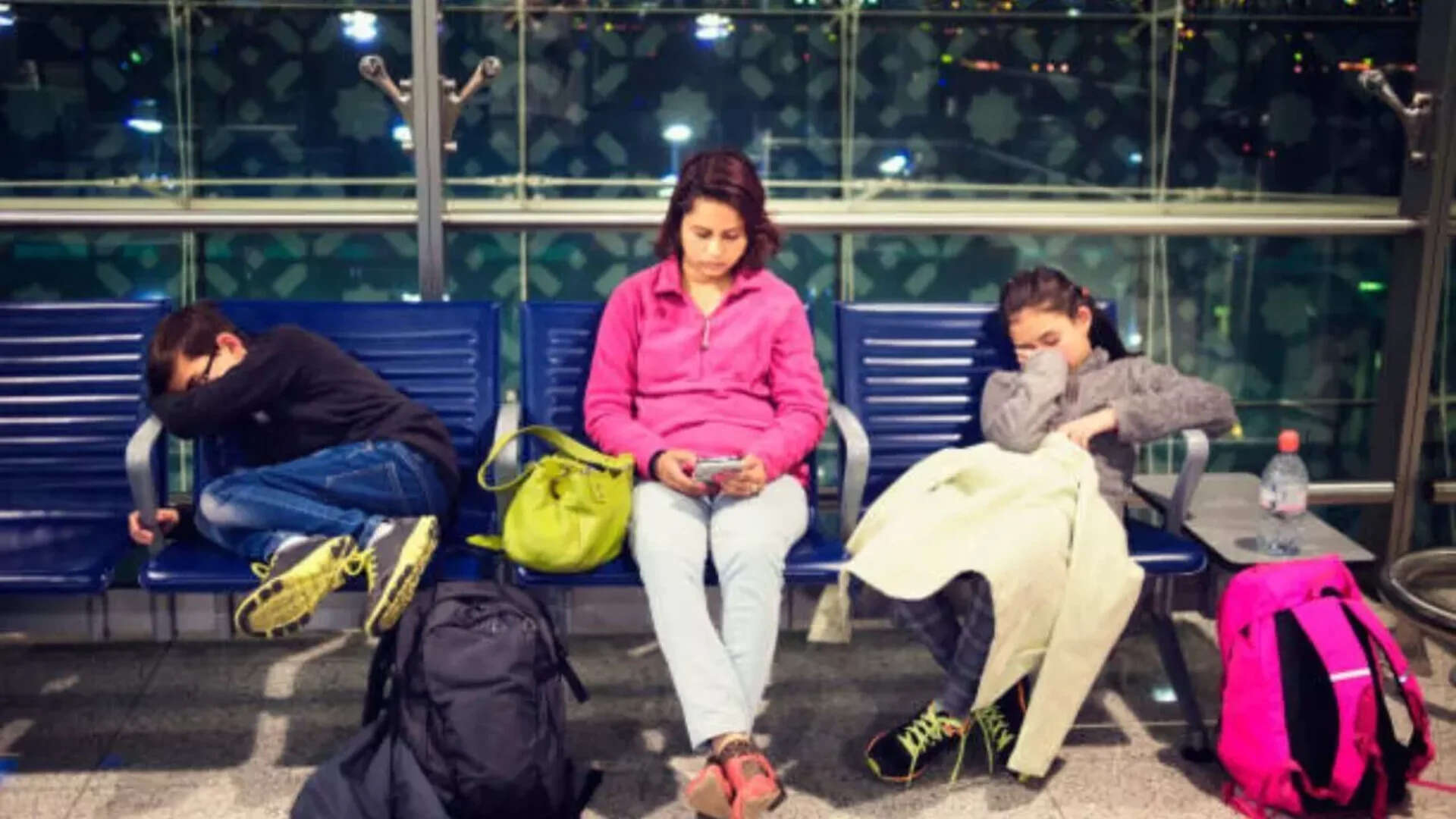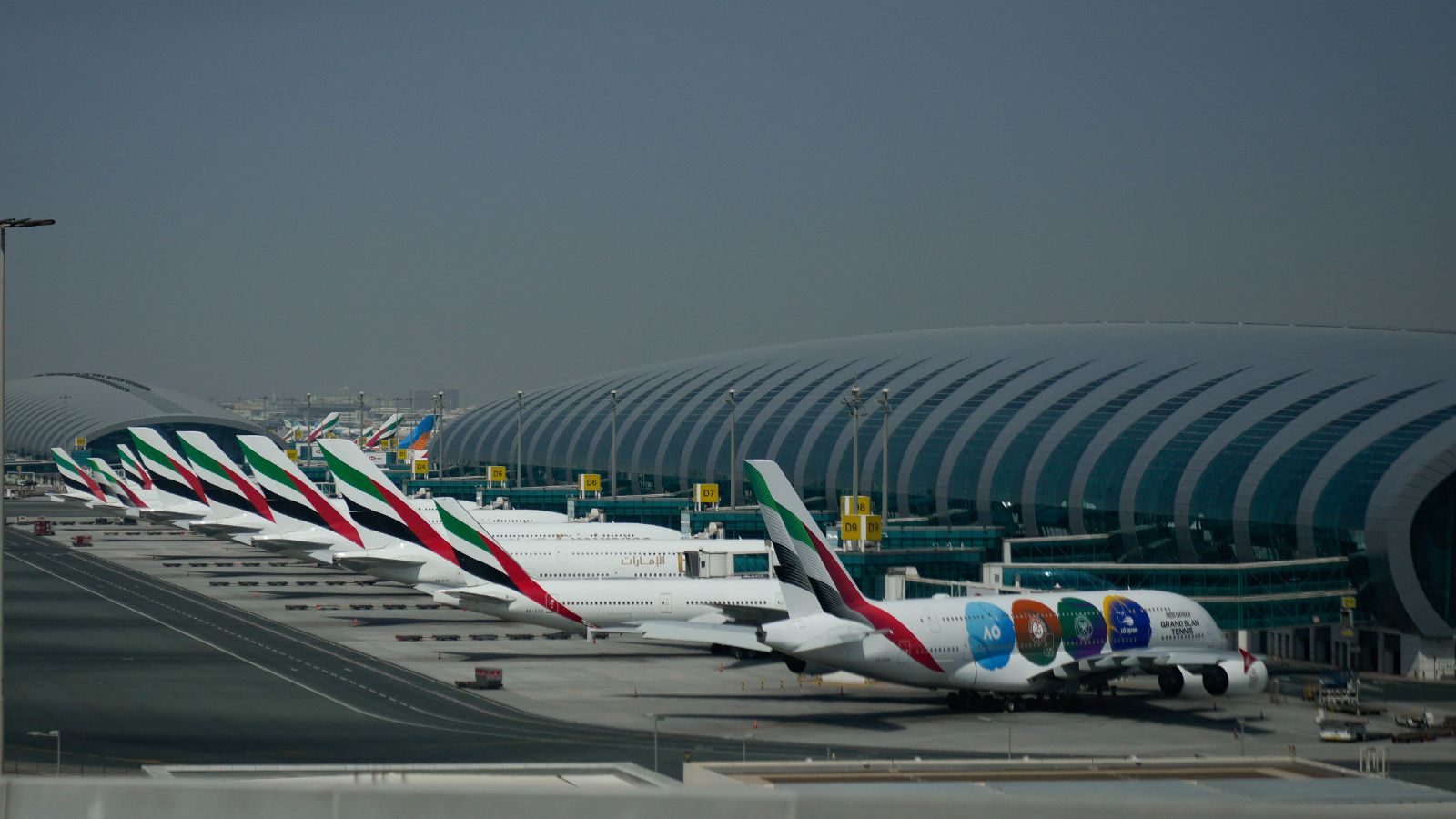
The hum of the air conditioner in Terminal 3 is a sound most travelers ignore. It is the white noise of progress, the mechanical breath of a global hub that never sleeps. But for Sarah, a freelance graphic designer trying to get home to London, and Ahmed, a businessman whose flight to Beirut had vanished from the departure board, that hum became the soundtrack to a sudden, terrifying limbo.
Outside the glass, the sky over the Persian Gulf wasn’t just hot. It was heavy. News alerts were blooming on every smartphone screen like digital wildfires. Missiles. Airspace closures. The sudden, jagged realization that the invisible lines we fly across are actually fragile borders drawn in the sand of a volatile geopolitical reality.
When the Iran-Israel-US tensions escalated into a direct exchange of fire, the world’s flight paths didn’t just change. They snapped.
The Weight of Being Stranded
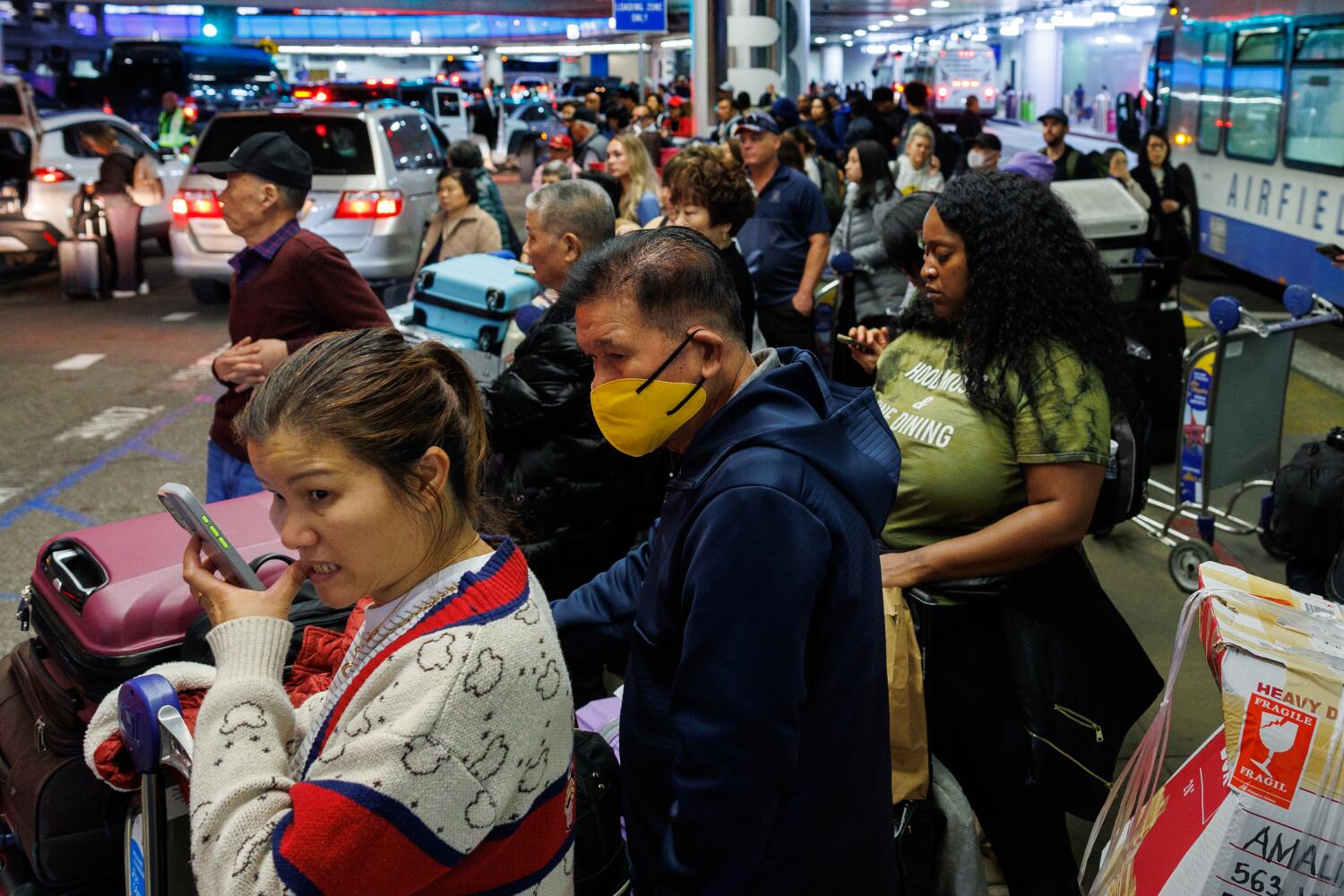
Imagine the physical weight of a cancelled flight when you are four thousand miles from home. It isn’t just the lost ticket. It’s the dwindling battery on a phone that holds your only connection to worried parents. It’s the calculation of how many meals you can afford at airport prices before your credit card hits a limit. It’s the smell of recycled air and the sight of thousands of people slumped against their carry-on bags, eyes glued to news tickers that offer no comfort.
Over 20,000 people found themselves in this exact shadow. This wasn't a minor delay caused by a technical glitch or a summer storm. This was a mass displacement of travelers caught in the crossfire of a regional conflict they had no part in. The logistics of such a collapse are staggering. Usually, when a flight is cancelled, the airline hands out a voucher for a mediocre sandwich and perhaps a discount code for a hotel that is already full.
But as the scale of the crisis became clear, the response shifted from corporate policy to something deeply human.
A City Opening Its Doors
The United Arab Emirates is often criticized as a place of polished surfaces and high-rise ambition. Yet, beneath the glitter of the Burj Khalifa lies a bedrock of Bedouin hospitality—a cultural DNA that views the traveler not as a customer, but as a guest. In the desert, hospitality isn't a luxury; it's a survival mechanism. If someone comes to your tent, you feed them. You protect them.
As the airspace shuttered, the UAE government didn't just issue a statement. They opened the gates.
For those 20,000 stranded souls, the "all-expenses-paid" headline wasn't a marketing stunt. It was a massive mobilization of resources. Consider the sheer math of the operation. Feeding 20,000 people three times a day means 60,000 meals. Housing them means thousands of hotel rooms—not in dingy airport motels, but in the very heart of the Emirates.
Sarah didn't stay on the terminal floor. Instead, she was ushered onto a shuttle bus. She described the surreal transition from the panic of the departure gate to the quiet dignity of a hotel lobby in downtown Dubai. There was no bill. There was no demand for a credit card for "incidentals." There was just a room, a hot shower, and a meal that didn't come in a plastic wrap.
The Invisible Stakes of a Ghost Flight
The cost of this operation is measured in millions of dollars, but the true stakes are measured in trust. In a world that feels increasingly fractured and tribal, the act of a nation-state absorbing the cost of 20,000 strangers is a radical departure from the norm.
We live in an era where "force majeure" is the favorite phrase of legal departments. It’s the clause that lets companies off the hook when things go wrong due to "acts of God" or, in this case, acts of war. Legally, the UAE and its flagship carriers could have pointed to the missiles in the sky and said, "Not our fault. Good luck."
They chose the opposite path.
By covering flights, meals, and accommodation, they effectively neutralized the panic. When people are afraid, they make desperate choices. They clog embassies. They overwhelm emergency services. By providing a "desert sanctuary," the state maintained order through the most effective tool available: radical generosity.
Ahmed, the businessman, spoke of the strange camaraderie that formed in the hotel lounges. People from dozens of different countries—who would normally never speak to one another—found themselves sharing tea and comparing news updates. The conflict was happening hundreds of miles away, but in the quiet corridors of these hotels, a different story was being written. It was a story of being seen.
The Logistics of Kindness
The operation was a masterclass in crisis management that bypassed the typical bureaucratic sludge. The UAE’s Ministry of Foreign Affairs worked in tandem with the General Civil Aviation Authority and local tourism boards. They didn't just wait for people to ask for help; they sought them out.
- The Transit Surge: Thousands were stuck in the transit zones of DXB and AUH. These are people who don't have visas to enter the country. The government waived these requirements instantly, turning a security nightmare into a humanitarian corridor.
- The Meal Chains: Catering companies that usually service flights were redirected to hotels and temporary shelters. The supply chain was flipped overnight.
- The Communication Hub: Information desks were staffed not just with airline employees, but with volunteers and government officials who could provide real-time updates on airspace safety.
This wasn't just about a free bed. It was about the psychological relief of knowing that you weren't an abandoned statistic. In the cold logic of international travel, the passenger is often just "cargo that talks." In this instance, the cargo was treated like family.
Beyond the Bottom Line
The cynic might argue that this was a PR move. They might say the UAE was simply protecting its brand as a global travel hub. Even if that were true, the result remains the same: 20,000 people slept in beds instead of on linoleum floors. 20,000 people were fed instead of scrounging for snacks.
But there is a deeper truth here. When the world is on the brink of conflict, the way we treat the "stranger in our gates" defines our civilization. The tension between Iran, Israel, and the US is a complex web of history and weaponry. It is a macro-problem that feels impossible for the average person to influence.
However, the micro-solution—the act of providing shelter—is something tangible. It is a reminder that even when the sky is filled with the machinery of war, the earth can still be a place of refuge.
The flights eventually resumed. The airspace reopened. Sarah finally made it to London, and Ahmed found a way back to his family. They didn't leave with just a story of a narrow escape or a terrifying news cycle. They left with the memory of a place that didn't ask who they were or what they believed before offering them a seat at the table.
As the last of the 20,000 checked out of their rooms and headed back to the terminals, the hotels returned to their usual bustle. The air conditioning continued its steady hum. But for those who were there, the sound had changed. It no longer sounded like white noise. It sounded like a long, steady breath of relief.
The desert has a long memory. It remembers the travelers who pass through its dunes. And those 20,000 travelers will long remember the desert, not for its heat or its towers, but for the shade it offered when the world began to burn.