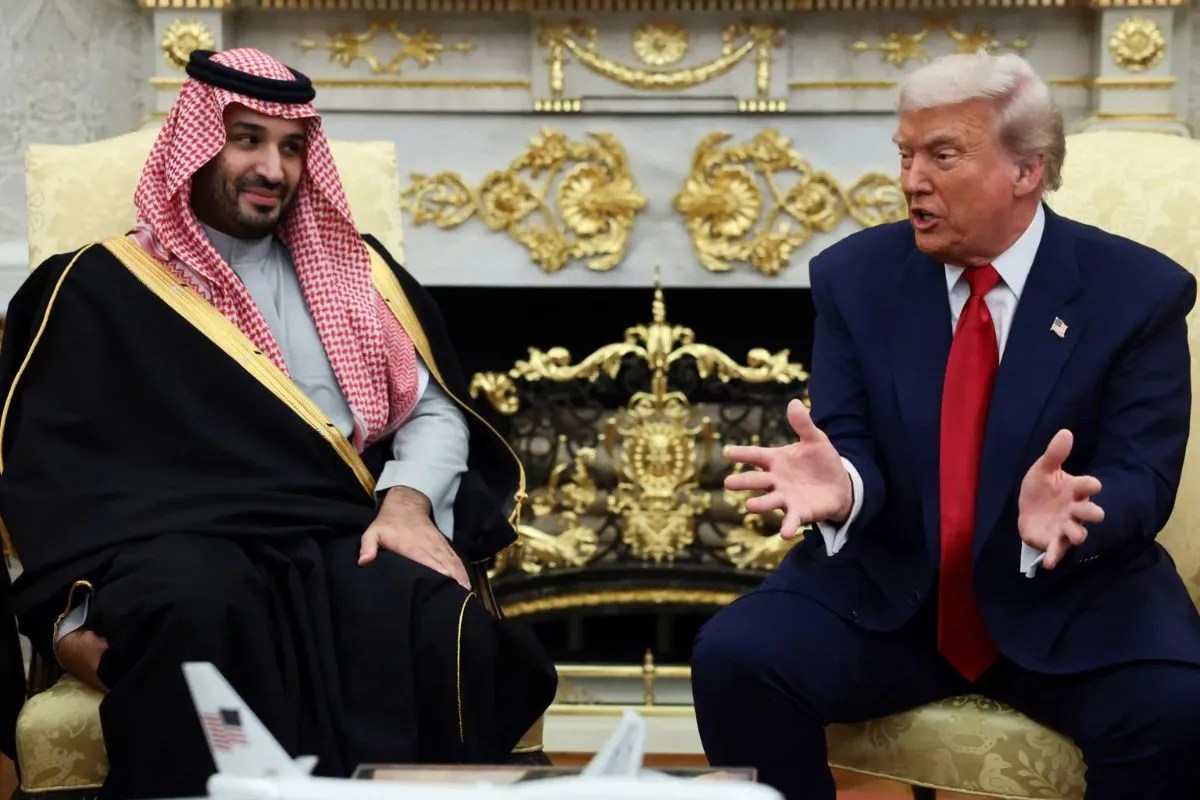
The air in Riyadh doesn't just carry the scent of expensive oud and filtered oxygen. It carries the weight of a thousand-year-old chess match. When news broke that Saudi Arabia had reportedly urged Donald Trump to maintain a hard line against Iran, even as the tectonic plates of Middle Eastern diplomacy seemed to be shifting, it wasn't just a headline. It was a heartbeat. It was the sound of a door slamming shut in a hallway where everyone had been holding their breath for a glimpse of light.
To understand why a kingdom would whisper "keep fighting" into the ear of a superpower, you have to stop looking at maps and start looking at shadows.
Imagine a merchant in a small border town near the Persian Gulf. He doesn't care about uranium enrichment levels or the specific wording of a nuclear deal. He cares about the fact that every time a drone hums in the distance, his children stop playing. For him, the "geopolitical tension" isn't a phrase in a briefing. It is a physical tightening in his chest. When Riyadh speaks to Washington, they aren't just discussing policy; they are trying to manage that tightening. They are betting that a firm hand is the only thing keeping the roof from falling in.
The Ghost at the Negotiating Table
The tragedy of the Middle East is that peace often feels like a Trojan horse. For years, the narrative has been simple: the West wants a deal, Iran wants relief, and the neighbors are just being difficult. But the reality is far grittier. When the Saudi leadership looked at the possibility of a softened stance toward Tehran, they didn't see progress. They saw a betrayal of the security they had spent decades building.
Trust is a currency that has been devalued to zero in this region.
Consider the Iranian response. While diplomats were supposedly carving out the architecture of a new understanding, the "revenge" mentioned in whispers and intelligence reports wasn't a sudden burst of anger. It was a calculated move. Iran operates on a different clock. They aren't looking at the next election cycle or the next fiscal quarter. They are looking at the next century.
When the Saudis urged Trump to stay the course, they were reacting to a history of broken promises. They saw a landscape where every concession by the West was met with a shadow move by Tehran’s proxies. It’s like watching a game of poker where one player is using a deck of cards and the other is using a set of mirrors. You don't ask for a fair shuffle; you ask the house to kick the other player out.
The Invisible Stakes of a Handshake
Why does this matter to someone sitting in an office in London or a cafe in New York? Because the price of oil is the least of our worries. The real cost is the normalization of a permanent state of "almost-war."
We have become comfortable with the idea that these two giants must hate each other. We accept the "cold war" of the desert as a natural law, like gravity. But there is nothing natural about it. It is a manufactured exhaustion.
The human element here is the diplomat who goes home at night knowing that their "successful" meeting just paved the way for another decade of proxy battles in Yemen or Lebanon. It is the young student in Tehran who wants to be part of the global economy but is instead trapped in a cycle of sanctions and rhetoric. It is the Saudi entrepreneur who wants to build a future beyond oil but knows that one wrong move in the Oval Office could turn his gleaming city into a target.
The Revenge That Never Left
The "revenge" of Iran isn't always a missile. Sometimes, it is the quiet expansion of influence in the gaps where the West refuses to look. It is the building of a school, the funding of a local militia, the slow, methodical weaving of a web that makes direct conflict impossible because the lines are too blurred to see.
Riyadh’s plea to Trump was an admission of fear. Not a coward’s fear, but the fear of an architect watching the foundations of his building crack. They knew that if the pressure was lifted without a fundamental change in how Tehran operates, the "revenge" would simply become the status quo.
The cycle is vicious.
Pressure leads to resentment.
Resentment leads to retaliation.
Retaliation justifies more pressure.
We are caught in a loop where the players are so focused on not losing that they have forgotten how to win. Winning, in this context, doesn't look like a signed treaty on a podium. It looks like a day where no one has to check the news to see if their city is still standing.
The Architecture of a Grudge
If you sit in a majlis in Riyadh, you hear stories of the 1970s. You hear about a time when the region felt like it was on the verge of something different. Then came 1979, and the world changed overnight. That year is a scar that hasn't healed. For the Saudi monarchy, the Iranian Revolution wasn't just a political shift; it was an existential threat to their way of life.
When they talked to the Trump administration, they were speaking from that scar.
They weren't just being "hawks." They were trying to prevent the repeat of a nightmare. But the irony is that by pushing for a harder line, they may have ensured the very instability they sought to avoid. It is the classic dilemma of the security trap: the more you do to make yourself safe, the more your neighbor feels threatened, and the less safe you both become.
The "revenge" taken by Iran in the midst of these secret talks was a signal. It was a way of saying, "We see you." It was a reminder that no matter what is discussed in the high-ceilinged rooms of the White House, the reality on the ground is controlled by those who are willing to bleed for it.
The Weight of the Silence
There is a specific kind of silence that follows a failed diplomatic effort. It’s the silence of a desert after a storm has passed, but the clouds haven't cleared.
We often talk about these events in terms of "agreements" and "pacts." We use clinical language to describe things that are inherently bloody and messy. But the "full matter" isn't about clauses or sub-clauses. It’s about the fact that in 2026, we are still using the same playbooks that failed us in the 1980s.
The Saudi request wasn't an anomaly. It was a symptom. It was a cry for a world that makes sense, even if that sense is defined by conflict. Because for many in the halls of power, a known enemy is much safer than an uncertain friend.
As the sun sets over the Persian Gulf, the lights of the oil rigs flicker like fallen stars. They are a reminder of the wealth that fuels this fire, but also of the fragility of the whole system. The ships move through the Strait of Hormuz like ghosts, navigating waters that are technically international but emotionally charged with the weight of every threat ever uttered in a private meeting.
The true story isn't that a kingdom asked a president to keep fighting. The true story is that we live in a world where fighting is the only language we have left to speak. We have built a civilization on the edge of a knife, and we are surprised when we get cut.
The next time you see a headline about a "clash" or a "revenge move," don't look at the missiles. Look at the people who have to live in their shadow. Look at the diplomat who has stopped believing in his own words. Look at the merchant who has stopped teaching his children to play outside. That is where the real war is being fought, and that is where the real cost is being paid, long after the presidents and kings have left the room.
The desert remembers everything, but it forgives nothing.