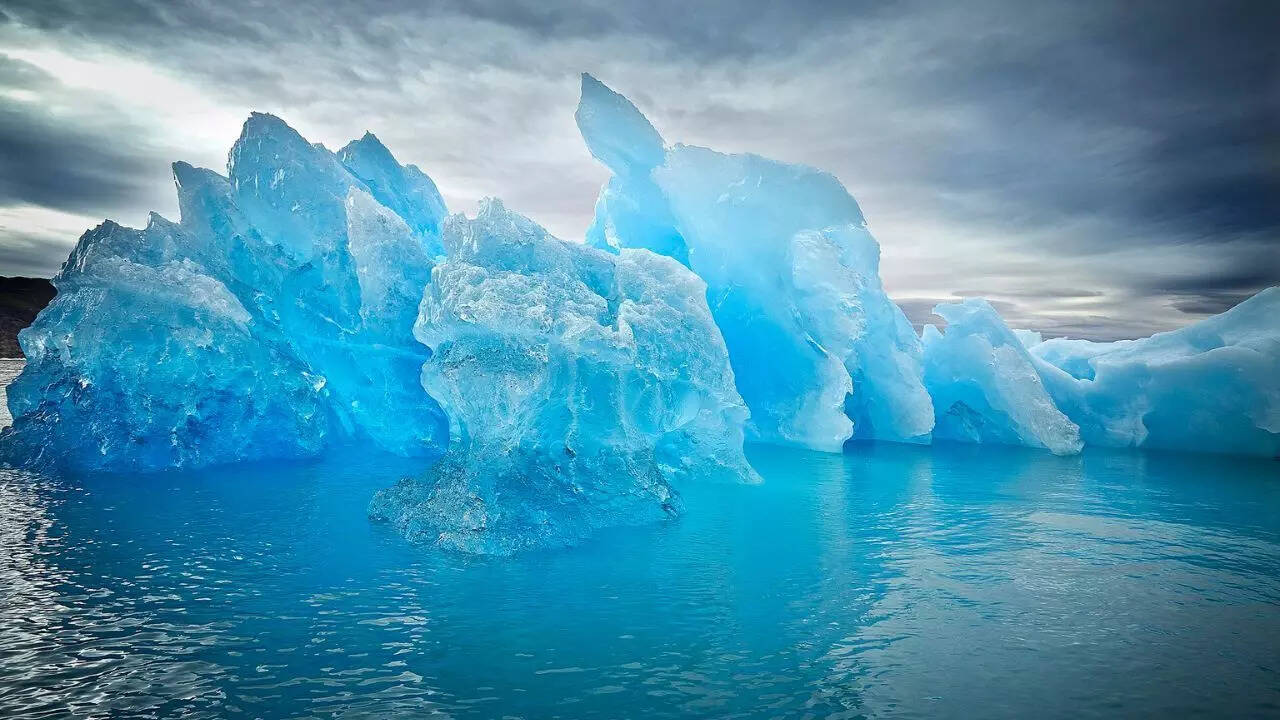
Greenland is not technically "treeless," but it exists in a state of permanent dendrological arrest. While popular media focuses on the "shock" of its icy exterior, the absence of extensive forests is a predictable outcome of specific thermodynamic and biological bottlenecks. The island’s flora is governed by the 10°C isotherm—a climatic boundary where the mean temperature of the warmest month fails to exceed 10°C. This threshold represents the physiological minimum required for tree metabolism, specifically the ability to produce enough carbohydrates through photosynthesis to outweigh the energy costs of respiration and tissue maintenance.
The Biogeographic Isolation Factor
The primary constraint on Greenland’s forestation is not merely the cold, but a legacy of glacial scouring combined with extreme geographic isolation. During the Quaternary glaciations, the ice sheet expanded to the continental shelf, effectively erhadicating existing macroscopic plant life. Unlike North America or Eurasia, where species could migrate south and return as ice retreated, Greenland’s surrounding seas acted as a biological moat.
This isolation created a dispersal bottleneck. For a tree species to naturally colonize the island, its seeds must cross hundreds of miles of North Atlantic or Arctic waters. While wind-dispersal works for lightweight seeds like Salix (willow) or Betula (birch), heavier-seeded conifers that dominate the Siberian and Canadian taiga have been physically barred from entry.
The Colonization Gap
The few "trees" that do exist—predominantly the Downy Birch (Betula pubescens) and various willow species—are restricted to the deep fjords of the south. These areas provide a microclimate shielded from the katabatic winds that pour off the inland ice sheet. Even here, growth is stunted. What qualifies as a forest in Greenland would be classified as scrubland elsewhere. The biological reality is a "Prostrate Growth" adaptation: plants grow horizontally rather than vertically to remain within the relatively warmer boundary layer of air trapped just above the soil surface.
The Thermal Summation Deficit
Tree growth requires a specific cumulative amount of heat during the growing season, often measured in Growing Degree Days (GDD). In most of Greenland, the thermal sum never reaches the critical mass needed for wood lignification.
- Lignin Synthesis Failure: For a plant to form a vertical trunk, it must synthesize lignin to reinforce cell walls. This process is highly temperature-dependent. If the summer is too short or too cool, the new growth does not "harden" before the first frost.
- Desiccation by Transpiration: In winter, frozen ground prevents roots from absorbing water. Meanwhile, high winds and bright sun cause needles or buds to lose moisture. Without a protective snow cover or sufficient height-to-girth ratio, the plant undergoes lethal desiccation.
- Nutrient Cycling Latency: Decomposition in Arctic soils is exceptionally slow. Nitrogen and phosphorus—the building blocks of rapid vertical growth—remain locked in undigested organic matter. Trees cannot "afford" to grow tall when the soil cannot provide the recurring nutrient ROI required for such a structure.
The Soil Architecture Bottleneck
Greenland lacks "mature" soil profiles. Most of the terrain consists of regolith—raw, weathered rock—or thin layers of peat. The absence of a deep, nutrient-rich O-horizon (organic layer) prevents the establishment of complex root systems capable of anchoring large trees against Greenlandic gales.
The presence of permafrost in the northern and central regions creates a "cryoturbation" effect. The constant freezing and thawing of the "active layer" of soil creates mechanical stress that can snap roots or physically eject saplings from the ground. This creates a feedback loop: without trees to provide shade and organic litter, the soil remains thin and prone to temperature swings; because the soil is thin, trees cannot establish.
Anthropogenic Interventions and the Qinngua Valley Exception
The Qinngua Valley stands as the only natural forest in Greenland. Located approximately 50 kilometers from the sea, it is protected by high mountains that block the cooling influence of the ocean and the ice sheet. Here, birches can reach heights of 6 to 8 meters.
This exception proves the rule: when the mechanical and thermal stressors are removed, the biology is capable of verticality. This has led to various "Arboretum" experiments, most notably in Nanortalik and Qaqortoq. Since the mid-20th century, foresters have introduced non-native species such as:
- Siberian Larch (Larix sibirica)
- Sitka Spruce (Picea sitchensis)
- Lodgepole Pine (Pinus contorta)
These species, sourced from similar latitudes in Alaska and Siberia, have shown that the soil can support growth if the species are bypass-dispersed by humans. However, these plantations are not self-sustaining ecosystems. They are "assisted colonies" that struggle to recruit new generations without human protection from the local herbivore populations, such as the Greenlandic sheep.
The Impact of Isostatic Rebound and Climate Shifting
Greenland is currently experiencing two simultaneous geological and climatic shifts that may alter its dendrological future. First, as the ice sheet melts, the landmass is undergoing isostatic rebound—literally rising out of the sea as the weight of the ice is removed. This creates new coastal land, though it remains biologically sterile for decades.
Second, the shifting of the 10°C isotherm is moving the "tree line" northward. Current models suggest that by 2100, significant portions of Southern Greenland will possess the thermal sum required for North American-style boreal forests.
The bottleneck remains the migration speed. Trees do not move fast. For a forest to naturally form in the newly warmed valleys, it must overcome the same oceanic barriers that have suppressed it for the last 10,000 years. If the "Greenland Forest" becomes a reality in the next century, it will be a result of human silviculture rather than natural succession.
Strategic investment in Arctic afforestation projects must account for the high failure rate of seedlings due to "winter browning"—a phenomenon where the plant survives the cold but dies from the spring sun while its roots are still frozen. Future success in greening Greenland requires a focus on species that exhibit "high phenotypic plasticity," allowing them to survive the extreme variance between the maritime coast and the glacial interior.
Analyze the soil moisture content in the deep fjord systems before attempting any large-scale sapling introduction. The primary risk is not the absolute minimum temperature, but the lack of synchronization between light availability and soil thaw. Focus on the Southern fjords between 60°N and 62°N as the only viable pilots for timber-grade growth.