On February 28, 2026, the geopolitical map of the Middle East was essentially put through a shredder. The joint U.S.-Israeli operation, code-named Midnight Hammer, did more than just eliminate Ayatollah Ali Khamenei; it systematically erased the top three tiers of the Iranian clerical and military hierarchy in a single, sustained afternoon of kinetic strikes.
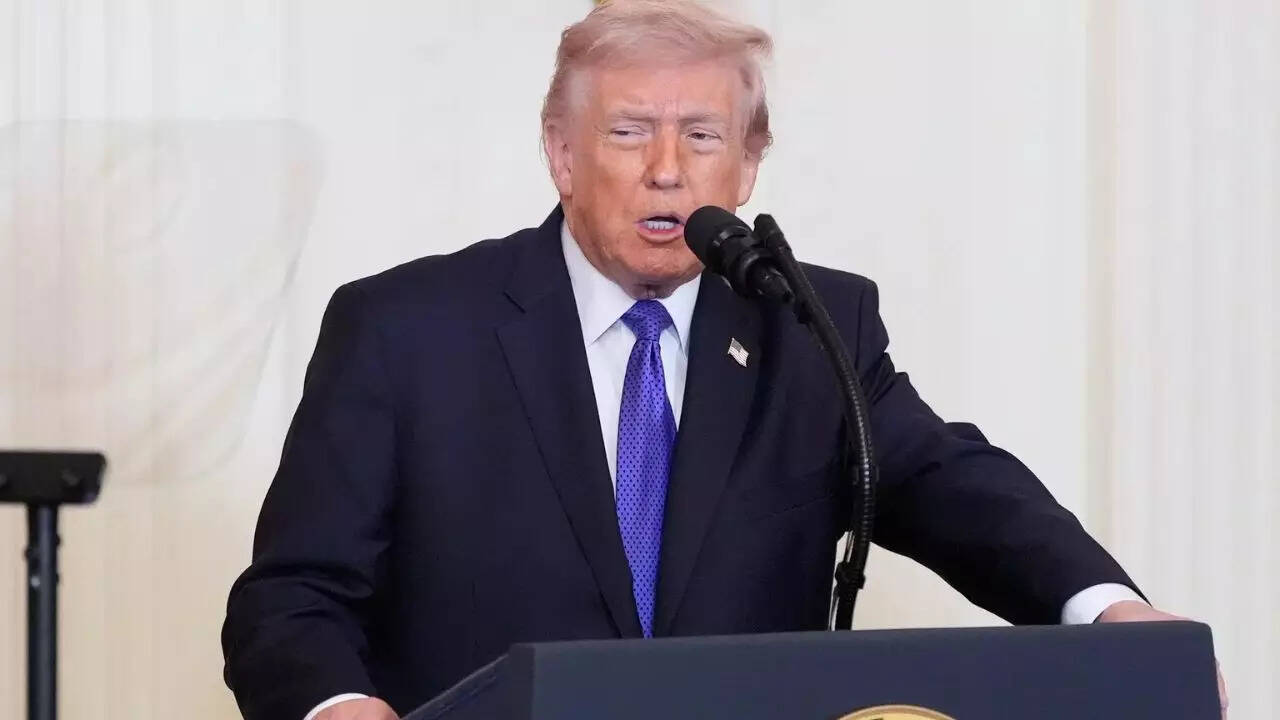
When Donald Trump stood in the Oval Office yesterday alongside German Chancellor Friedrich Merz, his assessment was characteristically blunt and devoid of diplomatic cushion. "Most of the people we had in mind are dead," he remarked, referring to the potential "moderate" successors Western intelligence had spent decades grooming or tracking. It was a statement that confirmed the true nature of the mission: this was not a surgical strike to prompt a negotiation, but a total decapitation intended to leave the Iranian state an empty vessel.
The Midnight Hammer Logic
For forty years, the West played a game of chess with the "Axis of Resistance," assuming there was always a rational actor behind the curtain. Midnight Hammer operated on a different premise. By utilizing autonomous swarm munitions and deep-penetration bunker busters, the U.S. and Israel didn't just target the Supreme Leader; they targeted the very mechanism of succession.
Reports from Tehran indicate that the initial wave hit 49 high-value targets. This included not only Khamenei but his chief of staff Ali Asghar Hejazi and several key figures from the Assembly of Experts—the 88-member body legally tasked with choosing the next Rahbar. By hitting the electors alongside the elected, the coalition created a constitutional void that cannot be filled by traditional means.
The strategy is a radical departure from the "regime change" failures of the early 2000s. In Iraq, the U.S. removed the head but left the body to rot into an insurgency. In Iran, the 2026 model appears to be the "Venezuela Scenario" on steroids—vacuuming out the entire decision-making apparatus to see if the remaining mid-level bureaucrats will simply trade their loyalty for survival.
The Collapse of the Succession Pipeline
The "moderate" hope, often whispered about in the halls of the State Department, is now largely a ghost. Trump’s admission that "second or third place is dead" highlights the intelligence community’s realization that their preferred alternatives—men like Hassan Khomeini or certain pragmatist jurists—were either in the same room or on the same target list as the hardliners.
This has forced the remnants of the Iranian state into an emergency "Leadership Council." Led by President Masoud Pezeshkian and Ali Larijani, this council is a desperate attempt to maintain the appearance of a functioning government. However, Larijani is operating from an undisclosed location, and Pezeshkian’s authority is being challenged by IRGC commanders who see the civilian government as a liability.
The IRGC is now the only coherent entity left, yet even they are fractured. Without the unifying religious authority of a Supreme Leader, the Guard is essentially a massive, well-armed corporation with no CEO. The "Third Wave" of strikes mentioned by Trump on Tuesday reportedly targeted IRGC command and control centers in Fars and Esfahan, further degrading their ability to coordinate a national defense.
A New Breed of Asymmetric Retaliation
Tehran’s response has been predictable but devastating for global markets. The shift to "Total Deterrence" means they are no longer just hitting U.S. bases; they are aiming for the economic throat of the world. The Strait of Hormuz is effectively a no-go zone, not because it is physically blocked by sunken ships, but because the deployment of smart sea mines and drone swarms has made insurance premiums for tankers mathematically impossible to sustain.
- Brent Crude has spiked past $120 a barrel, a shockwave felt at every gas pump in the West.
- Regional Aviation is paralyzed. The closure of airspace over the Persian Gulf has severed the primary transit link between Europe and the Indo-Pacific.
- Proxy Activation is no longer a slow burn. In Baghdad, protesters have already attempted to breach the U.S. Embassy, and in Lebanon, Hezbollah has signaled that the "red lines" are entirely gone.
The danger now is not a traditional war, but the "Balkanization" of Iran. If the central authority continues to evaporate, we are looking at a nuclear-capable territory (or at least one with the raw materials) being fought over by localized IRGC factions and ethnic separatist groups.
The Intelligence Failure of Success
There is a grim irony in the perfection of the Midnight Hammer strikes. By being "too successful," the U.S. has removed the very people it would need to sign a surrender or a new nuclear treaty. Trump’s claim that "everything’s been knocked out" ignores the reality that a country is more than its air defenses.
The administration is betting that the Iranian people will see this vacuum as an invitation to "take back their country." But history suggests that when a state is decapitated this quickly, the result is rarely a Jeffersonian democracy. It is more often a chaotic scramble for resources, where the most organized and brutal local actor wins.
Currently, that actor is the IRGC mid-level officer corps, men who have spent their lives being told the U.S. is the "Great Satan" and who now have no Supreme Leader to tell them to hold back. The gamble is that these men will ask for immunity and "lay down their guns," as Trump suggested. The reality on the ground in Tehran—marked by internet blackouts and the sound of secondary explosions—suggests they are instead preparing for a long, ugly war of attrition.
The U.S. has proven it can kill anyone, anywhere, at any time. What it has yet to prove is that it knows what to do with the silence that follows.
Would you like me to analyze the specific economic impact on the GCC nations or look into the current status of the Iranian Leadership Council's members?